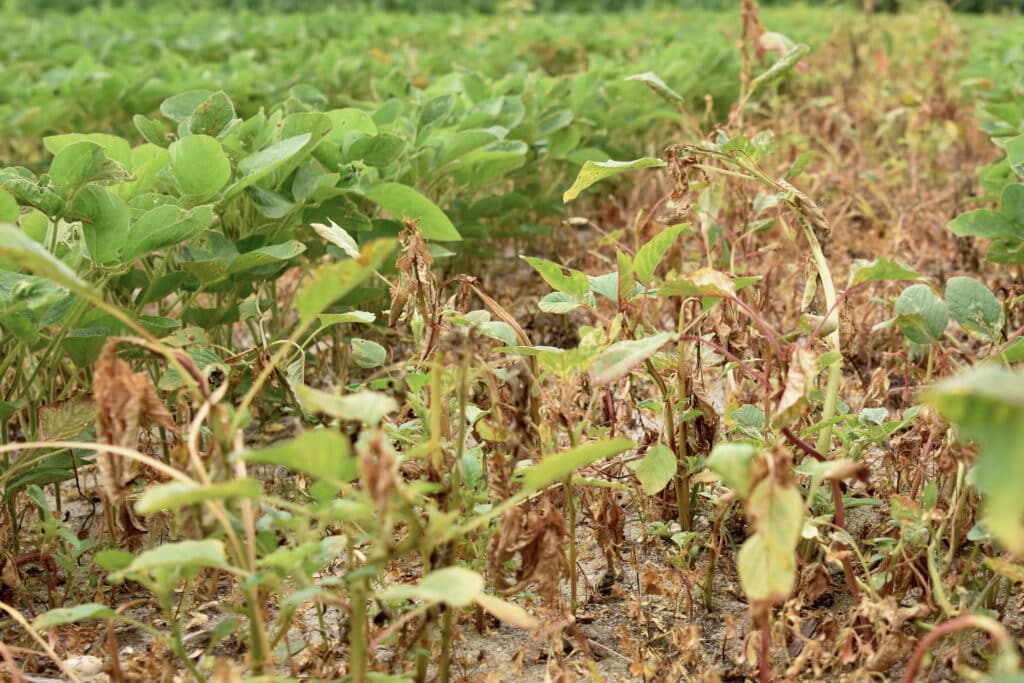
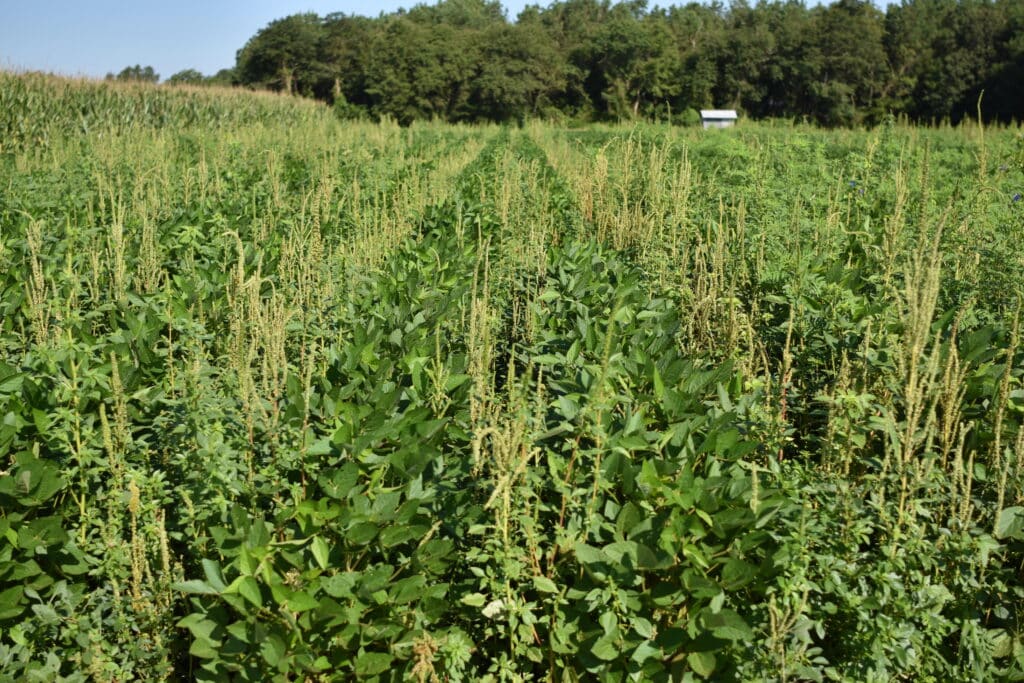
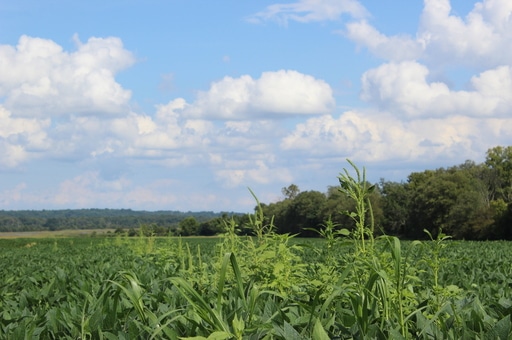
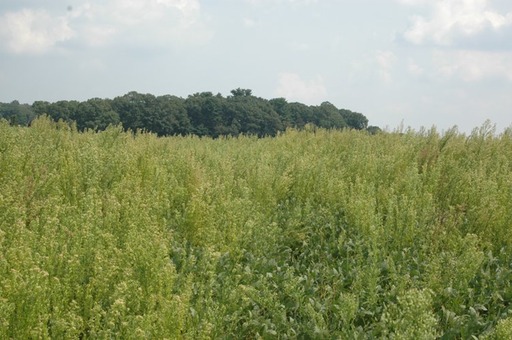
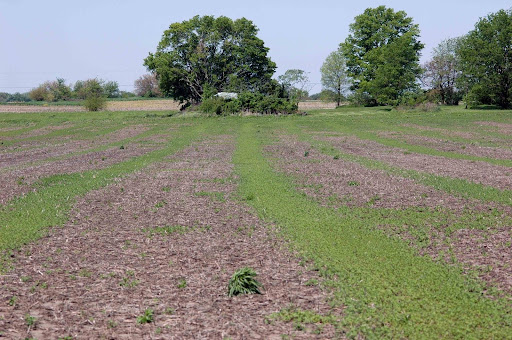
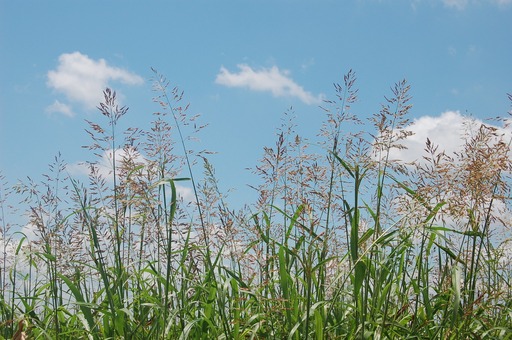
Weeds are a major problem in row crop fields, but they are hardly ever the only problem. Another hassle for farmers are whitetail deer – four-legged soybean-eating machines.
Around 2023, deer began disrupting so many Missouri soybean fields that University of Missouri scientists began to investigate if deer repellents could be tank-mixed with herbicides to take out two major pests in the field.
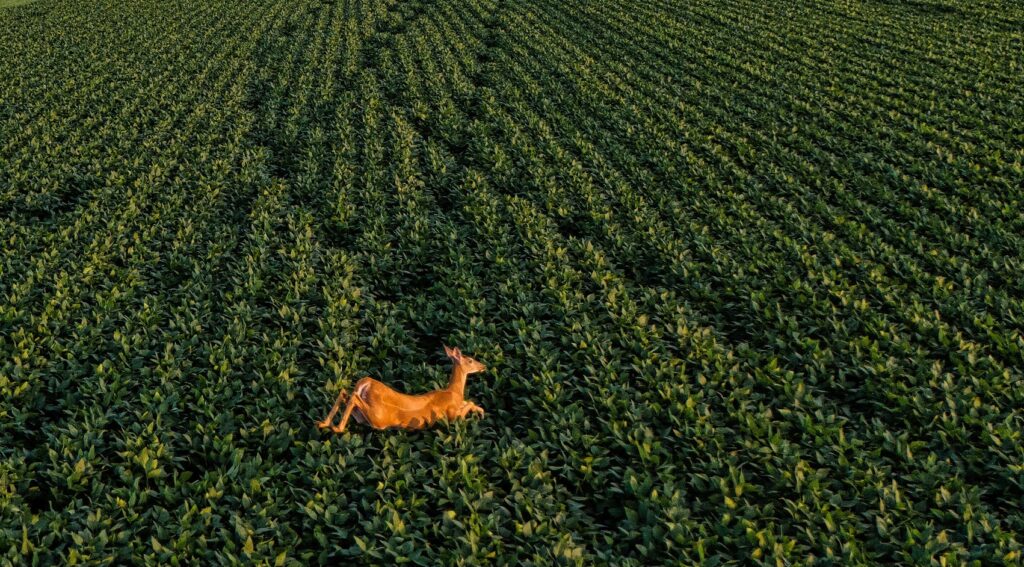
“Our research center was starting to get deer pressure, and we’ve heard from growers over the years about deer problems,” recalls Dr. Kevin Bradley, a University of Missouri Extension weed specialist, on the research’s motivation.
Bradley’s findings revealed that deer repellents didn’t impact herbicide efficacy, but they also didn’t consistently impact deer browsing. Soybean farmers and researchers will have to handle their weeds and their deer separately as they wait for a fully effective commercial deer repellent to hit store shelves, says Bradley.
The Heavy Deer Tax
For centuries, farmers and wildlife have duked it out over food and cash crops. In the U.S., whitetail deer are a menace to a range of crops, from soybean fields to fruit orchards. Mississippi farmers recently reported that deer damaged over 14,000 acres of soybeans in 2025 (over 4,000 acres were replanted), resulting in an average loss of nearly $260 dollars per acre.
And that’s just deer damage in one state and one crop.
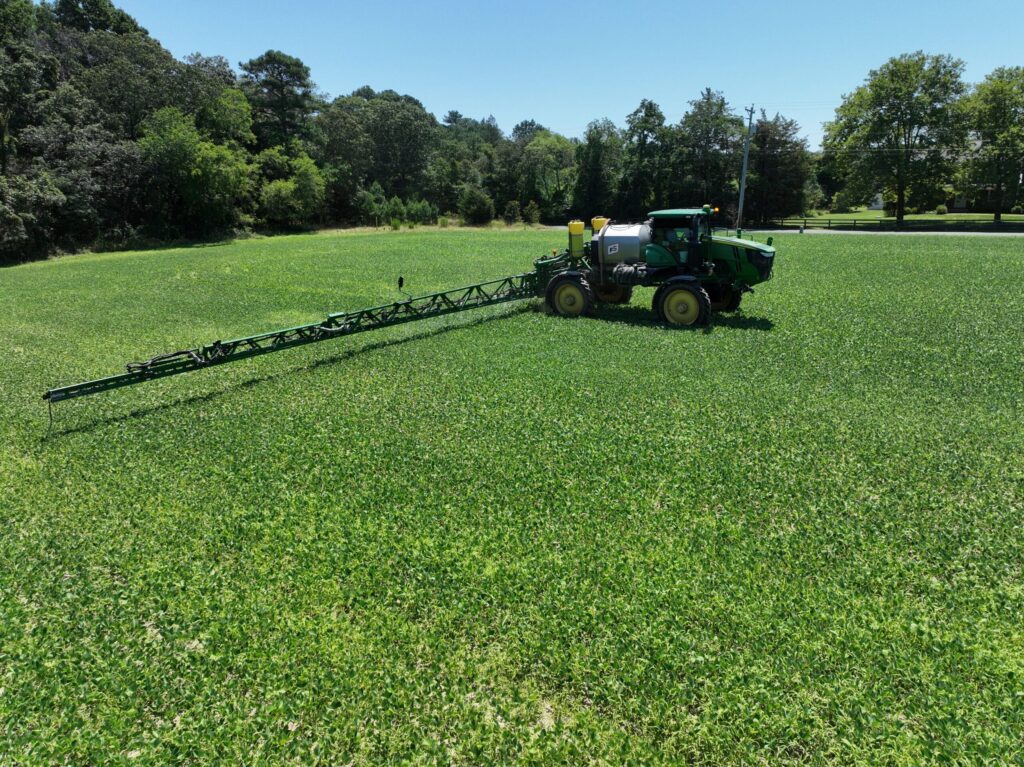
Farmers’ options to control deer in their fields include hunting, fencing, and using deer repellents. Hunting requires a significant time investment, and fencing is usually too costly to be realistic for row crop producers. But farmers could potentially tank mix deer repellents with their herbicides to control two problems in the field at once, making it a more appealing option.
Commercially-available repellents typically deter deer by stench with ingredients such as eggs and garlic, and many are exempt from FIFRA registration and efficacy testing since they have little-to-no environmental risks.
That last dynamic raised alarms for Bradley. Farmers might mix deer repellents with their herbicides, but could that mixture alter the herbicides’ performance? No one seemed to know, so he set out to find the answer.
Tank-Mixing Deer Repellents with Herbicides
For this study, Bradley examined how five different deer repellents (Liquid Fence, Hinder, Bobbex, Plantskydd+, and Penergetic bWV) worked in tank mixes with various combinations of glufosinate (Liberty) and other herbicides such as glyphosate (Roundup Powermax3), clethodim (Select Max), acetochlor and fomesafen (Warrant Ultra), pyroxasulfone (Zidua SC), or cloransulam-methyl (FirstRate).
The lab found that tank-mixed deer repellents had little impact on the herbicides’ weed control or soybean plant yield.
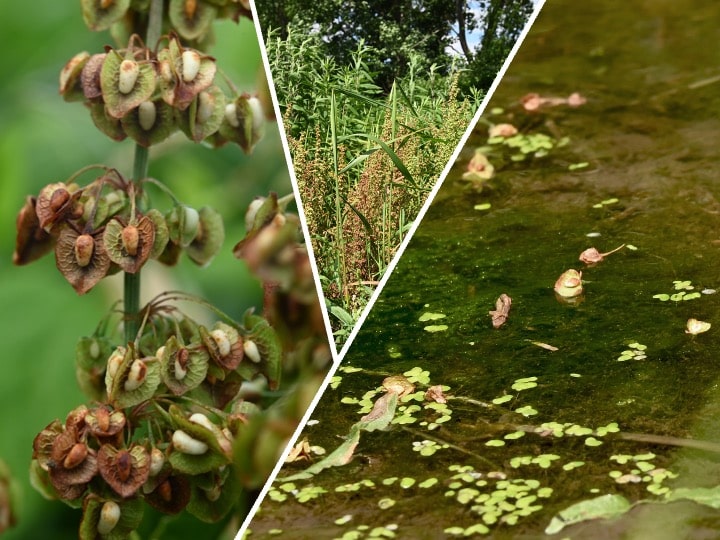
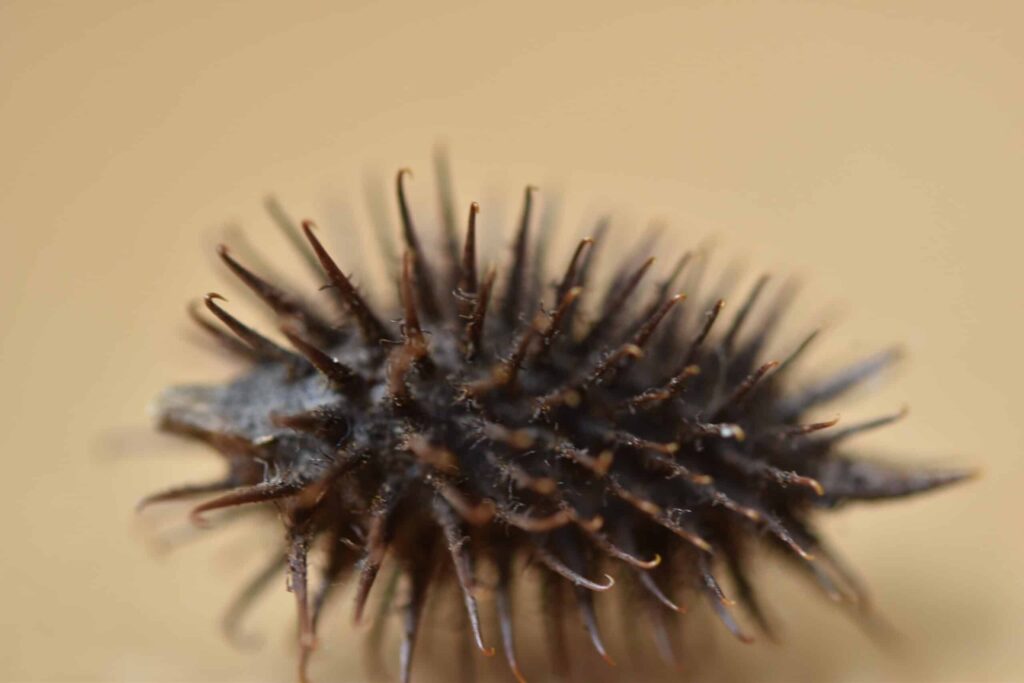
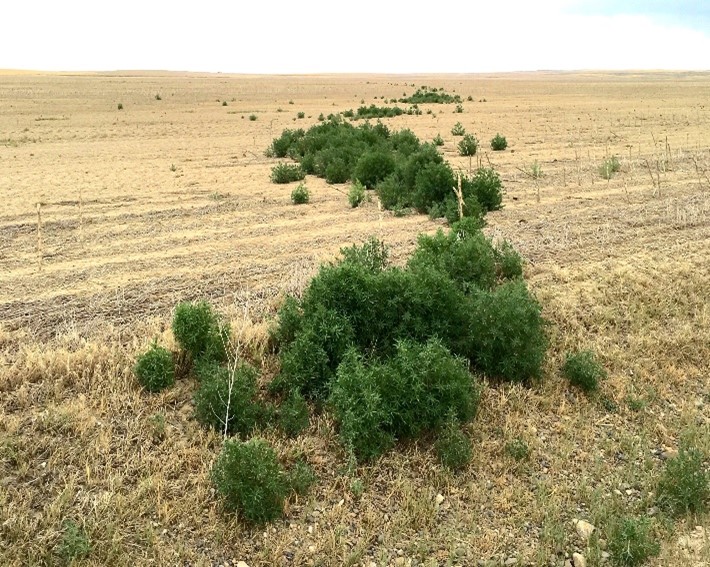
In a few instances, certain repellents slightly decreased weed control when compared to herbicide treatments alone: Liquid Fence tank-mixed with glufosinate and glyphosate had 2.7% less waterhemp control; Hinder tank-mixed with glufosinate, acetochlor, and fomesafen had 1.6% less waterhemp control; Liquid Fence tank-mixed with glufosinate had 3.5% less foxtail control; and Plantskydd+ mixed with glufosinate and cloransulam-methyl had 1.5% less cocklebur control.
No deer repellent and herbicide combination produced below 91% weed control.
Soybean yields for this portion of the study ranged from 25 to 44 bushels per acre. Bradley only found slightly lowered soybean yields when Plantskydd+ was mixed with glufosinate and cloransulam-methyl compared to other deer repellents mixed with glufosinate and cloransulam-methyl (36 bushels per acre versus an average of 41 bushels per acre).
How Did Deer Repellents Alone Alter Deer Browsing?
Deer repellents didn’t impact weed control or yield much when tank-mixed with herbicides, but nor did they do much to deter deer browsing when sprayed alone.
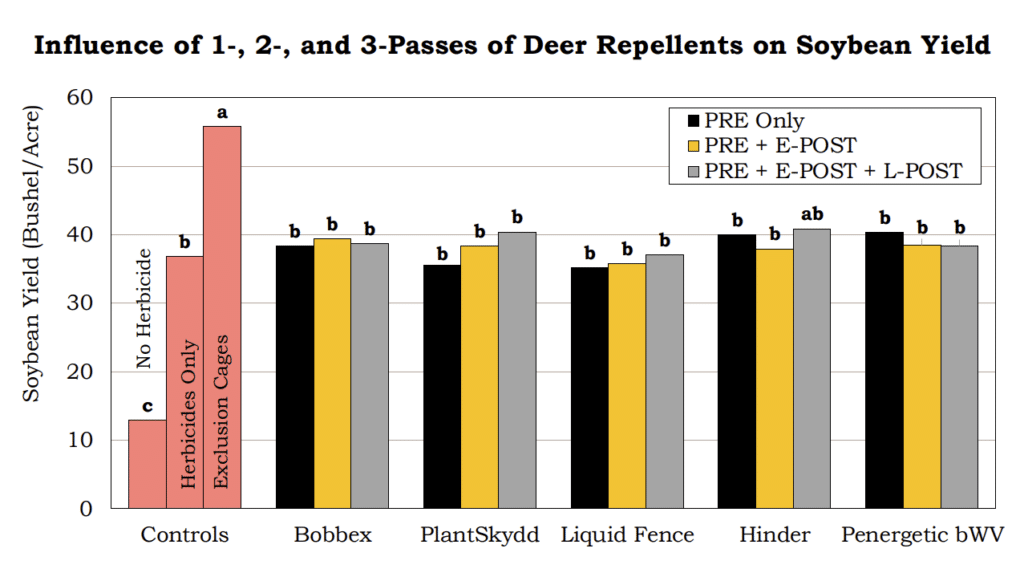
Bradley found deer repellents would sometimes reduce deer browsing early in the season, but the results didn’t follow any pattern that could be attributed to any particular deer repellent product or application frequency. Researchers applied each deterrent once, twice, or three times alongside the preplant burndown, early postemergence, and late postemergence herbicide applications.
“You might get [deer] avoidance short term, but that’s not going to slow the deer down very much,” Bradley notes.
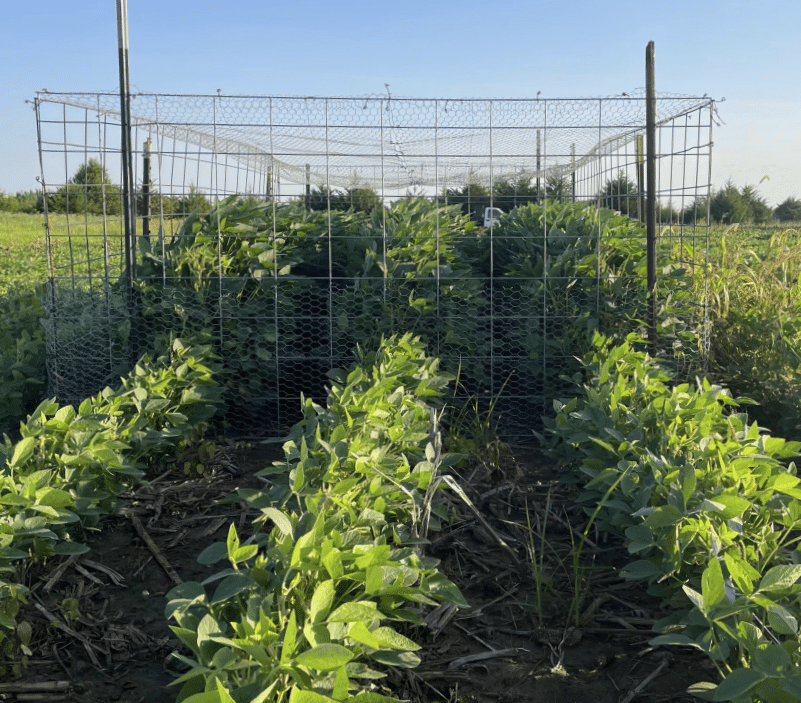
At one study site 21 days after repellent application, only Bobbex (applied once) and Hinder (applied either once or twice) reduced deer browsing by up to 12%. Twenty-eight days after application, all tested deer repellents temporarily reduced browsing by at least 16%, regardless of how many times they were applied. But deer still reduced soybean yields at this site by up to 35% when compared to a fenced control plot.
At another study site, deer were active early and late in the season, possibly because the repellent became less smelly over time. At this study site, the no-treatment weedy control plot often had less deer browsing than the study plots with deer repellent or herbicides applied. The reason, Bradley suspects, is that the weeds could have deterred deer by stressing soybean plants. Deer reduced soybean yields by up to 63% in this study plot.
Overall, Bradley warns that while repellents might not harm herbicide effectiveness, they also won’t grant consistent long-term deer control. He notes that only applying deer repellent to the field edges near wooded areas – where deer most commonly browse – might be the most economic use of deer repellents.
“Deer stick around exteriors,” Bradley explains. “So work on the [field] exteriors.”
And while deer repellents mixed with herbicides might not be the next big thing for soybean farmers, this study highlights how farmers can bring production-related questions to their commodity boards, local universities, and county Extension offices, Bradley explains. These organizations have unbiased researchers who are prepared to help farmers investigate problems (and solutions) in their fields.
Explore Take Action’s website for videos and factsheets on herbicide and weed management.

Article by Amy Sullivan, GROW
Header photo by the United Soybean Board; Feature photo by Randy von Liski
Article funded in-part by the United Soybean Board.