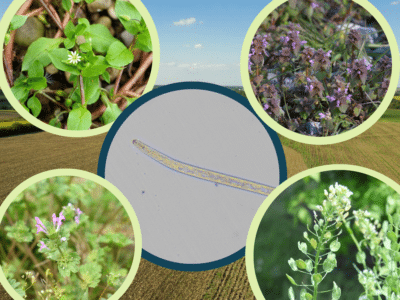
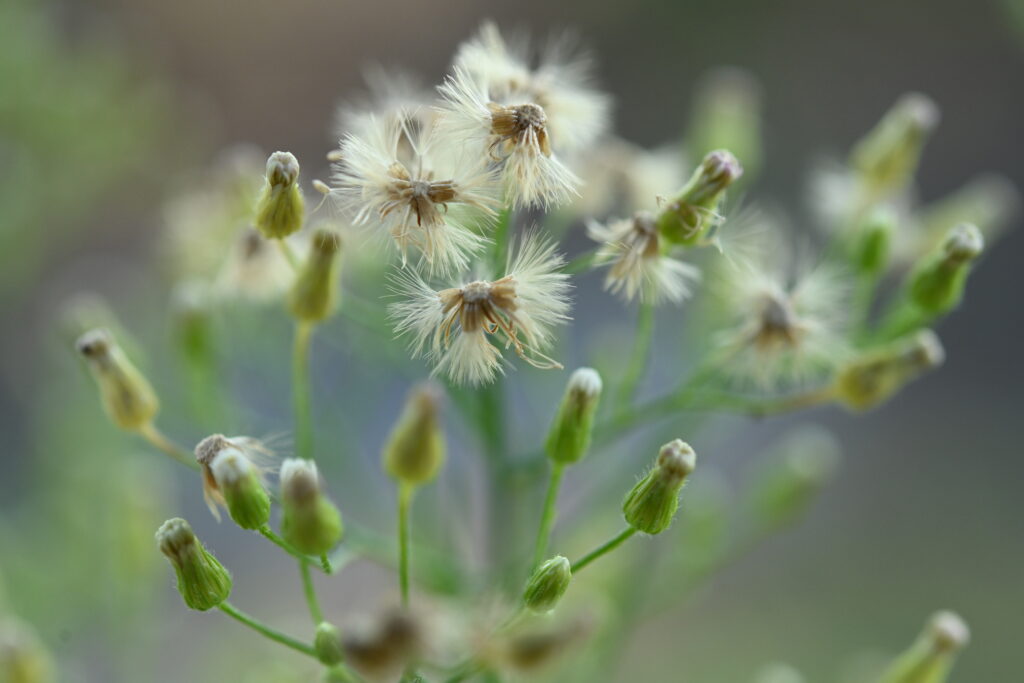
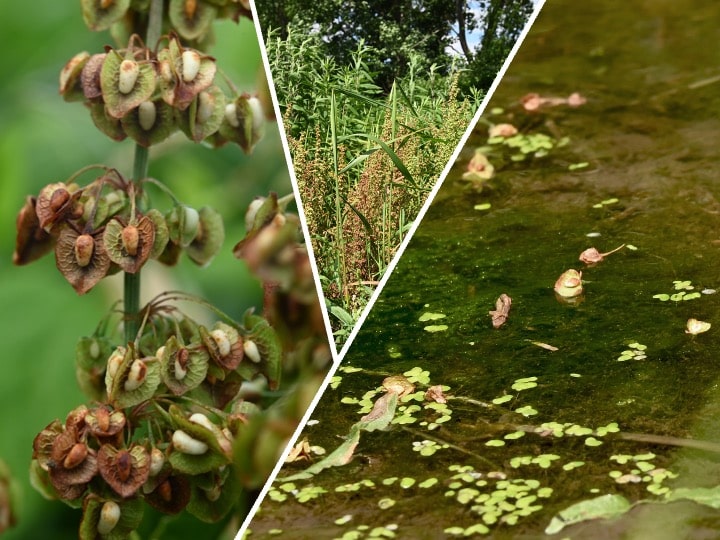
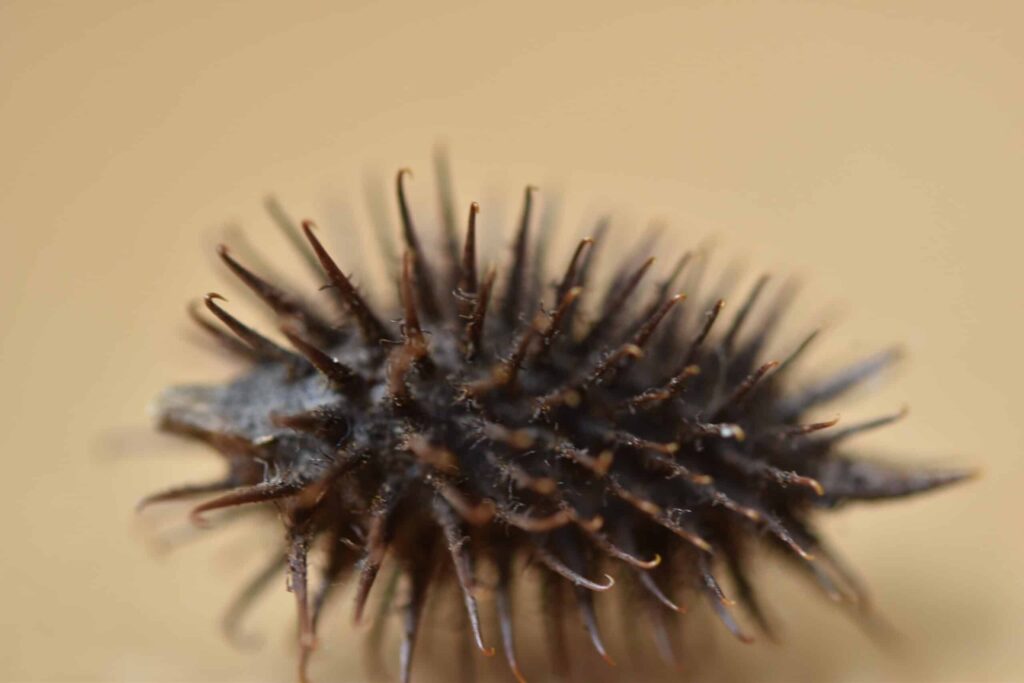
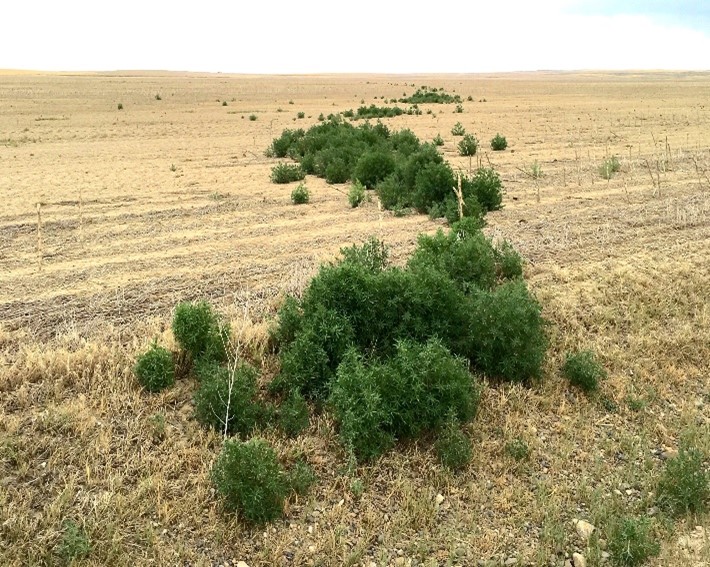
Looking to get better at distinguishing Palmer amaranth from waterhemp? Or maybe you just want to sharpen your weed knowledge a little bit everyday?
Good news!
The Weed Quiz App promises to make honing your weed identification skills faster and more fun.
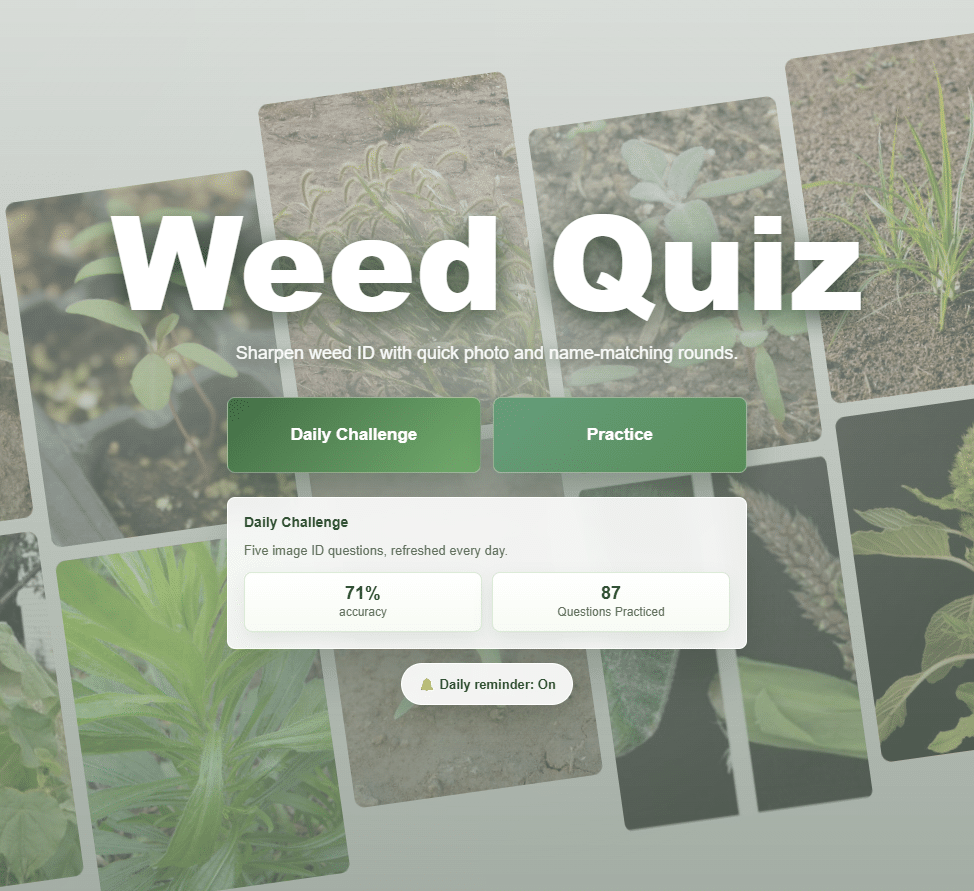
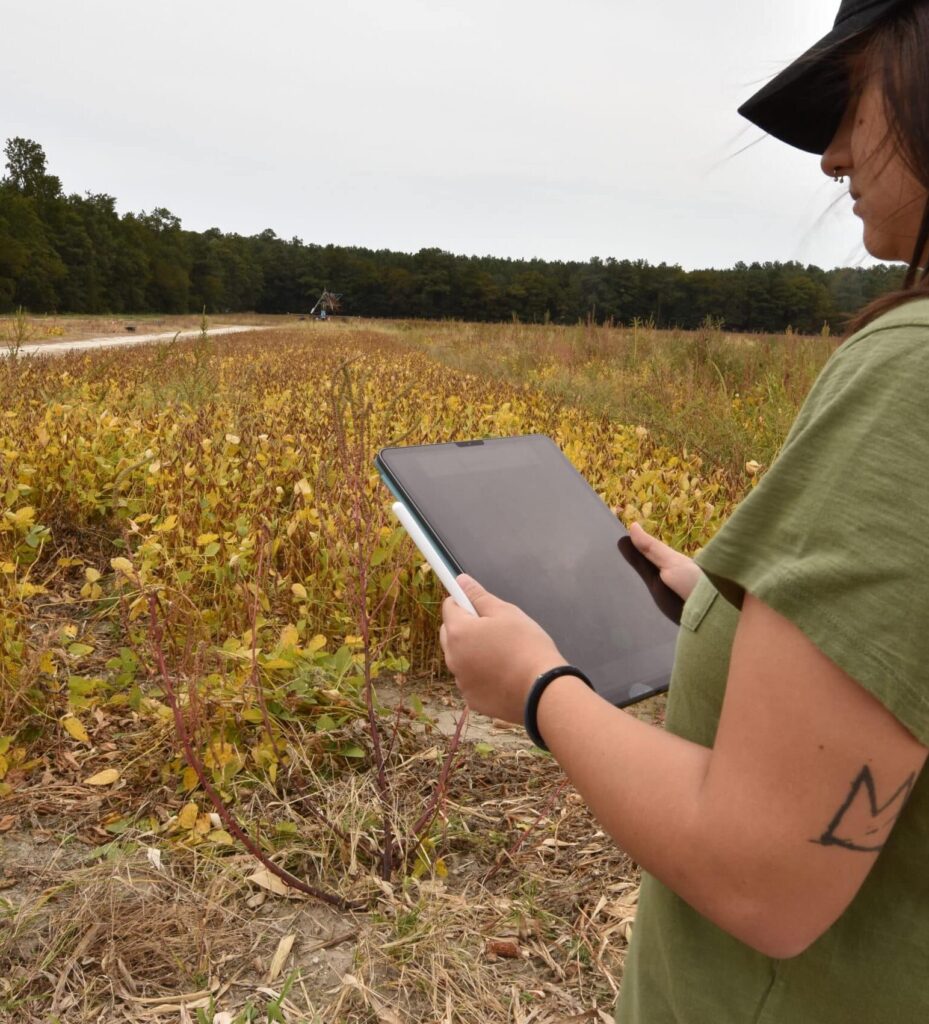
The app was developed by Precision Ag Research Associate and Texas A&M weed science Ph.D. student Navjot Singh, who wanted to help his labmates study for student weed contests. Weed identification quizzes – the app’s main component – challenge users to identify weeds based on images, botanical name, or plant family. The app’s secondary feature lets users find a weed’s botanical name by searching its common name.
How to Use the Weed Quiz App
“Instead of doomscrolling, you can go on the weed quiz app and learn a new weed.”
Navjot Singh
The app can be found at https://agweedquiz.com/, and is also accessible through the GROW website’s Tools menu. It offers three comprehensive quizzes and spans 97 weeds.
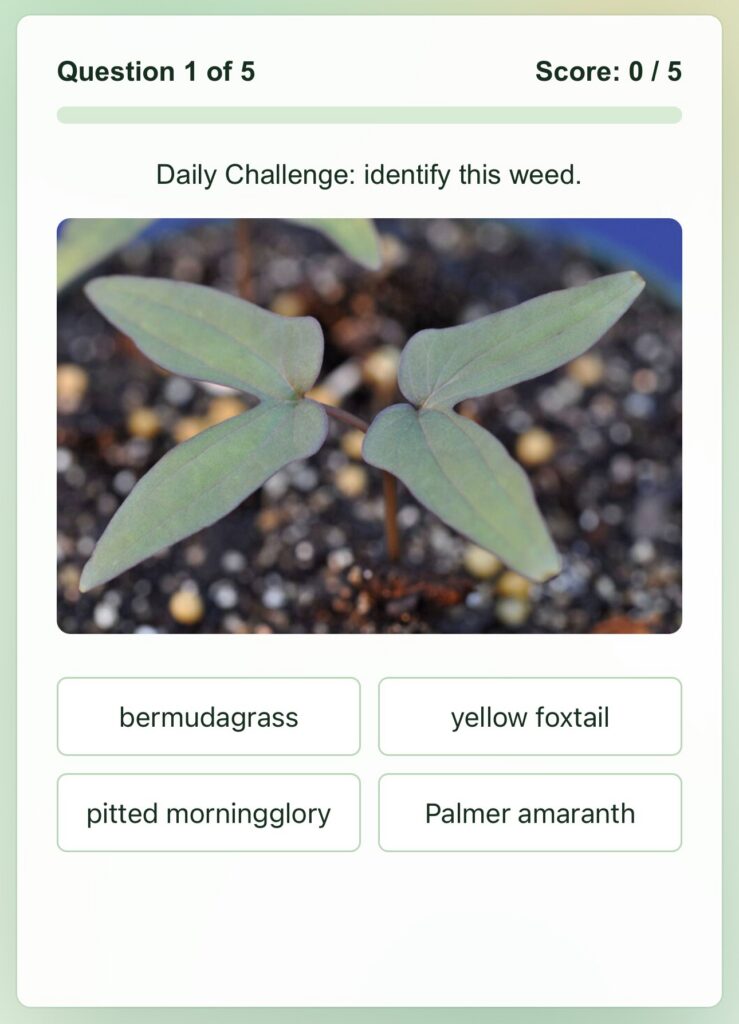
- Image ID Quiz: Put your weed image identification skills to the test with this quiz, which asks you to identify everything from weed seedlings to mature seedheads. Users can up the ante by choosing to answer with a weed’s botanical name rather than its common name.
- Nomenclature Quiz: So you know how to identify weeds visually, but can you match a weed’s common name to its botanical name? Use this quiz to find out.
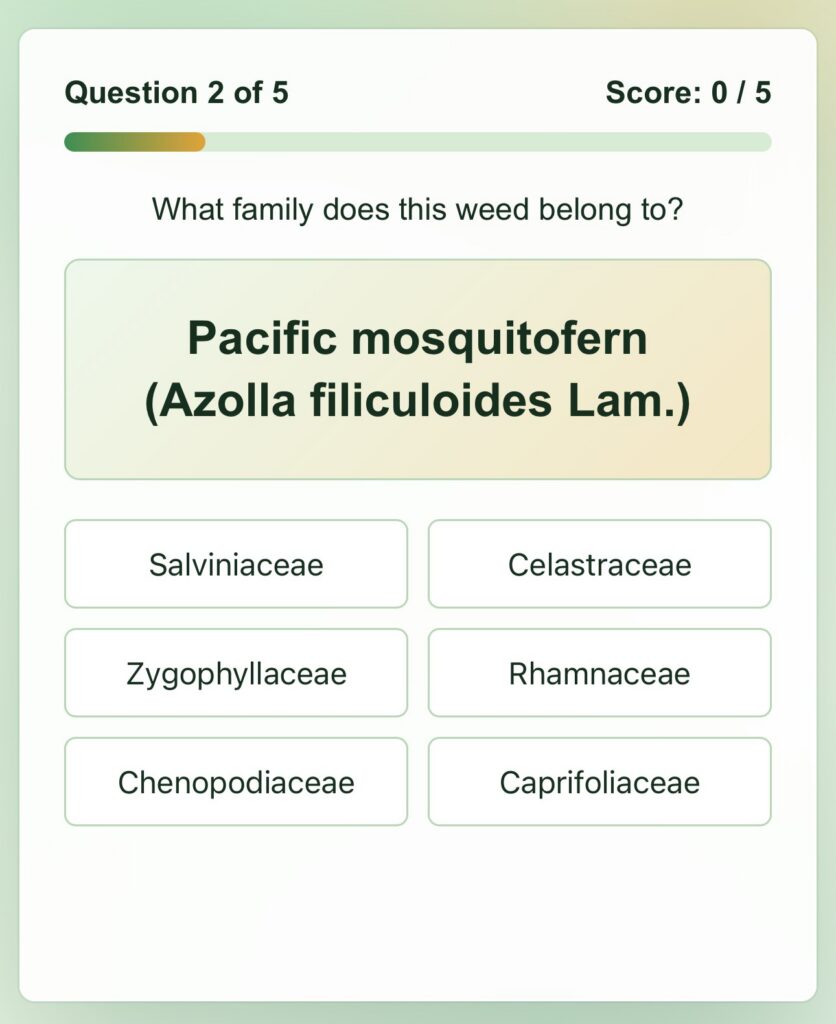
- Plant Family Quiz: The ultimate test. Do you know enough about weeds to match a weed’s botanical name to its plant family?
Looking for less of a commitment? The app also features a daily weed image ID challenge featuring just five quick questions (and an optional daily reminder notification so that you never forget about the daily challenge).
Singh designed the app to be friendly to all users, regardless of their weed science knowledge. And the web app keeps track of a user’s performance across quizzes, even noting weeds that the user has repeatedly struggled to identify.
Birth of a Weed Quiz Tool
Singh published the app in July 2026, just a year after he decided to build the app before the 2025 Southern Weed Science Society’s student weed contest. Singh also credits his advisor, Dr. Muthukumar Bagavathiannan, for encouraging him to explore new ideas and projects.
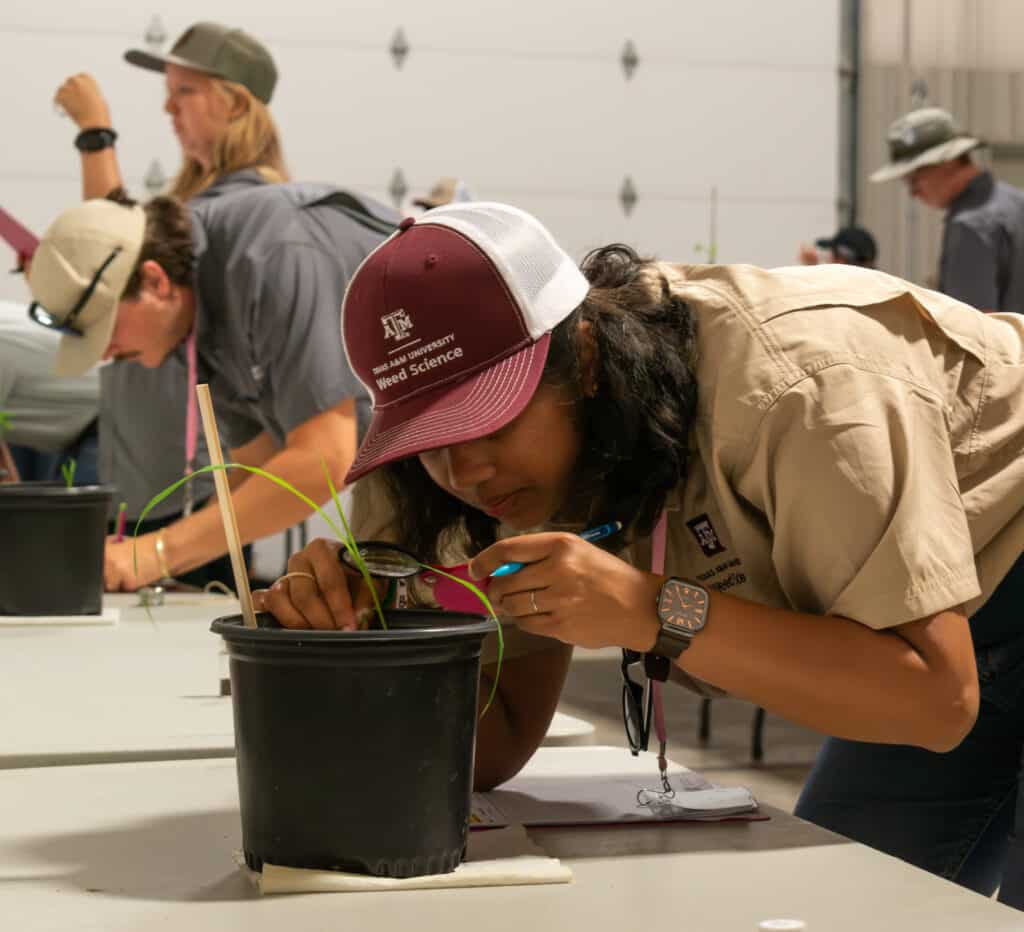
Fellow Ph.D. student Dr. Gustavo Camargo Silva helped Singh flesh out how the app would function. Singh and Silva both thought the app would help students train for the weed science contest independently and on the fly, instead of students having to rely on each other, flash cards, or a dedicated instructor. Silva even provided his study materials (namely a database of weeds and their images) for Singh to plug into the app.
Singh, who has been learning to code in Python for three years, took on the app as a skill-building personal project. Between his full-time job at Texas A&M, being a Ph.D. student, and his personal life, Singh juggled building and then fine-tuning the app. “If you’re passionate about something, you will find time to do it,” Singh notes.
The app’s first iteration only offered an image identification quiz with common weed names. Singh launched it with Texas A&M’s weed science students, but they had some surprising feedback. “They said, ‘This is too easy, make it harder!’” Singh recalls.
Now, in its final form, Singh has increased the number of questions and answer choices that students can choose from, and added two additional (and more challenging) quizzes by pulling information from the WSSA’s composite list of weeds.
Future Updates Planned
The app’s development isn’t over, Singh says. His next goal is to add a search tool where users can find a weed’s common or botanical name and use an image database showing that weed at various growth stages.
Singh also wants to make the app relevant to international students by expanding the weed database and allowing users to filter their quiz by region or country.
Singh’s ultimate update will be adding the app to the Android and Apple app stores, but he notes that funding this endeavor is a hurdle. Android lets users add apps to the app store for free, but Apple requires payment to add an app to the app store.
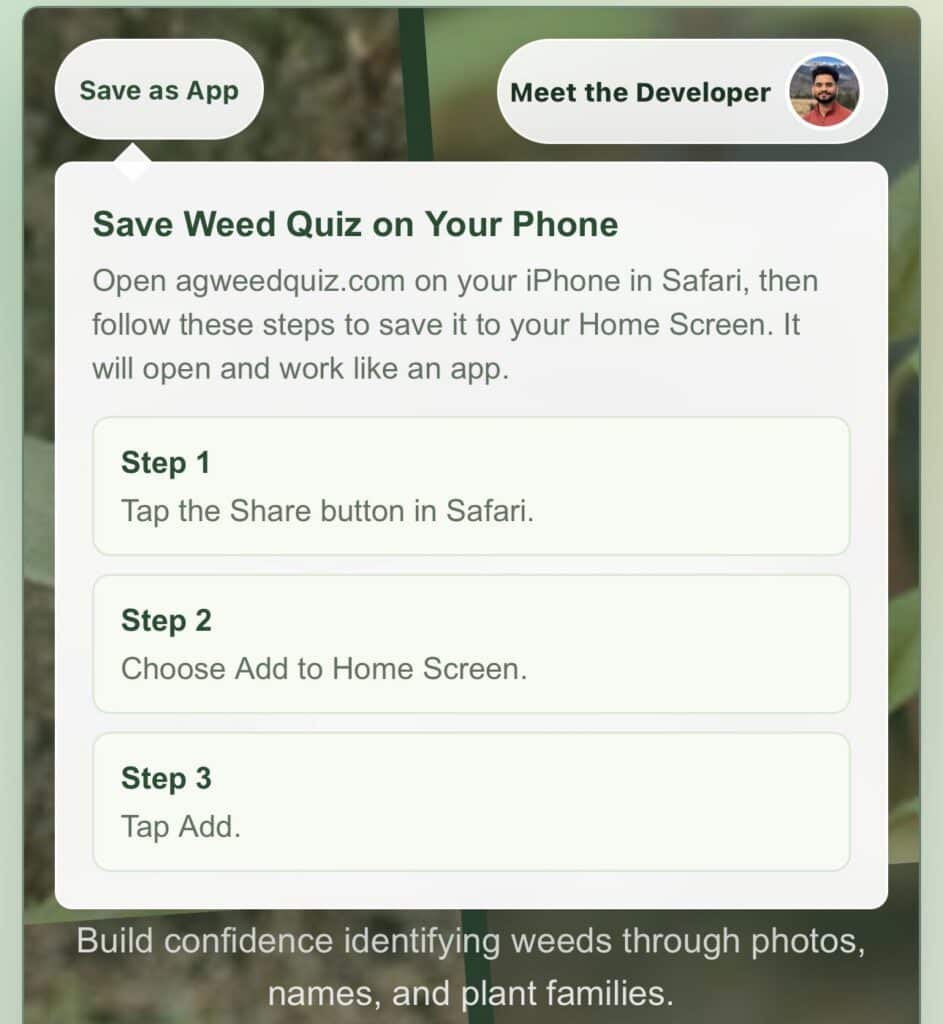
In the meantime, users can add the web app directly to their phone’s home screen to use the quiz like a normal app – but maybe a more productive one!
“Instead of doomscrolling, you can go on the weed quiz app and learn a new weed,” Singh suggests.
Singh encourages users to test their weed identification knowledge with the app as he continues to develop it. Anyone with suggestions for feedback for Singh should reach out to navjot.singh@tamu.edu or https://www.linkedin.com/in/navjot-singh-nangia.
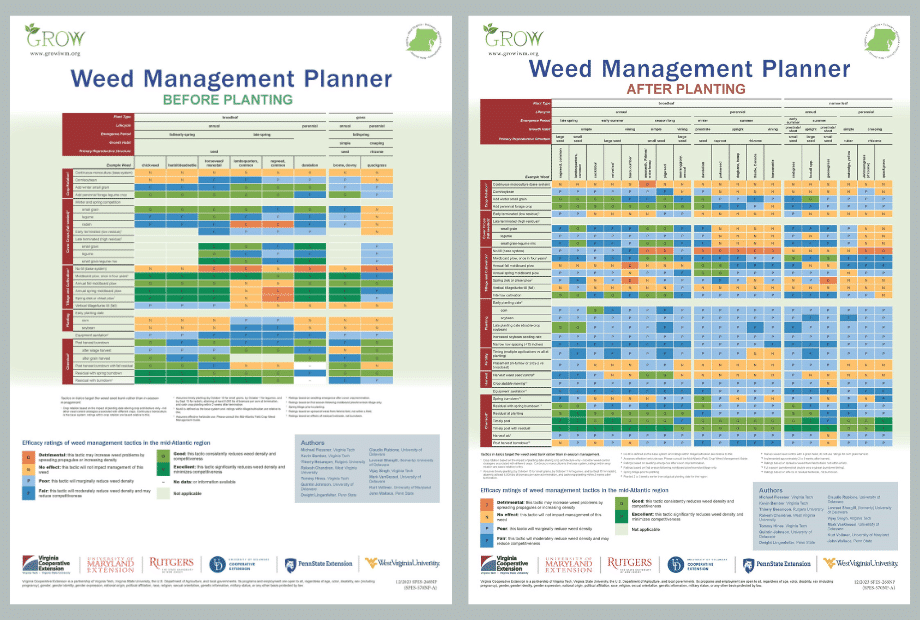
Explore GROW’s website for more weed management tools and resources.
Article by Amy Sullivan, GROW; Header photo by Vipan Kumar, Cornell University; Feature photo by Navjot Singh, Texas A&M.