Cyperus rotundus
Also known as: nutgrass, coco-grass, red nutgrass
Purple nutsedge is an invasive perennial weed that emerges in spring and summer and persists year-round in warm climates. It is native to Africa, southern and central Europe, and southern Asia and is considered one of the most troublesome weeds in the southern United States. This species produces large numbers of rhizomes and tubers, allowing it to spread rapidly, especially in damp or poorly drained soils. The weed can cause approximately 50% yield losses in cotton, soybean, and vegetable crops across Mississippi and the southeastern United States.
Identifying Features
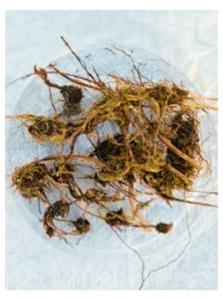
Purple nutsedge spreads mainly through underground tubers rather than seeds, which makes it difficult to control. The tubers are oblong and irregular in shape and grow in chains along rhizomes, with several connected to a single underground stem. These tubers are 0.5- to 1-inch long, dark brown to black in color, and covered with a thin, papery layer, giving them a rough texture. Each tuber can sprout a new plant, and because the rhizomes continuously produce new tubers, purple nutsedge often reemerges and spreads even after cultivation or herbicide treatment.
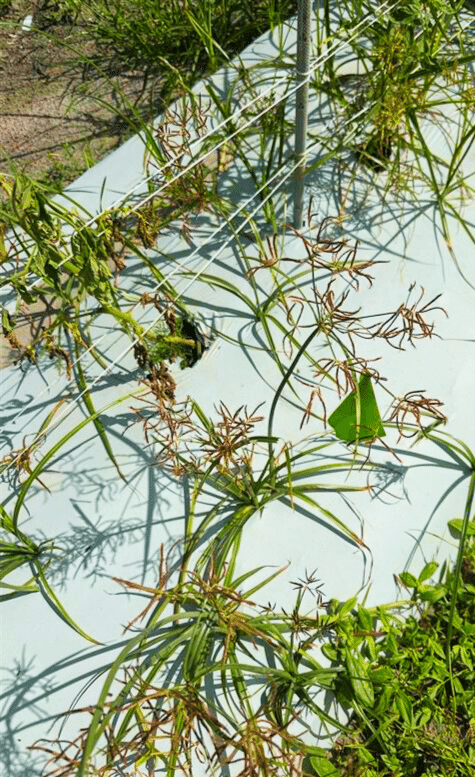
A key feature that distinguishes nutsedge from grasses is the leaf arrangement and stem shape. Grass leaves grow in two opposite directions, while nutsedge leaves grow in three directions around the stem. As the plant matures, it forms dense patches with upright shoots. These shoots typically grow 6- to 18-inches tall. The stems are solid and triangular in cross-section, which helps identify sedges.
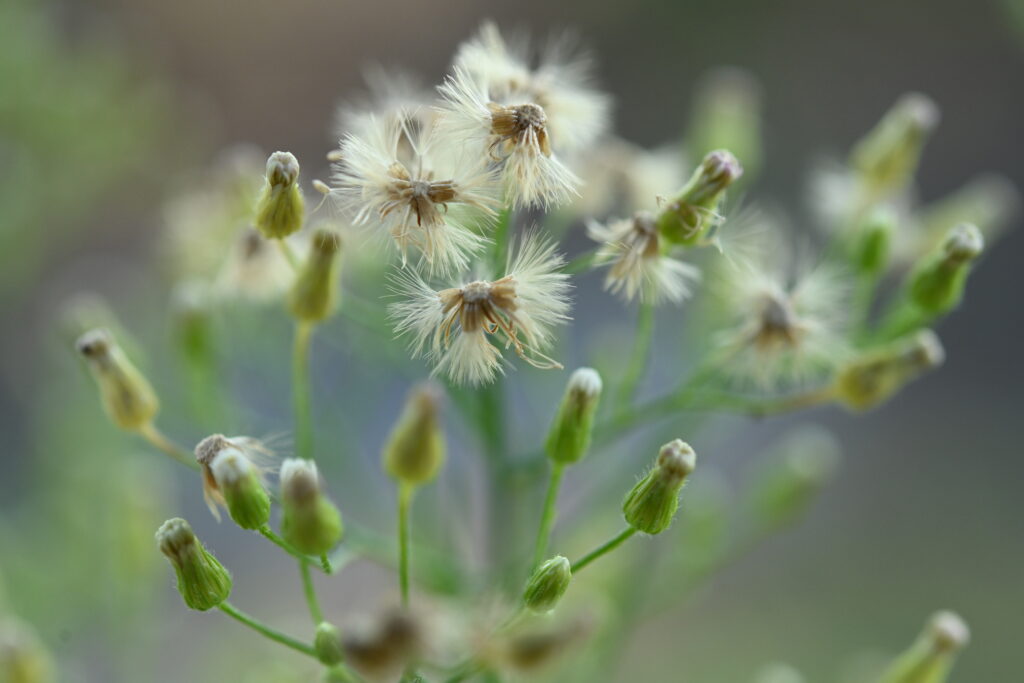
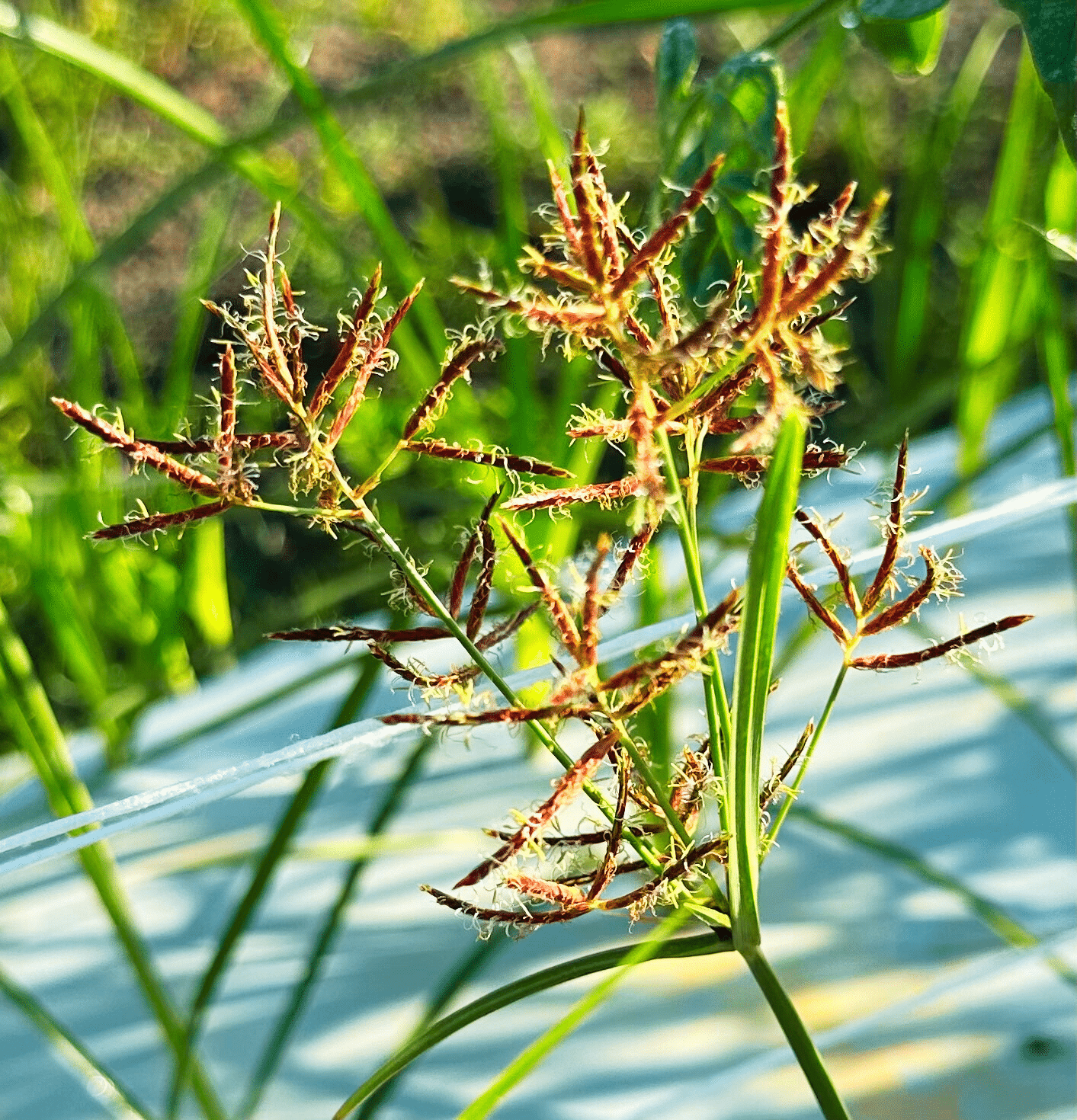
The leaves of purple nutsedge are dark green and taper abruptly to a sharp point at the tip. The flower head appears at the top of the stem as an umbrella-shaped cluster of reddish-purple or brown spikelets, each made up of small overlapping flowers that form tiny dark seeds.

Yellow nutsedge (Cyperus esculentus), is closely related and similar, and can often be mistaken for purple nutsedge but has distinct identifying characteristics. Its tubers are smooth and nearly round, growing singly at the tips of rhizomes rather than in chains. The leaves are light yellow-green and taper gradually to a sharp point, and the flower head is yellow to golden brown, distinguishing it from the reddish-purple flower head of purple nutsedge. Yellow nutsedge is more tolerant of colder climates and can be found throughout the US and southern Canada.
Seed Production
Purple nutsedge produces flowers, but viable seeds are rare and play little role in its spread. Instead, the plant primarily reproduces through underground tubers. Each tuber can generate new shoots and rhizomes, which then form additional tubers, allowing rapid multiplication. These underground structures store substantial energy, enabling the plant to regrow after tillage or herbicide applications. A single plant can produce hundreds to thousands of tubers in one season, making purple nutsedge one of the most persistent and difficult weeds to control.
Herbicide Resistance
None
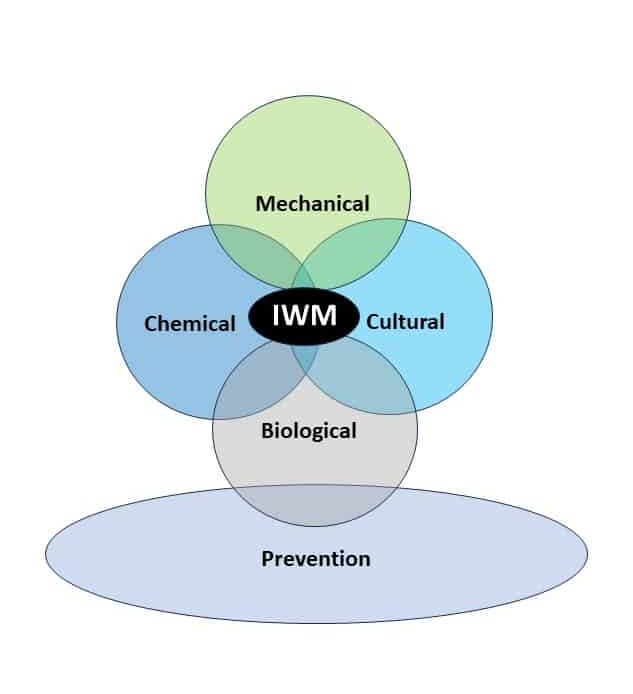
Integrated Weed Management
Cover Crops & Crop Rotation
Cover crops and crop rotation are effective strategies for reducing purple nutsedge over time. Crop rotations lasting about two-and-a-half years have been shown to significantly decrease tuber populations. Dense-canopy crops, especially when combined with early cultivation, suppress purple nutsedge by limiting light availability, as the weed does not tolerate low light. Terminating summer cover crops, such as prickly sesbania, with herbicides after 45 days has also provided season-long suppression and improved yield and weed control compared to traditional plowing and glyphosate. However, residue from fall cover crops alone is generally ineffective at suppressing purple nutsedge because the substantial energy reserves in underground tubers allow shoots to readily penetrate surface residue and reach sunlight, unlike seed-propagated weeds.
Tillage
Frequent shallow tillage – typically 2 to 3 weeks during the growing season – can help control purple nutsedge in many soil types. Consistent tillage is essential, as missed intervals allow tuber chains to recover and regrow. Infrequent tillage can actually worsen infestations of purple nutsedge instead of eliminating them. When tillage is infrequent, underground tuber chains may break apart but are not eradicated. Because they are still alive, these tuber fragments can easily grow into new shoots, increasing the plant density. The establishment and growth of new chains during the regrowth phase between tillage operations may increase underground structures. Consequently, irregular or insufficient tillage may promote purple nutsedge growth instead of inhibiting it, increasing the costs and time needed for control.
Soil Fumigation
This method is primarily used in cotton but is now rarely practiced due to the high cost of soil fumigation,which limits its economic feasibility. Preplant treatment with soil fumigant metam-sodium can provide effective weed control of purple nutsedge when applied during a summer fallow period, allowing the soil to remain undisturbed for approximately 90 days.
Herbicide Control Options
Resources
Cotton / Agriculture: Pest Management Guidelines / UC Statewide IPM Program (UC IPM)
VPH/CV292: Vegetable Production Handbook of Florida, 2025–2026 edition
Manage Weeds on Your Farm – SARE
2024 Louisiana Suggested Chemical Weed Management Guide
Citations
Tiwari, Ruby, Mahesh Bashyal, and Ramdas Kanissery. “Weed management strategies for tomato plasticulture production in Florida.” Plants 11, no. 23 (2022): 3292.
Varanasi, Vijay, Taghi Bararpour, Partson Mubvumba, Reginald Fletcher, and Krishna Reddy. “Purple nutsedge (Cyperus rotundus) response to postemergence herbicides varies with mode of action and plant growth stage.” Weed Technology 39 (2025): e81.
Nath, C. P., Narendra Kumar, Asik Dutta, K. K. Hazra, C. S. Praharaj, Deepak Kumar, and G. P. Dixit. “Cover crop and herbicides can control purple nutsedge (Cyperus rotundus L.) and increase crop yields in conservation agriculture-based crop rotations.” Crop Protection 187 (2025): 106974.
Bendixen, Leo E., and U. B. Nandihalli. “Worldwide distribution of purple and yellow nutsedge (Cyperus rotundus and C. esculentus).” Weed Technology 1, no. 1 (1987): 61-65.
Babu, CS Arunima, Sheeja K. Raj, P. Shalini Pillai, and D. Jacob. “Allelopathic Influence of Leachates of Sesame Varieties on Germination and Growth of Weeds.”
Kandhro, M. N., S. D. Tunio, I. Rajpar, Q. D. Chachar, and A. W. Gandahi. “Allelopathic impact of sorghum and sunflower on germination and seedling growth of summer broadleaf weeds.” Advances in Agriculture and Animal Science 31, no. 2 (2015): 229-239.
El-Rokick Kowther, G., R. R. El-Masry, S. A. A. Ahmed, S. A. Mohan, and Nadia K. Messiha. “Allelopathic effects of Allium sativum cloves on growth and yield of Helianthus annuus plants associating Cyperus rotundus.” Int. J. Environ 7, no. 3 (2018): 78-86.
William, R. D. “Purple Nutsedge: Tropical Scourge1.” Hortscience 11, no. 4 (1976): 357-364.
Mohler, Charles L., John R. Teasdale, and Antonio DiTommaso.
Manage weeds on your farm: a guide to ecological strategies. Sustainable Agriculture Research and Education, 2021.
Wills, Gene D.
“Comparison of purple nutsedge (Cyperus rotundus) from around the world.” Weed Technology 12, no. 3 (1998): 491-503.
Tofanelli, Mauro BD, and Sam E. Wortman. “Benchmarking the agronomic performance of biodegradable mulches against polyethylene mulch film: A meta-analysis.” Agronomy 10, no. 10 (2020): 1618.
Patterson, David T. “Suppression of purple nutsedge (Cyperus rotundus) with polyethylene film mulch.” Weed Technology 12, no. 2 (1998): 275-280.
Webster, Theodore M. “Patch expansion of purple nutsedge (Cyperus rotundus) and yellow nutsedge (Cyperus esculentus) with and without polyethylene mulch.” Weed Science 53, no. 6 (2005): 839-845.
Author
Nithin Batthula, University of Florida
Editors
Ramdas Kanissery, University of Florida
Emily Unglesbee, GROW
Michael Flessner, Virginia Tech
William Curran, Penn State (emeritus)