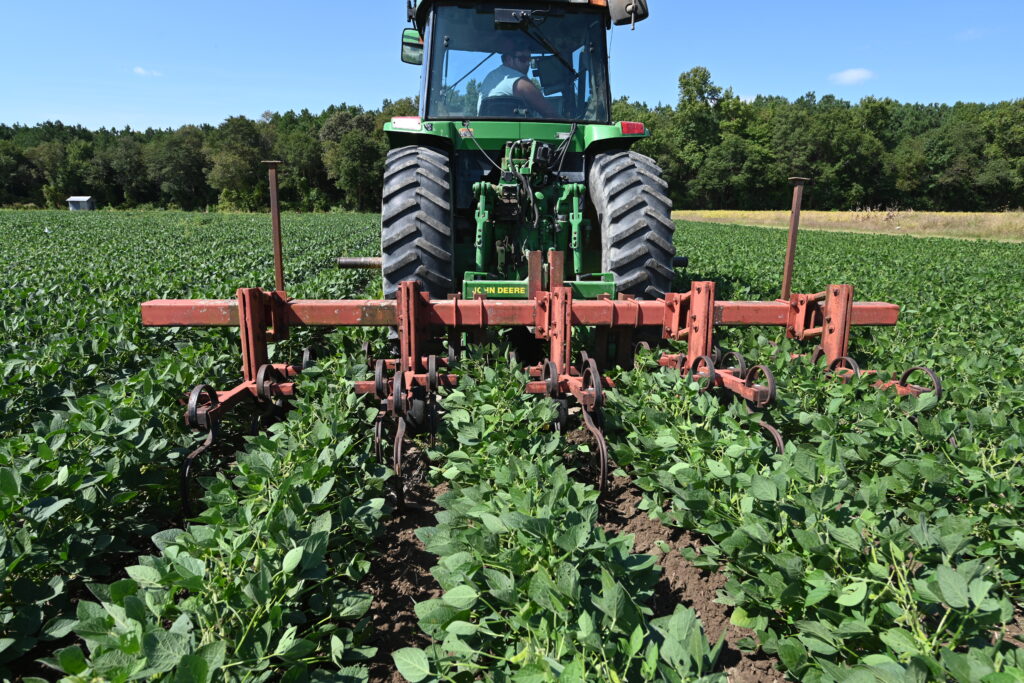
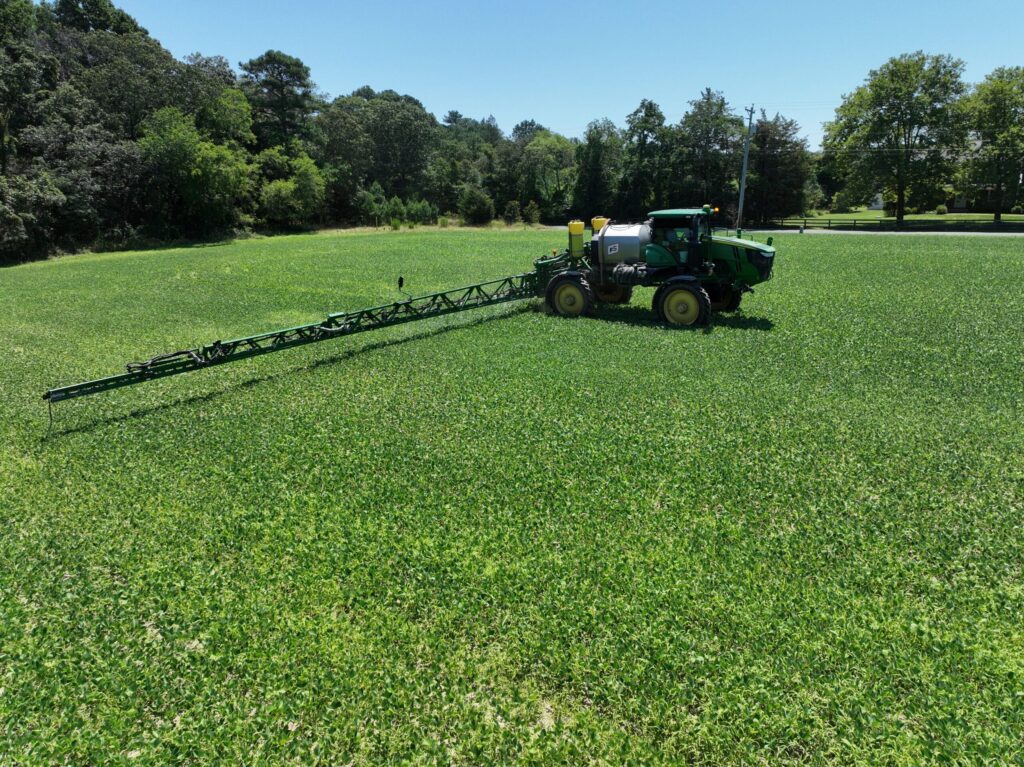
The first spot-spraying, “green-on-brown” sprayers were rolling into test plots 30 years ago, in the mid-1990s. So why isn’t every Midwestern cornfield crawling with self-driving sprayers today, spritzing minute amounts of finely calibrated herbicide mixes onto individual weeds?
Research and development of target spray technology has raced miles ahead of the realities in the field. In some cases, companies and start-ups are developing second- and third-generation target and robotic spray technology – before their first-generation technology has reached widescale farmer adoption.
This gap between cutting edge research and actual farmer adoption was the source of frustration and discussion at a symposium devoted to targeted and autonomous technology at the annual gathering of the Weed Science Society of America (WSSA) on February 10, 2026.
“My opinion on this is that we largely don’t need a lot more research on some of these things – I think there are some spectacular technologies; we just need to get them out to the field,” said Chris Padwick, a technical fellow at Blue River Technology.
As for the source of the bottleneck, fingers pointed in many directions, but most landed on two of the usual suspects: Regulation (EPA’s pesticide labels still haven’t even accounted for application by drone – another decades-old technology) and economic hurdles (few farmers can afford these new sprayers upfront, as their large price tags reflect years of expensive R&D that companies are eager to recoup, amid tight farming profit margins).
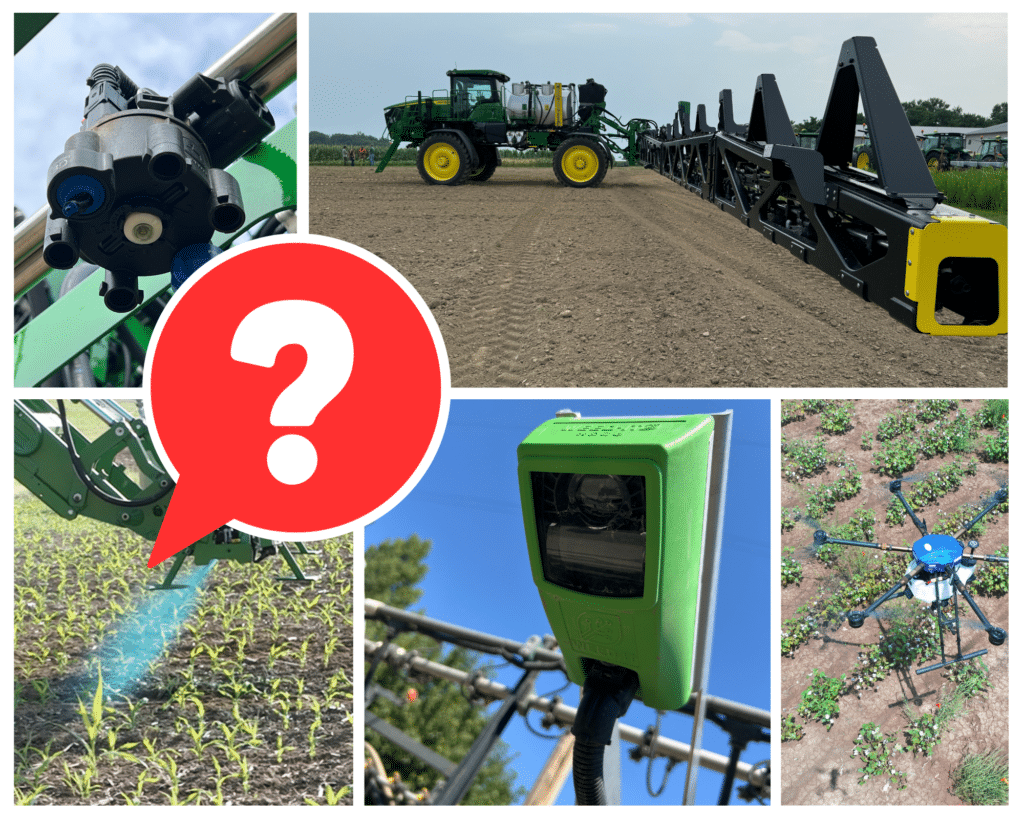
Making Precision Sprayers Pay
Economics – and the recent downward turn in the farm economy – is definitely at play, some of the WSSA speakers noted.
John Deere and Blue River’s development of See & Spray technology is moving forward briskly. Padwick promised symposium attendees that night-spraying capabilities were right around the corner, as well as several new crop systems, and fully autonomous farming systems in corn and soybeans by 2030.
Yet, the reality on the ground is far less sci-fi-esque. A 2024 report from the Government Accountability Office found that only 27% of farmers are using any kind of precision ag technology – much less the cutting edge new sprayers. High upfront costs remain the biggest hurdle, the report noted.

Deere says its target sprayers covered 5 million acres in 2025, and new players – like GreenEye and Precision Planting – are joining the landscape with target spray options that are added to existing sprayers, which may push those numbers up slowly. Since their target spray technology first hit the field in 2021, Deere has had to adjust to market realities, adding more affordable retrofit model options and tweaking a subscription and per-acre fee model, searching for the right combination that will drive profits while also giving farmers the technology’s promised chemical savings.
Ultimately, farmers adopting and accepting the new technology is the linchpin for all these companies’ successes, Padwick admitted when asked about how companies can get precision spray tech moving faster. He urged the industry to treat these emerging target sprayers like the developing technology they are – warts and all – and “lower the barriers to get into the field.” “Getting growers engaged is key and [we have to] keep supporting them,” he told attendees.
At least one federal agency is working to break through this economic bottleneck and help scale up much-needed precision ag technology. USDA-led initiatives like the Ag Image Repository and PlantMap3D aim to offer open-source data and software that could train AI to identify weeds, cover crops or cash crops to any scientist or start-up that wants it. The agency’s new Digital Ag Systems Hub (DASH) initiative is now trying to expand those tools to all agronomic disciplines, beyond weed science.
Other sources of the lack of adoption surfaced among symposium presenters as well – from legal and bureaucratic hold-ups with technology developed by public research (such as the WeedChipper), to the understandable human reluctance to make big changes and be the first to disrupt a farming operation with new technology.
Better listening skills within the ag equipment industry might help, said Chad Yagow, director of agronomy, industry relations and regulatory affairs for the precision application company, Verdant Robotics. “We need clear use cases – we need to understand where the rubber meets the road, so if you give us clear uses of what the problem is and the job you’re trying to execute, then we can be innovative on the solutions we can develop,” he told attendees.
Regulatory Rules Lag Behind
Target herbicide application technology could prompt major regulatory changes, the symposium’s speakers said. Future active ingredients could be developed and registered specifically for target sprayers, and ultra-precise application capabilities open the door to the use of older AIs more safely. The ability to reduce broadcast applications and limit off-target movement could also help farmers meet new label requirements for protecting endangered species and critical habitats.
But for all of this to come to commercial fruition, the EPA must have the protocols and standards in place to analyze, approve and add these new spray techniques to pesticide labels, EPA Senior Science Advisor Kelly Tindall said. And that’s an uphill battle. The agency has suffered major staffing losses under the Trump administration and is currently undertaking a herculean effort to finally make pesticide labels fully compliant with the Endangered Species Act and more lawsuit-proof.
Industry is motivated to help, said Adam Barlow, manager of technology standards and regulatory affairs at John Deere. He is helping lead a committee (X665) to develop uniform, consistent testing standards and evaluation protocols for targeted spray applications in row crops, piloted by the American Society of Ag Biological Engineers (ASABE). The group has also drafted proposed regulatory language for these target spray systems and are workshopping an amendment process that would let labels adapt faster as the technology advances.
But the current pace of regulatory changes and farmer adoption has been slow enough that even agrichemical companies seem uncertain how to proceed in the light of what should be transformational technology for the pesticide world.
“We are still a for-profit industry, so what does this actually mean for us?” asked Joseph Wuerffel, global precision application technical lead for Syngenta. “This is a technology that’s aimed at reducing [chemical] volumes.”
Future adoption seems almost certain, especially in “hot spots” such as Midwest corn and soybean fields, where large acreage can provide faster ROI, wide rows allow ease of access for the sprayers, and herbicide resistance looms, Wuerffel told attendees.
But without rapidly scaled-up adoption and an unclear regulatory path, very few crop protection companies are making substantial moves in response to target spray technology so far, he admits.
“There’s just a lot of uncertainty with respect to adoption and with respect to what the crop protection industry should do,” he said. “Even within Syngenta, we don’t have a monolithic opinion on what’s going to happen and how we’re going to address it.”
See more news from GROW on the development and testing of precision ag technology on our News Page.
Learn more about WSSA and its other symposiums here.
Article by Emily Unglesbee, GROW; header photo by Amy Sullivan, GROW