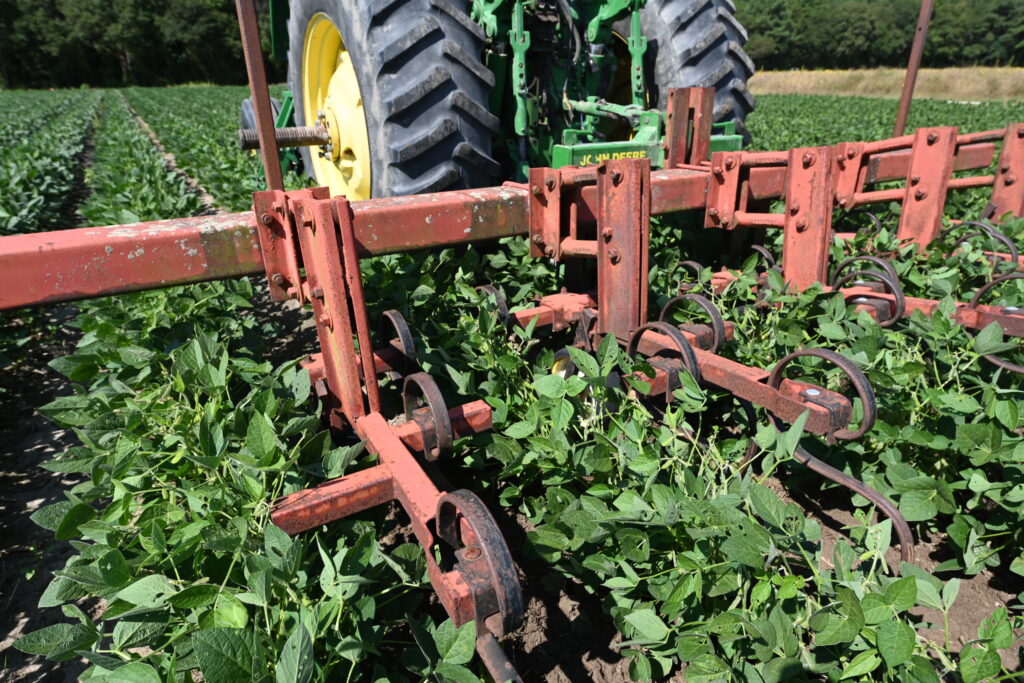
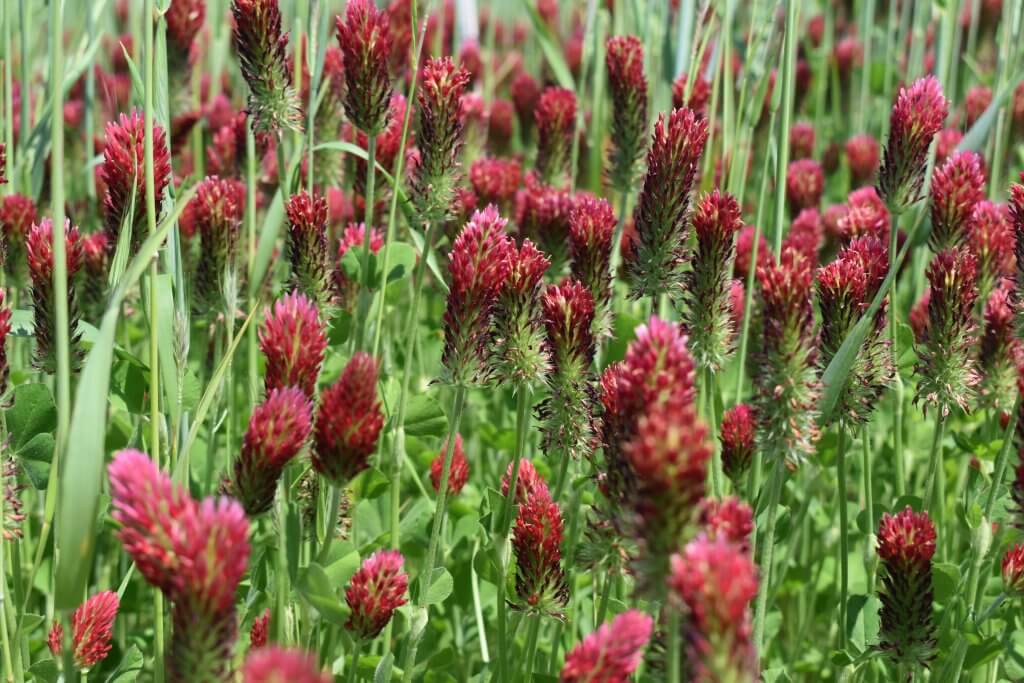
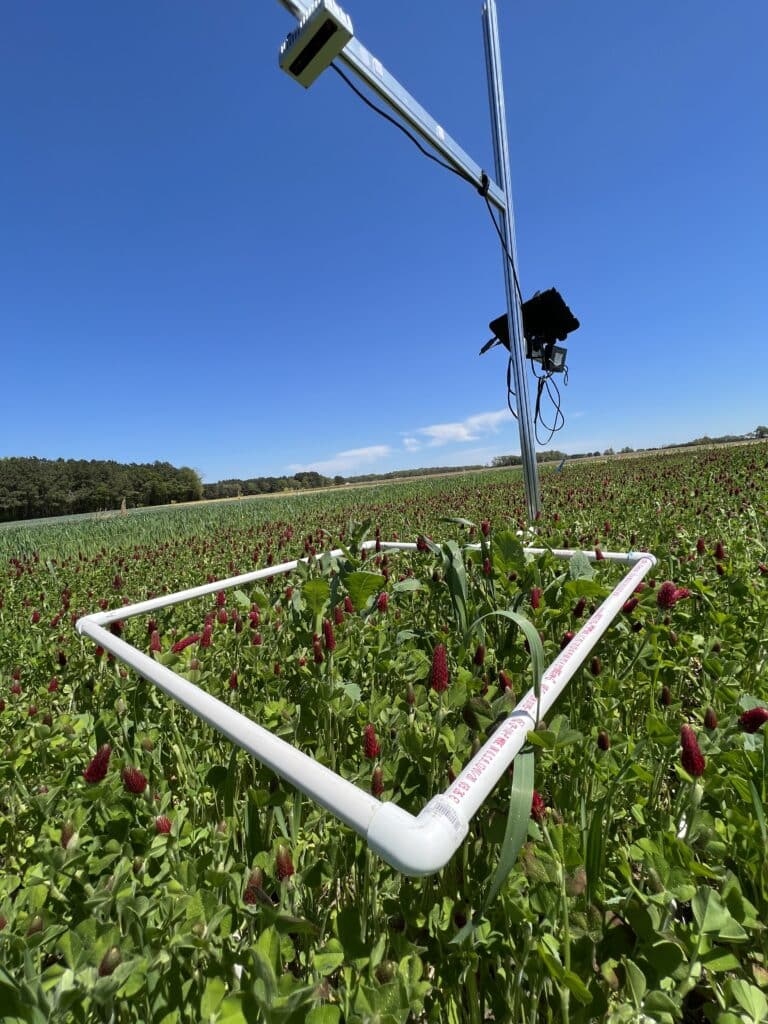
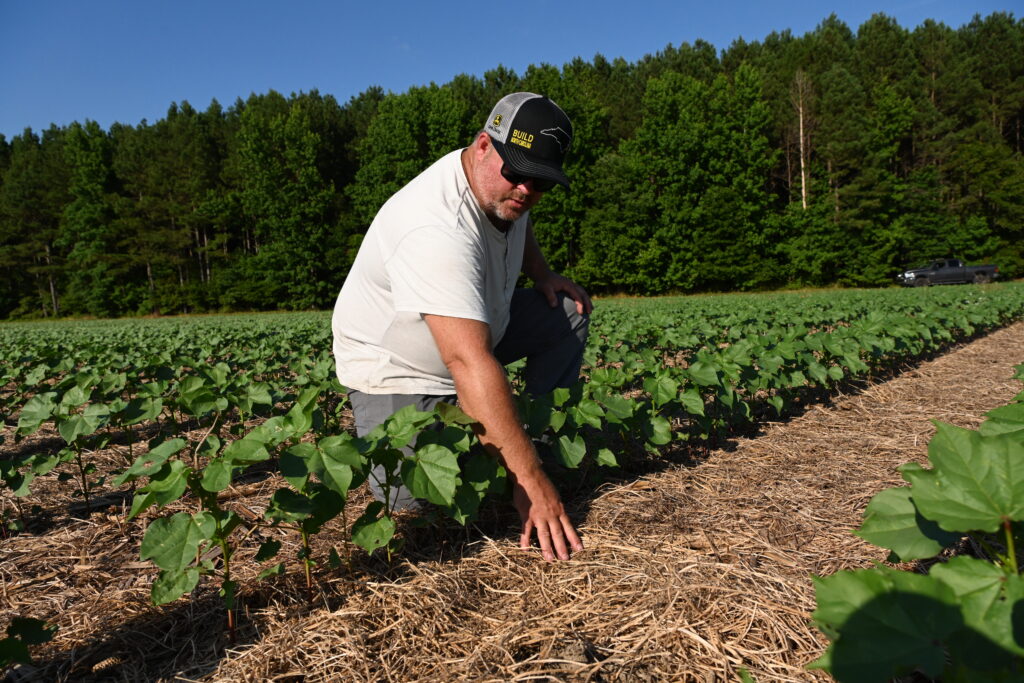
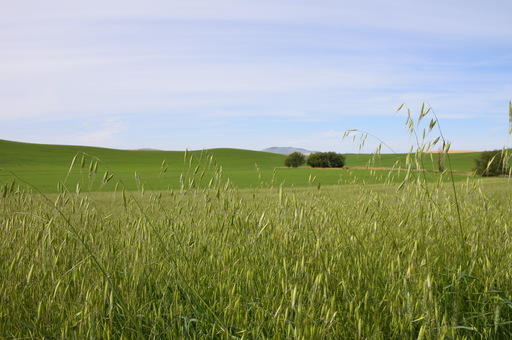
Cover crops and soil residual herbicides can make a powerful weed control duo, but only if those herbicides actually reach the soil. Penn State, Virginia Tech, and University of Delaware researchers recently examined how much cover crops (and cover crop management) can prevent herbicides from reaching the soil, as well as which herbicide chemistries are more likely to wash-off cover crops through rainfall.
“It’s important for [soil residual] herbicides to get incorporated into the upper soil so that they’re available in the soil water for weeds to take up,” explains Penn State Extension weed specialist Dr. John Wallace, a lead researcher in this study.
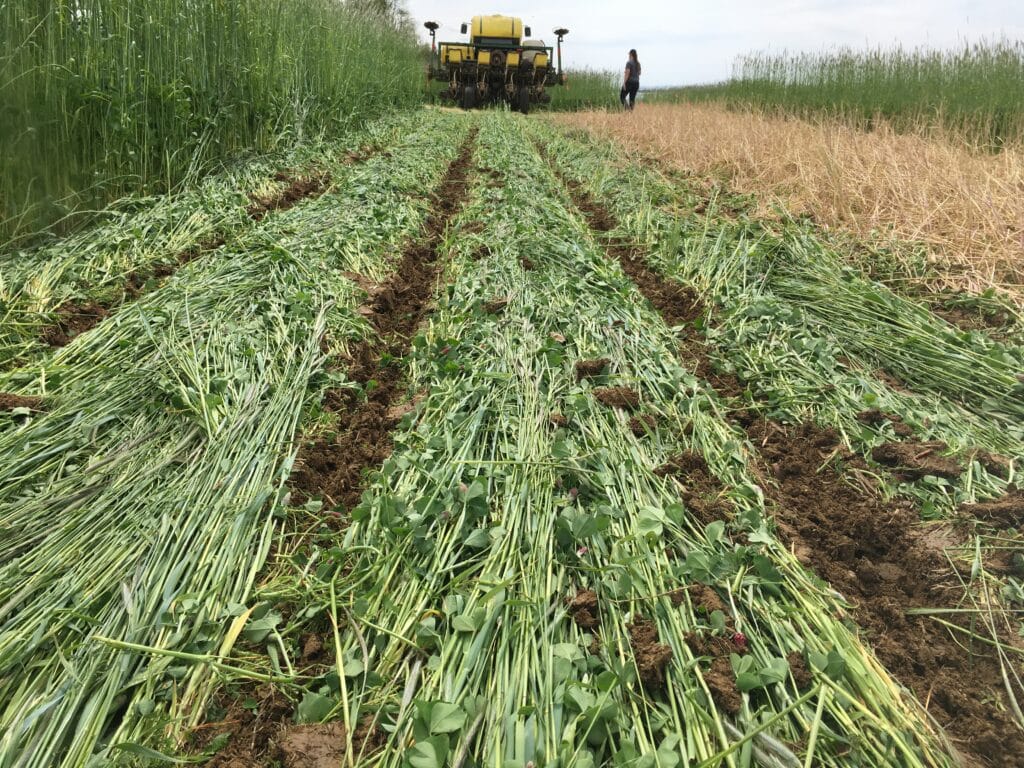
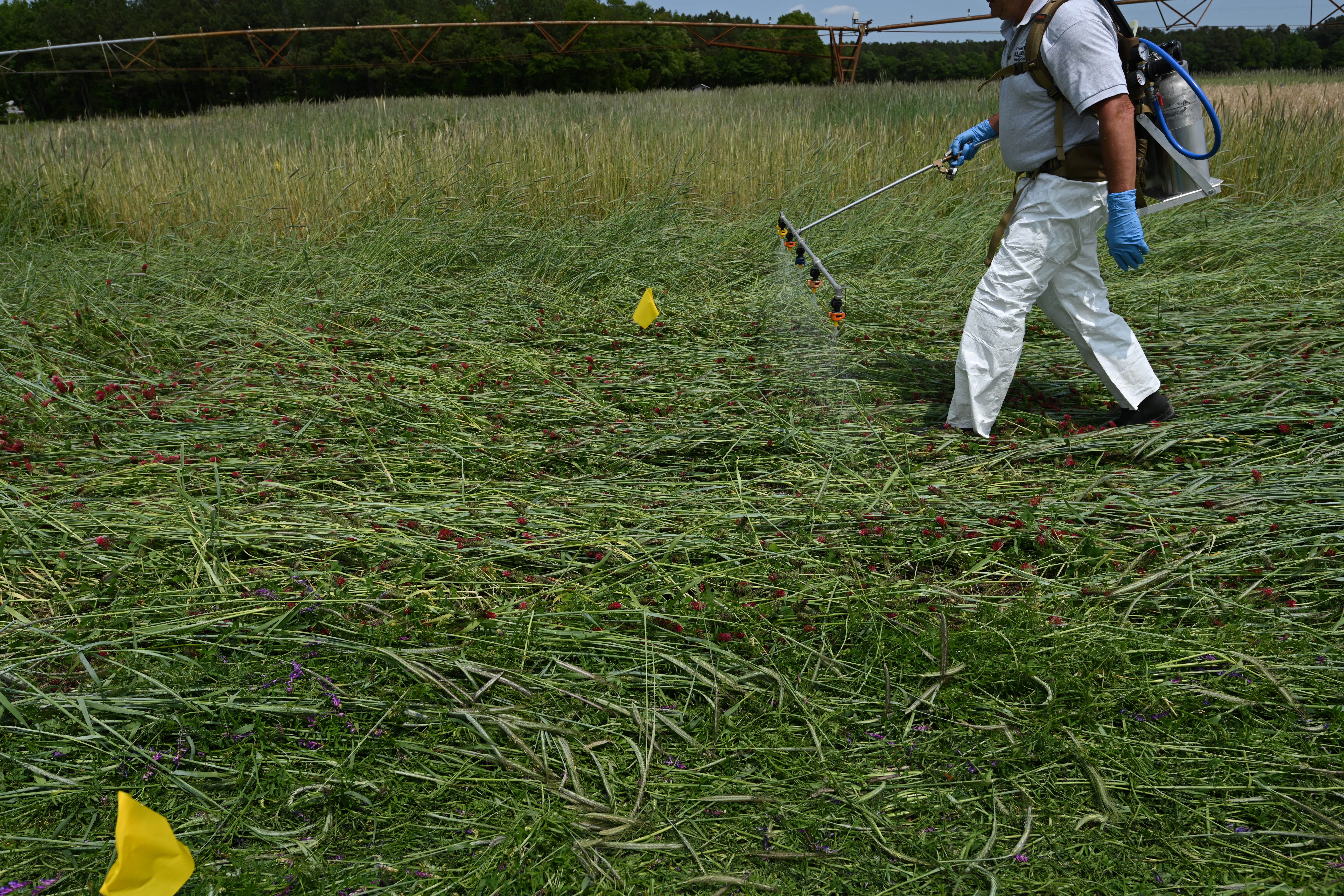
While high biomass cover crops can prevent up to 85% of herbicides from reaching the soil (depending if they are roll-crimped or left standing), rain will wash a portion of the herbicide on cover crops to the ground, Wallace and his graduate student Cody Smith found. And herbicide chemistry determines how easily rain washes herbicides off of cover crops. Pyroxasulfone (Zidua) and atrazine (Aatrex) showed higher rates of herbicide wash-off than other common herbicides such as S-metolachlor (Dual) and pendimethalin (Prowl H2O). The findings suggest that farmers who plant green or grow a lot of cover crop biomass should consider using a residual herbicide with a good wash-off potential and postponing their soil residual herbicide applications until later into the season.
Do Cover Crops Keep Herbicides From Reaching the Soil?
Managing cover crops for high biomass, roll-crimping prior to a herbicide application, and use of grass-legume mixtures all reduce the amount of herbicide reaching the soil, Wallace found.
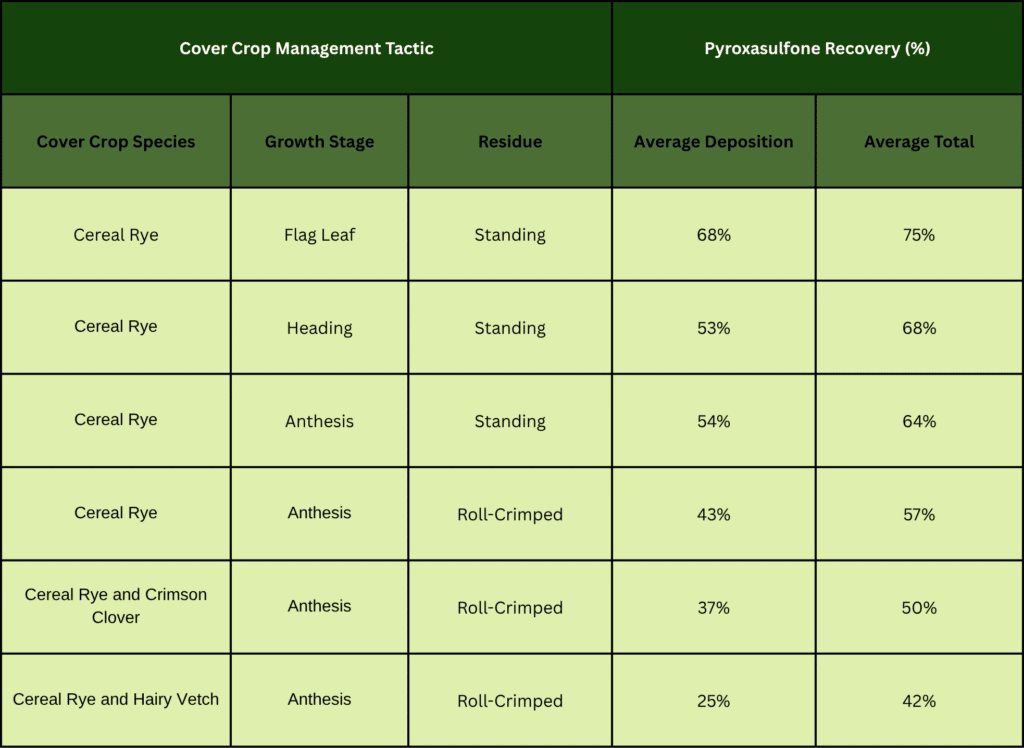
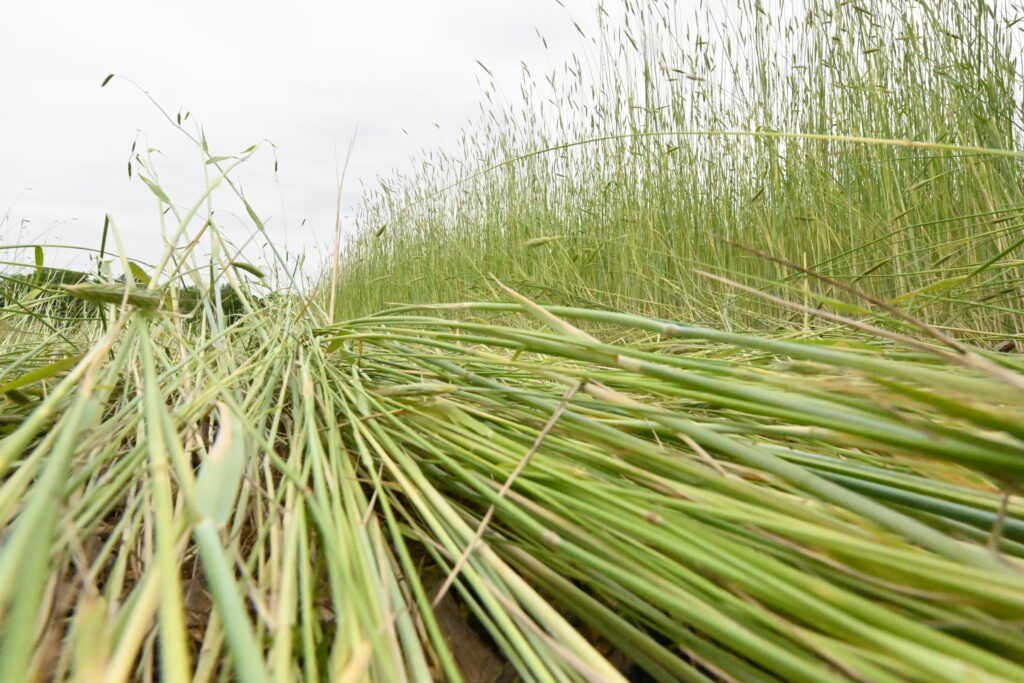
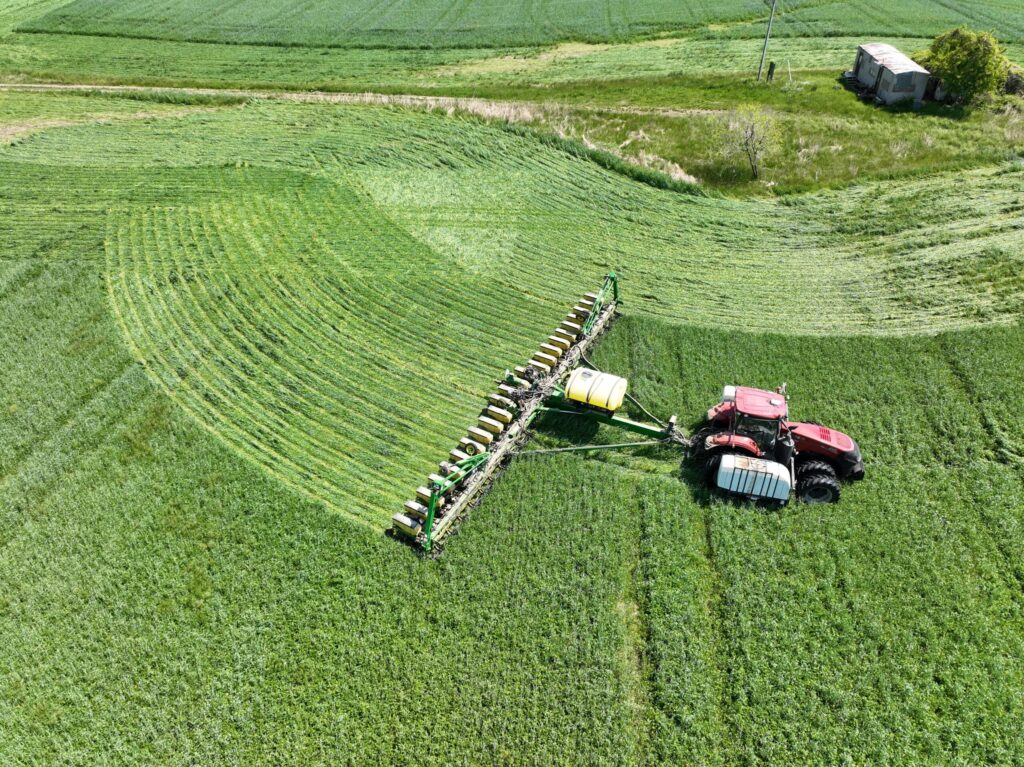
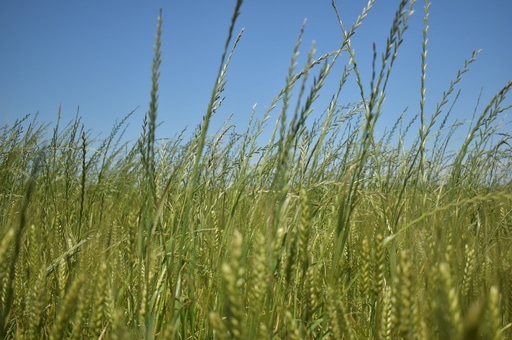
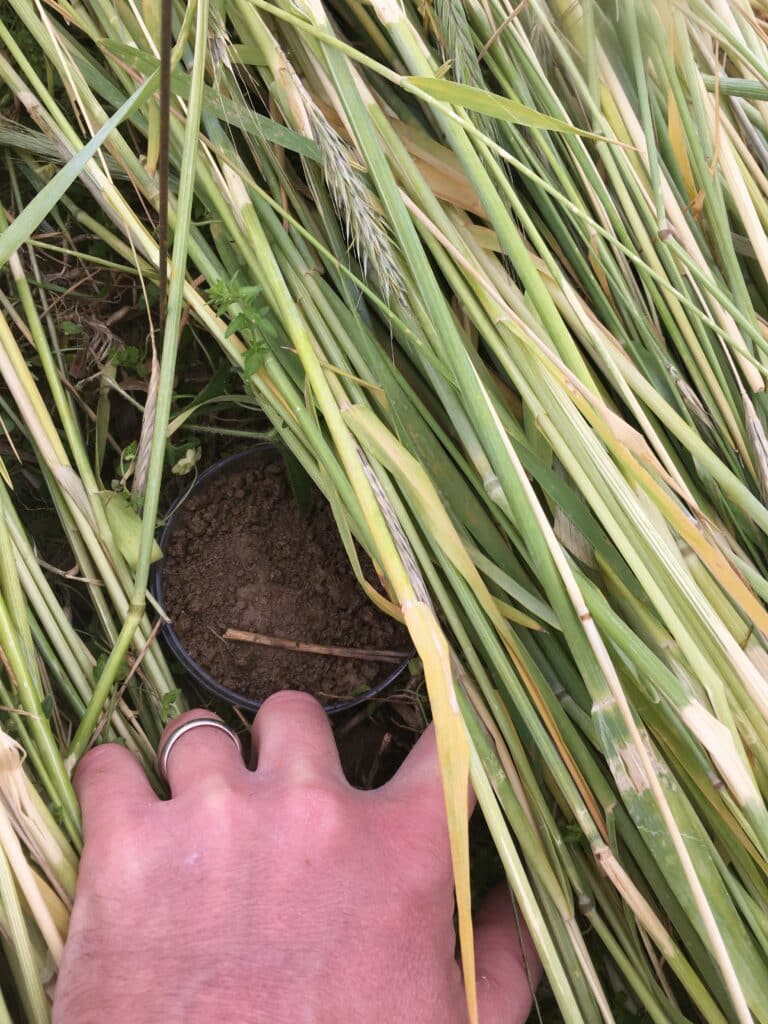
In general, cover crops left standing intercepted less herbicide compared to roll-crimped covers, Wallace found. Standing cereal rye that was close to the flowering (anthesis) stage (around 5,000 pounds per acre) halved the herbicide reaching the ground in this study, while the same cereal rye stand that was roll-crimped prior to the herbicide application reduced herbicide deposition by 70%, and roll-crimped cereal rye and hairy vetch mixtures with similar biomass reduced deposition by up to 85%.
Predictably, thinner stands that are common when terminating cover crops at earlier growth stages (flag leaf to heading) provided less interference – a cereal rye cover crop with biomass around 2,000 pounds per acre only reduced herbicide soil deposition by 35%, Wallace found.
Herbicide Selection and Application Timing Affect Wash-Off
One-half to three-quarters of an inch of rain is the sweet spot for residual herbicides soaking into the soil, Wallace notes. Too little rain means emerging weeds won’t be able to take in the herbicides, but too much rain can leach the herbicides away from where weeds germinate.
And even though rainfall is uncontrollable, farmers could adjust their application timing and herbicide selection to maximize herbicide wash off when growing high biomass cover crops.
In a planting green scenario, applying residual herbicides at the time of cover crop termination reduces the amount of herbicide that gets to the soil compared to waiting until the cover crop has died before applying residuals, Wallace found.
For example, rain washed 10 to 20% more pyroxasulfone to the soil when the herbicide was applied early-postemergence over brown, roll-crimped cereal rye, compared to a planting green scenario with same amount of biomass, where the herbicide was applied into living cereal rye that had been roll-crimped.
Herbicide wash-off isn’t just dependent on rainfall and application timing. Each herbicide’s chemical properties play a role in how easily rain can wash them into the soil, as well.
Lipophilicity – how easily a herbicide dissolves in lipids (fats or oils), and passes through the surface of a cover crop or binds to decomposing cover crop residues – greatly influences how well rain can wash herbicides from cover crops, Wallace found.
The researchers found that herbicides with intermediate lipophilicity had the greatest potential to wash off both living and partially decomposing cover crops, likely because these herbicides can move in and out of plant leaf structures without becoming trapped, so rain can wash these herbicides off (and out of) cover crops.
In their studies, pyroxasulfone had higher herbicide wash-off rates compared to a similar herbicide, S-metolachlor, thanks to its intermediate lipophilicity. Similarly, atrazine washed off more readily from cover crops than mesotrione.
But as dead cover crops became more decomposed, almost all tested herbicides experienced less wash-off. S-metolachlor was the only herbicide that had the same (or even better) wash-off in decomposing cover crops. Cover crop decomposition rates differ depending on the cover crop species, termination method, and regional weather.
While researchers need to evaluate more herbicides to provide solid recommendations, Wallace and his colleagues think that known properties of herbicides, such as their lipophilicity, can help identify which products will work best in cover crop systems.
The Takeaways
Wallace’s findings create an overarching weed management question for farmers that manage high biomass cover crops: To spray or not to spray soil residual herbicides?
The findings suggest that farmers who plant green or grow a lot of cover crop biomass should consider using a residual herbicide with a good wash-off potential and postponing their soil residual herbicide applications until later into the season.
“Integrating the cover crop with the residual herbicides is a good risk management practice because you have two forms of weed control early in the season,” Wallace says. This early-season weed management combo can maintain weed suppression should one practice fail – such as having very little cover crop biomass in some parts of the field or not enough rain to incorporate residual herbicides into the soil before weeds start to emerge.
Farmers that don’t usually have a booming cover crop biomass should worry less about their soil residual herbicide’s chemistry when spraying, since more herbicides are likely to reach the soil at the time of application. Farmers that regularly grow thick cover crops, however, could benefit from picking a soil residual herbicide that has greater potential to wash off cover crop residues when it rains. “The more cover crop biomass there is, the more important the [herbicide] wash-off,” Wallace explains.
Farmers that regularly achieve high cover crop biomass or plant green could also consider not spraying a soil residual herbicide at planting and instead rely on the cover crop for early season weed control. These farmers could then potentially use those residuals in the second pass to extend weed control later into the season after the cover crop starts to break down, Wallace suggests.
Explore GROW’s website for more information about cover crop management, termination, and herbicide best management practices.
Article by Amy Sullivan, GROW, and John Wallace, Penn State; Header and feature photo by John Wallace, Penn State.