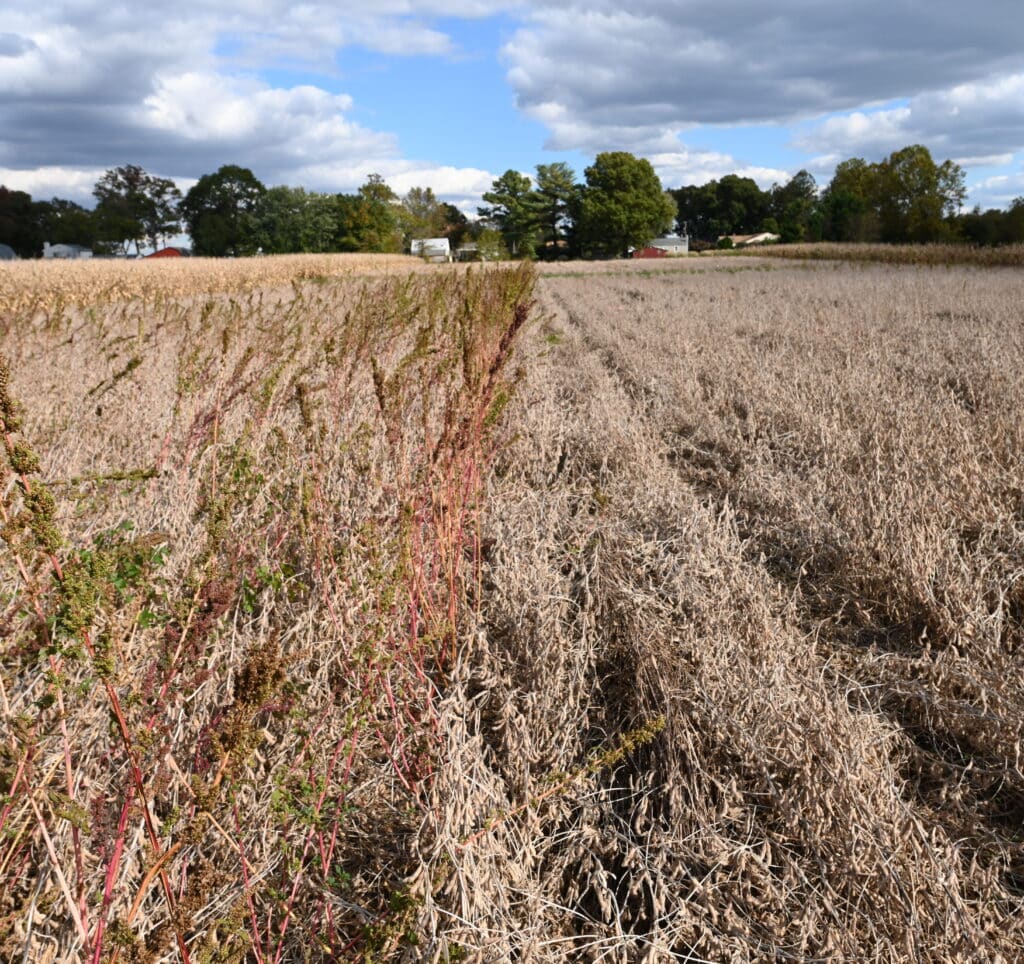
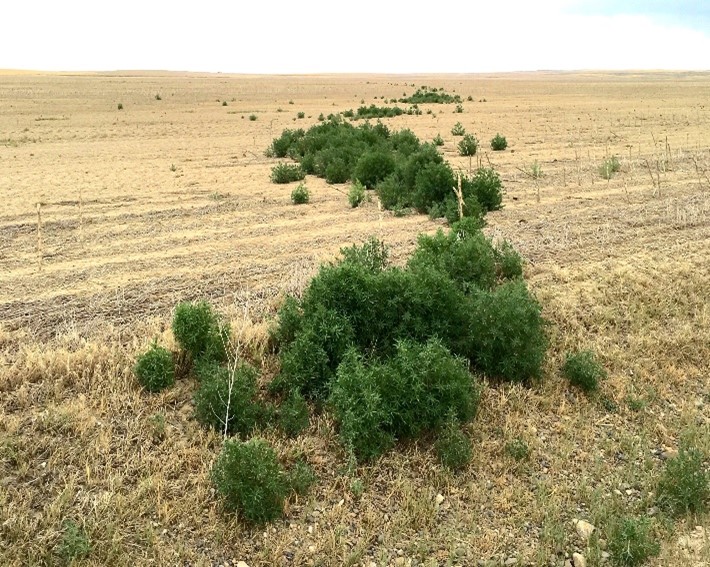
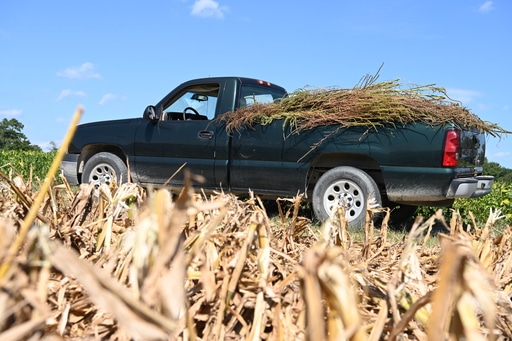
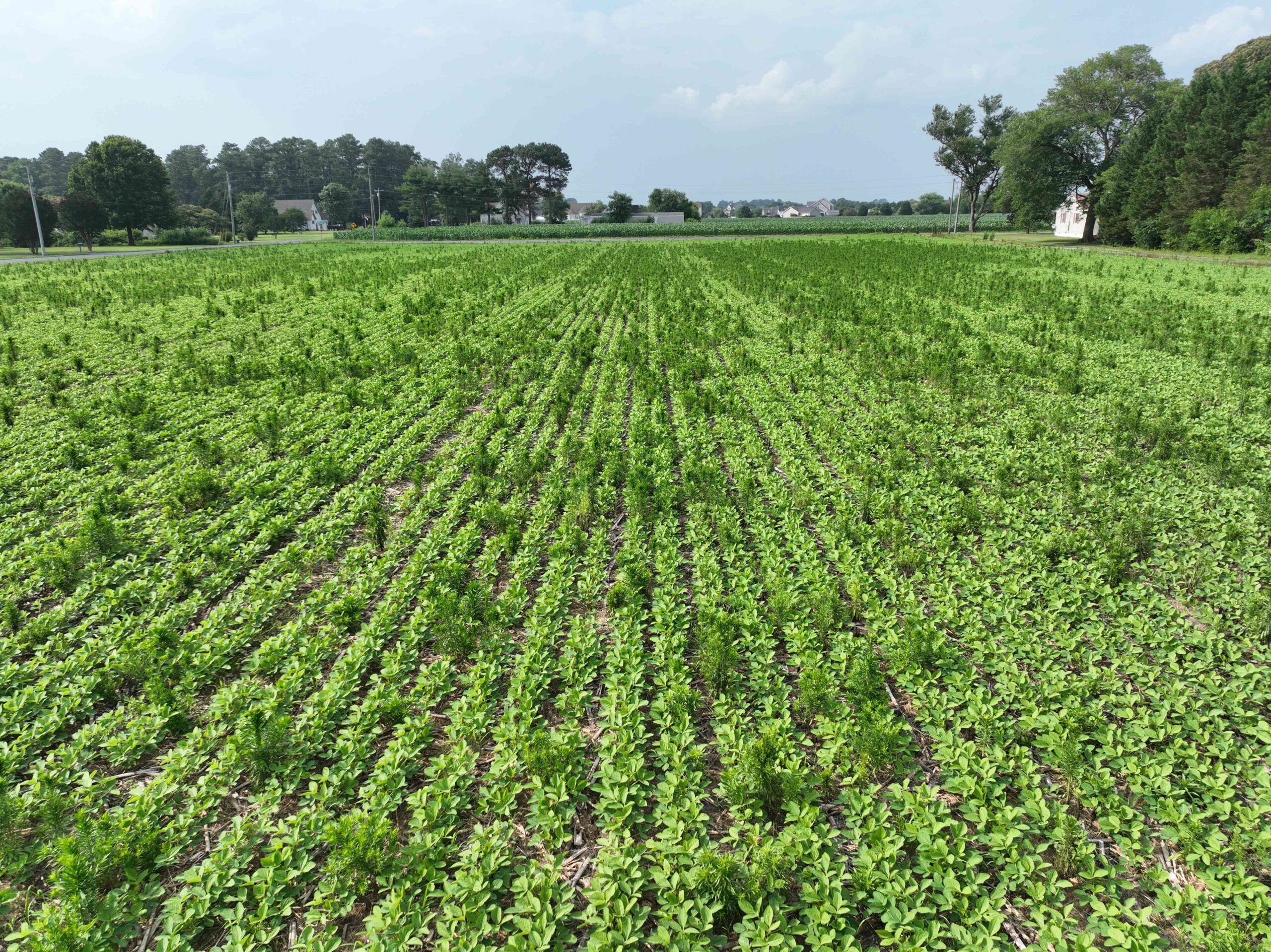
There’s some interesting activity afoot in the cropfields and pastures of Colorado, Utah, and Montana, as researchers explore a new biocontrol method for Canada thistle, by delicately sprinkling, hand-tossing, or even using a leafblower to spread a coarse powder over the weeds. That powder, Puccinia punctiformis, or Canada thistle rust fungus, is a promising weapon against this invasive weed, straight from Mother Nature’s own arsenal. Researchers are working to learn how well this naturally occurring fungus controls Canada thistle when applied alone or when paired with other weed management tactics.
Turning Canada thistle rust into a biocontrol agent was first envisioned over a century ago by a pioneer of American plant pathology, Dr. Byron Halsted. Two recent studies have now revealed that the fungus can nearly halve Canada thistle plant populations, and adding herbicide treatments can quicken and increase that control, according to researchers from the USDA, Colorado Department of Agriculture, and Utah State.
But for now, this fungus can’t be found on store shelves. Instead, interested users must locate the fungus growing on Canada thistle plants in the field and then harvest, dry, crush, and spread the fungal spores themselves.

The Origins of Canada Thistle Rust Fungus
In a resounding win for integrated weed management, stacking all control measures–herbicides, tillage, mowing, and the fungus–resulted in 95% suppression of Canada thistle plants after two years.
Canada thistle weeds likely arrived in the U.S. by hitching a ride on ships from Europe and Asia in the 1600s. It has since spread from coast to coast and is mainly found in the northern U.S. How the Puccinia rust fungus got to North America is more of a mystery, but researchers do know that this fungus has eyes for only one plant – Canada thistle.
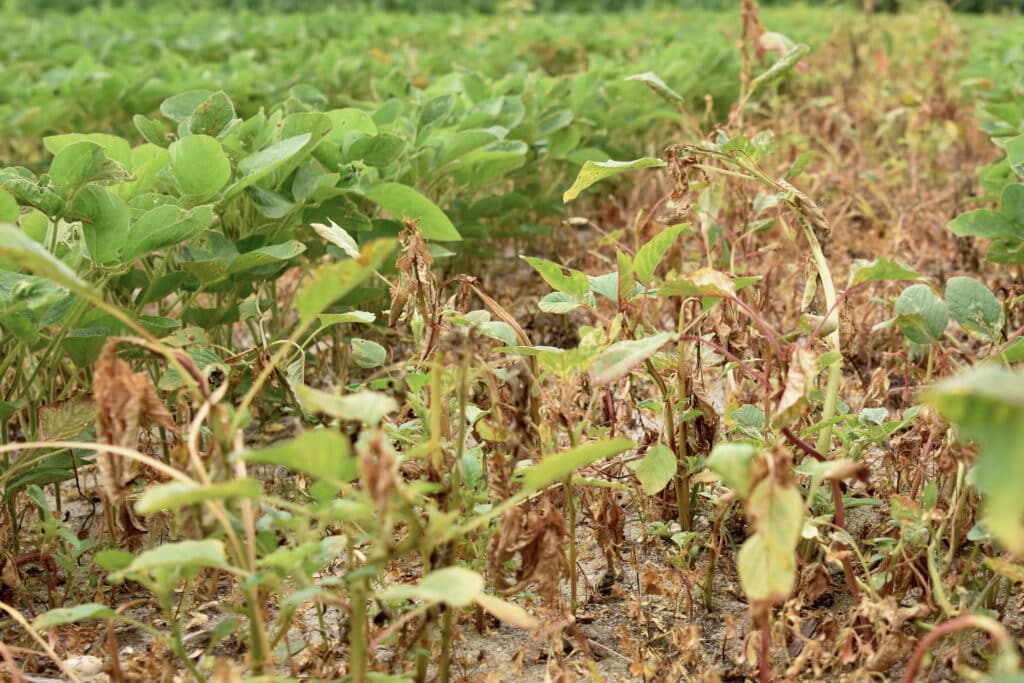
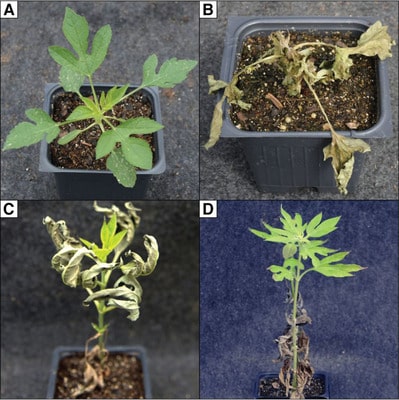
The fungus’ onslaught begins when fungal spores attach themselves to Canada thistle leaves. Slowly, they invade the weed and its root system, stealing water and nutrients from Canada thistle. Aboveground, that process results in plants with stunted growth, no flowers, or wilting leaves. That deadly appetite for only Canada thistle plants makes the fungus a prime biocontrol agent for controlling this problematic weed. Several states and state universities, such as the Colorado Department of Agriculture and Montana State University, have information readily available for farmers and landowners to learn about using the rust fungus properly.
Pairing Canada Thistle Rust Fungus with Other Control Methods

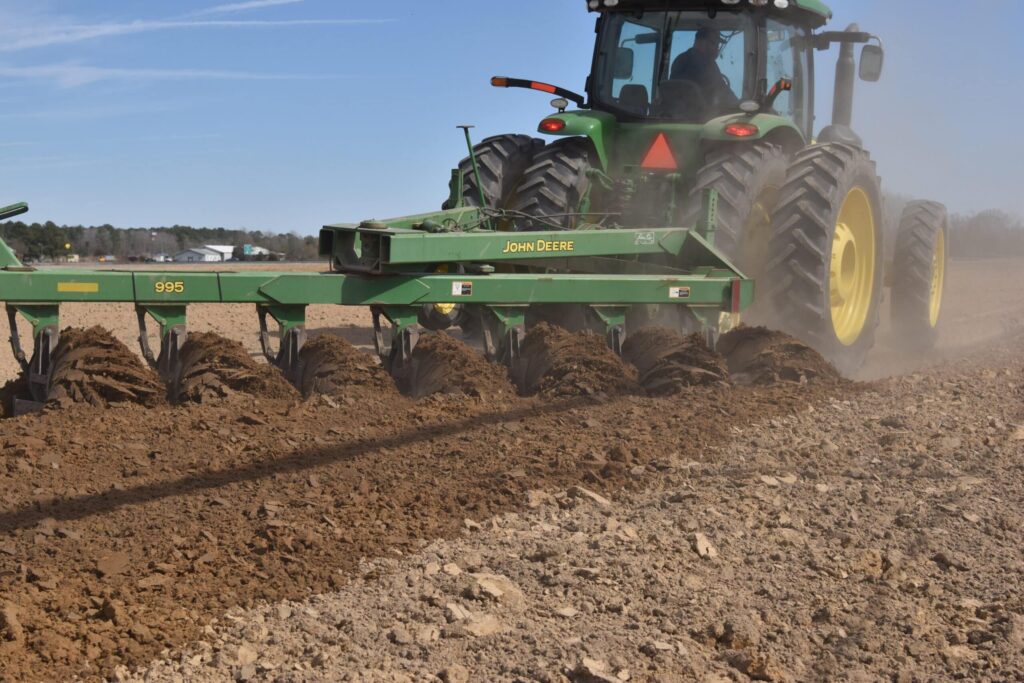
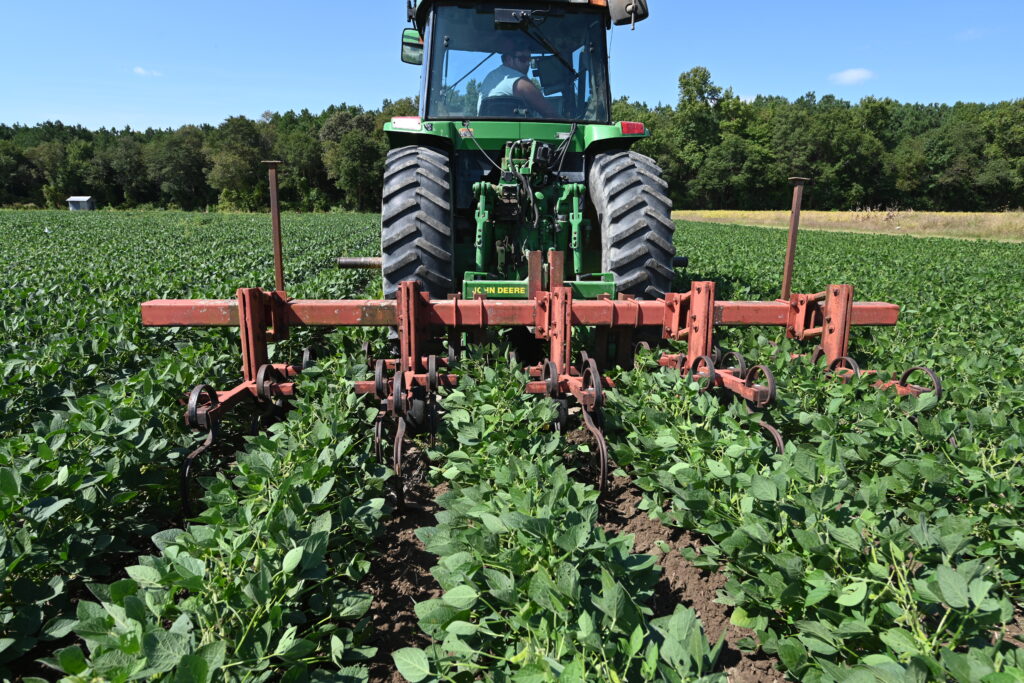
Herbicides, mowing, and tillage are the traditional go-to methods for controlling Canada thistle. But these weed control methods only damage above-ground plant tissue. They rarely damage Canada thistle’s extensive root system. “[Canada thistle] gets into a place and then it really starts to spread, and a lot of that is happening underground,” explains Utah State’s Dr. Robert Schaeffer, an author on both studies.
Attacking that root system, though, is the rust fungus’ specialty. Schaeffer also notes that the rust’s complete reliance on Canada thistle means that this fungus has no non-target effects on the environment.
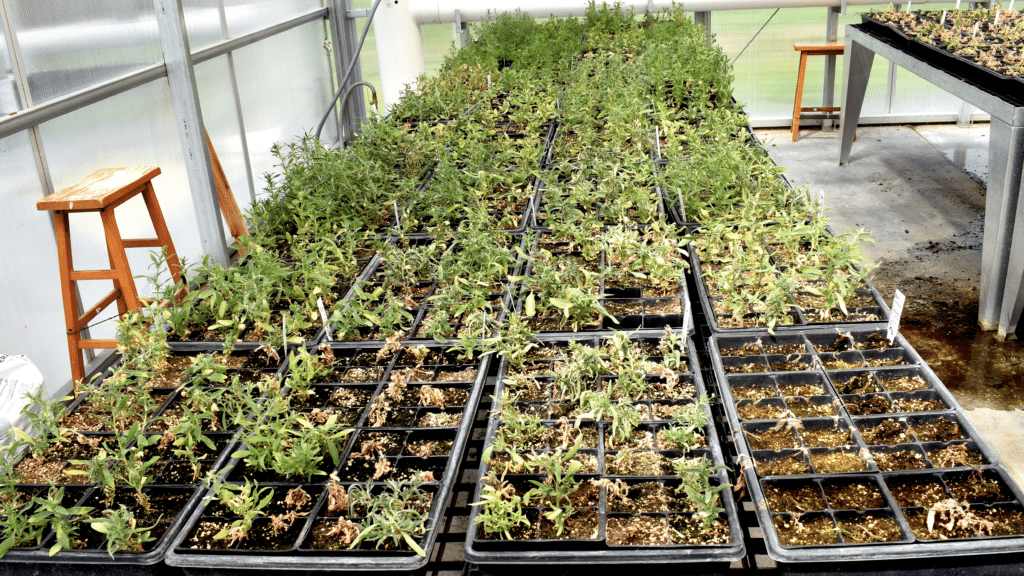
Schaeffer and his team designed their two-year study with this multi-pronged attack in mind. They applied the rust fungus to Canada thistle 14 days after either spraying herbicides, mowing, or tilling the study plots – or combining all three. Schaeffer and his team used backpack sprayers to moisten the weeds with water so the spores would stick, and then tossed the ground fungus and leaves onto Canada thistle plants by hand.
They found that using the fungus alone packed a punch. After two years it nearly halved Canada thistle plants when compared to the untreated control plots at the Utah study site. At the Colorado study site, the rust fungus reduced the plant population by 22% more than the untreated plots in that two-year period.
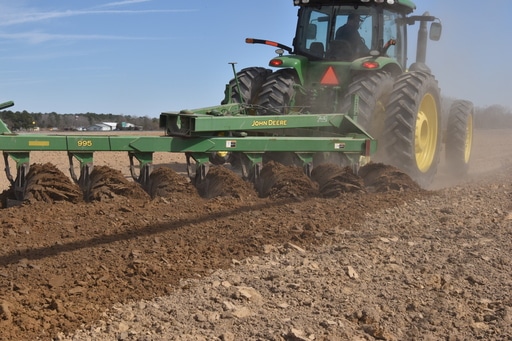
Combining the rust fungus with just tillage or mowing led to varying amounts of Canada thistle plants in the study plots. Schaeffer theorizes that tillage could actually help this hardy weed root itself in new locations.
Herbicide treatments with or without the rust fungus resulted in the greatest Canada thistle control (over 90%). Combining herbicides with the rust fungus resulted in complete suppression of Canada thistle plants at each study site after two years.
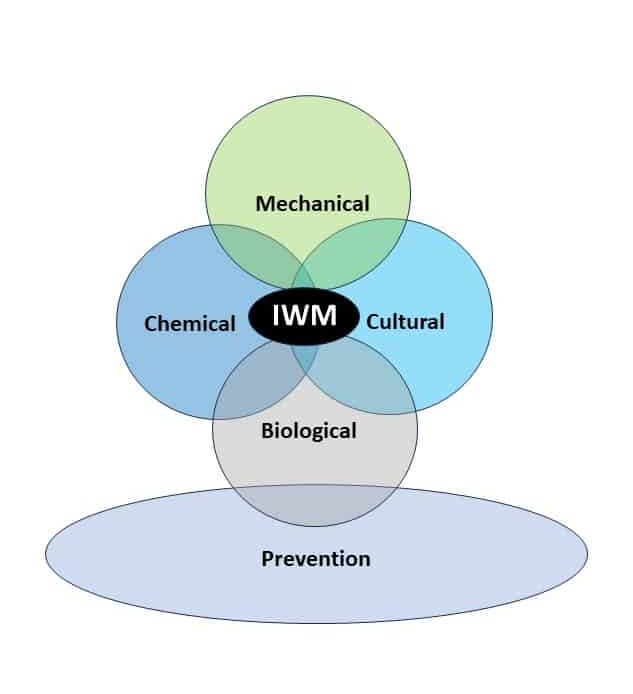
In a resounding win for integrated weed management, stacking all control measures–herbicides, tillage, mowing, and the fungus–resulted in 95% suppression of Canada thistle plants after two years.
Schaeffer theorizes that waiting more than two weeks after herbicides, mowing, or tillage to broadcast the fungus could help the fungus infect new shoots of Canada thistle.
A Long-Term Outlook
Two years of sole fungus use nearly halved Canada thistle populations, but what about eight years? From 2014 to 2021, the same research team partnered with volunteers and private landowners to examine what happens to Canada thistle populations when only treated with Canada thistle rust fungus. Similar to that two-year study, researchers found that, on average, the rust halved Canada thistle populations at 77% of the study sites. The results indicate that long-term Canada thistle management is possible with just the rust.
There’s more good news: Half of the 87 research sites only got one application of the thistle rust over the eight-year study. Re-applications only occurred when the site either showed no signs of successful infection from the previous year, or when variables such as livestock or wildfires damaged the sites. That suggests that one successful Canada thistle infection can last and spread for years to come.
Making this Fungus Fight for You
The rust fungus might be readily available to gather in a field near you, but there are some things to keep in mind when using this biological control agent.
Gathering this fungus requires good eyesight, and an understanding of its complex life cycle.

The fungus’ most infectious stage comes via small, rust-colored spores on the underside of leaves–teliospores. These can be hard to spot, according to Bill Curran, a hay farmer and retired Penn State weed scientist who recently applied rust to Canada thistle for the first time. Curran is working with Dr. Tim Seipel, an Extension Cropland Weed Scientist at Montana State who has researched the rust fungus for several years.
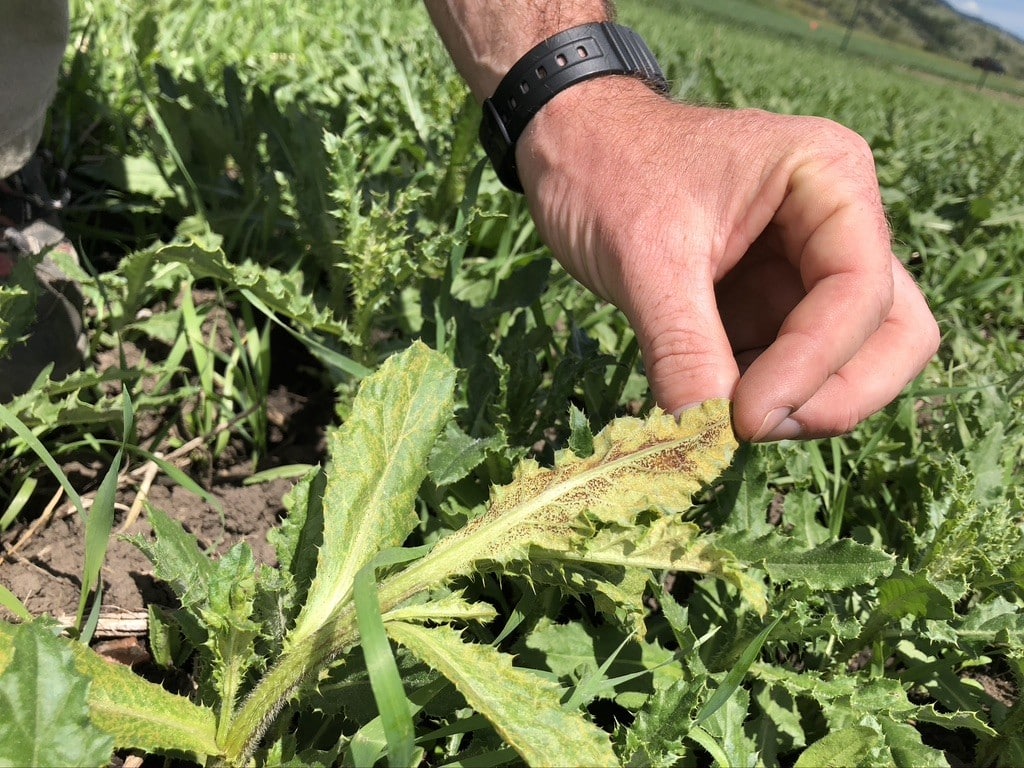
The best way to identify Canada thistle rust fungus is to visit patches of Canada thistle in the spring. Keep your eyes peeled for leaves with bright orange undersides. When you spot the orange patches (uredinia spores), you’ve caught the fungus at an eye-catching and early point in its life cycle. Return to those same plants around September to find and gather the leaves with those rust-colored infectious teliospores.
After gathering the leaves, you have to dry and blend them to create a fine powder of infectious fungus that’s ready to wage war against Canada thistle. Apply the fungus by hand (directly sprinkling onto Canada thistle or hand-tossing) to wet weeds in the late summer or early fall. The rust will have the best chance of germinating when applied early in the morning or late in the evening with temperatures between 55 and 64 degrees Fahrenheit.
“It’s a bit of a process for sure,” Schaeffer concedes. “I think that’s going to be one of the limitations to adoption…you can’t culture this on a petri dish.”
Once you’ve applied the fungus, the wait is on. It can take over a year for symptoms of the fungus to appear. And infection sometimes occurs just in the Canada thistle roots, resulting in no visible infection on plant leaves. Schaeffer noticed this in his two-year study, where many affected Canada thistle plants had little-to-no signs of uredinia or teliospores.
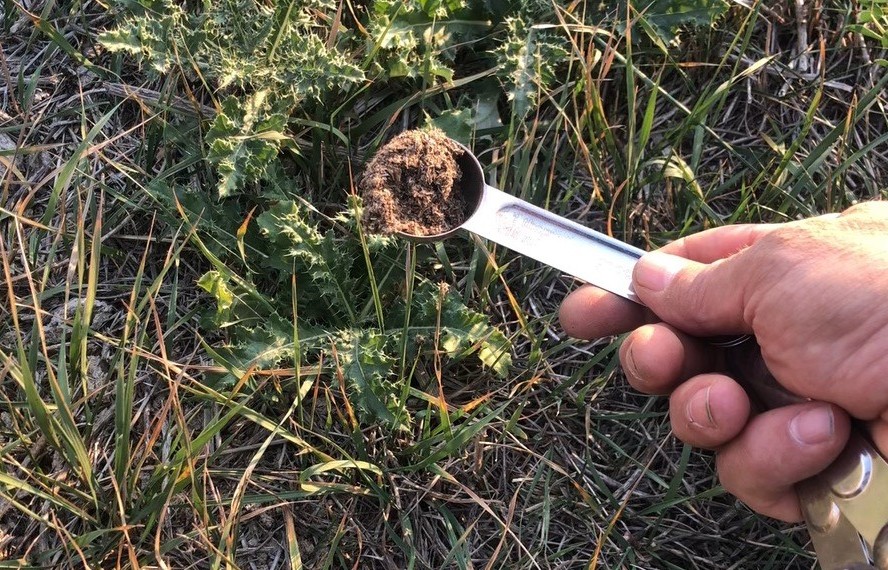
Keep a close eye on the target plants and reapply the fungus each year if necessary. This biocontrol agent should spread each year until no Canada thistle remains. The fungus dies out once it no longer has a host.
Next year, Curran plans to work with a Montana State Extension weed specialist to gain a better understanding of the Canada thistle rust fungus collection and preparation process. “It’s going to be a multi-year project, so I’m going to be learning a lot more as I go along,” Curran says.
Curran isn’t the only farmer interested in applying rust to Canada thistle. The study authors say that farmers and ranchers in Colorado and surrounding states are also deploying this rust fungus to help control their own Canada thistle populations.
Explore GROW’s website for more information on Canada thistle, biocontrol, integrated weed management, and prevention.
Article by Amy Sullivan, GROW; Feature photo by Tim Seipel and Dan Chichinsky, Montana State University; Header photo by Tim Seipel, Montana State University.