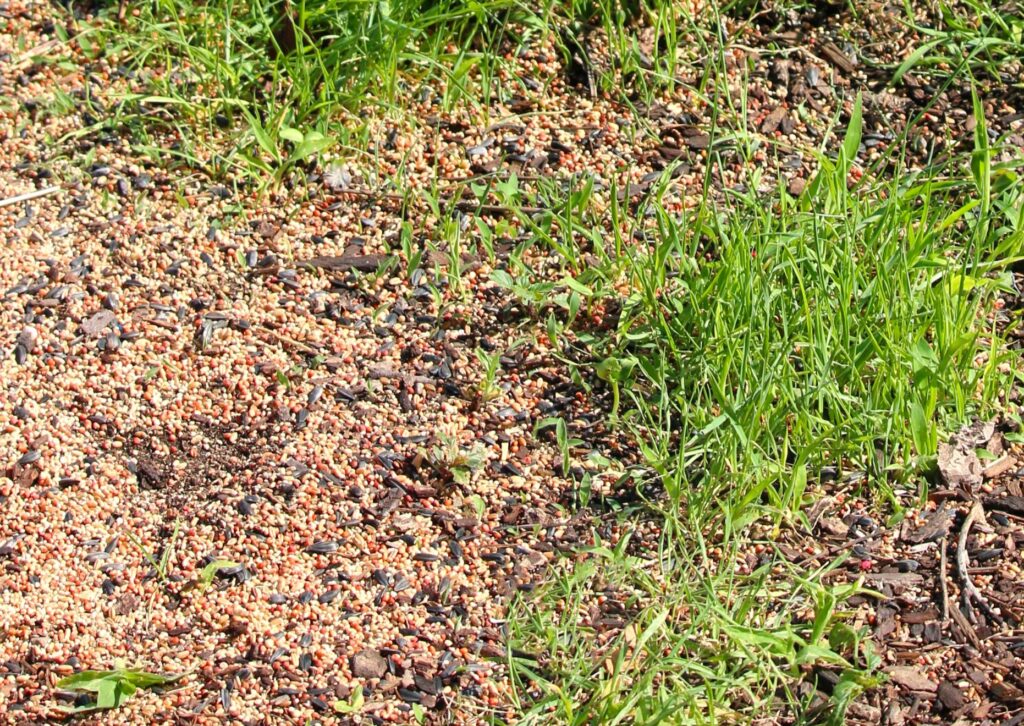
Thurman Johnson went to a Spokane, Washington Safeway on August 22, 2025 to gear up for a day of removing invasive garden loosestrife, but he ultimately stumbled upon a much more menacing weed lurking in that grocery store’s parking lot. One lone Palmer amaranth stalk towered three-feet tall in the parking lot’s landscaping island. At its roots were Palmer amaranth seedlings. A mess of bright red and yellow seeds gave the weed’s origin away: birdseed scattered by a well-meaning Safeway shopper.
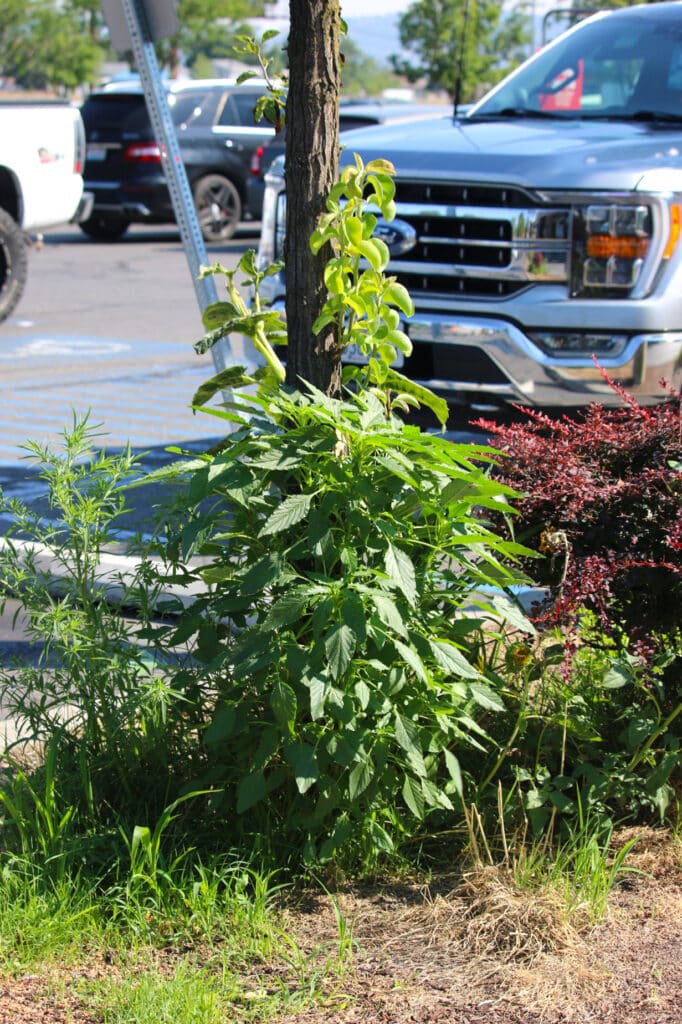
Johnson, a noxious weed specialist and field inspector for the Spokane County Noxious Weed Control Board, also discovered Washington’s first known Palmer amaranth population in a farmer’s field in 2023. That population was a result of sorghum seed contaminated with Palmer amaranth. “My worst nightmare was that [Palmer amaranth] would pop up in the city of Spokane,” Johnson confides after his first discovery. “The potential for transmission is exponential there.”
“We’re moving herbicide resistance across the United States in bags of bird feed.”
Dr. Tim Seipel, Montana State university
And Johnson’s nightmare isn’t over yet. In February 2026, he tested and got confirmation that several other Washington birdfeed brands contain Palmer amaranth, as well as its troublesome cousin, waterhemp – another first for the state.
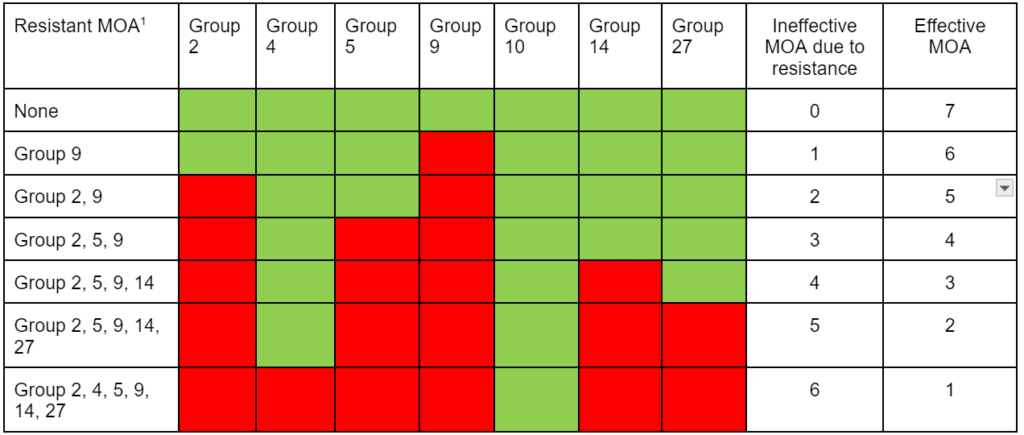
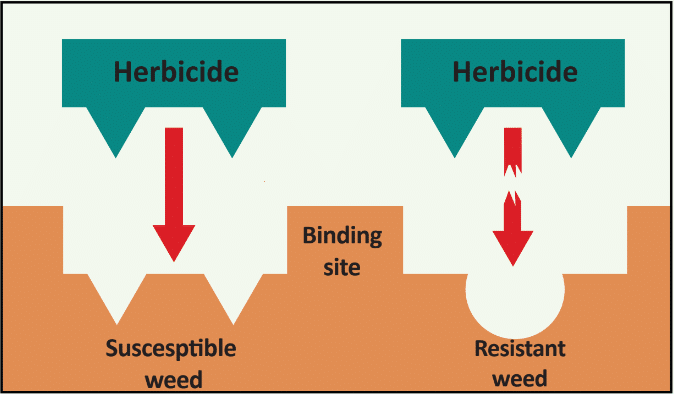
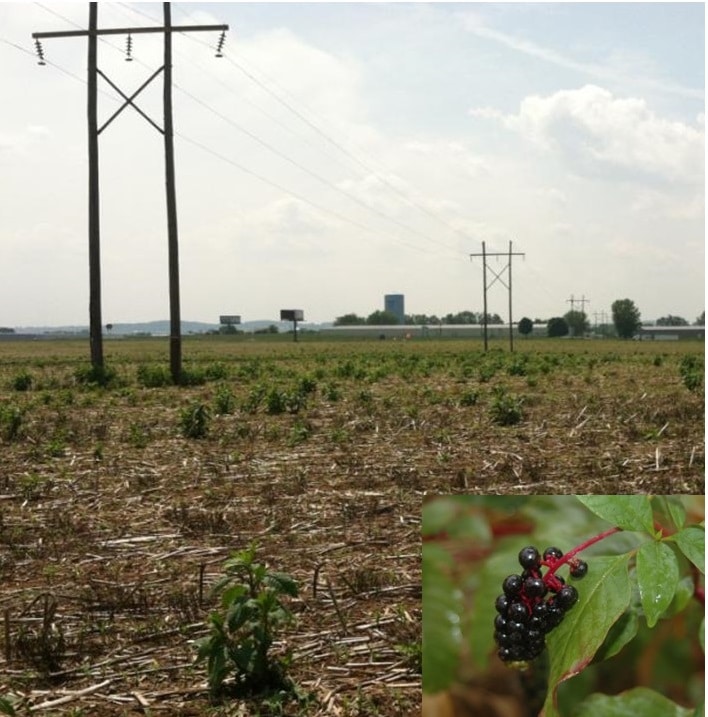
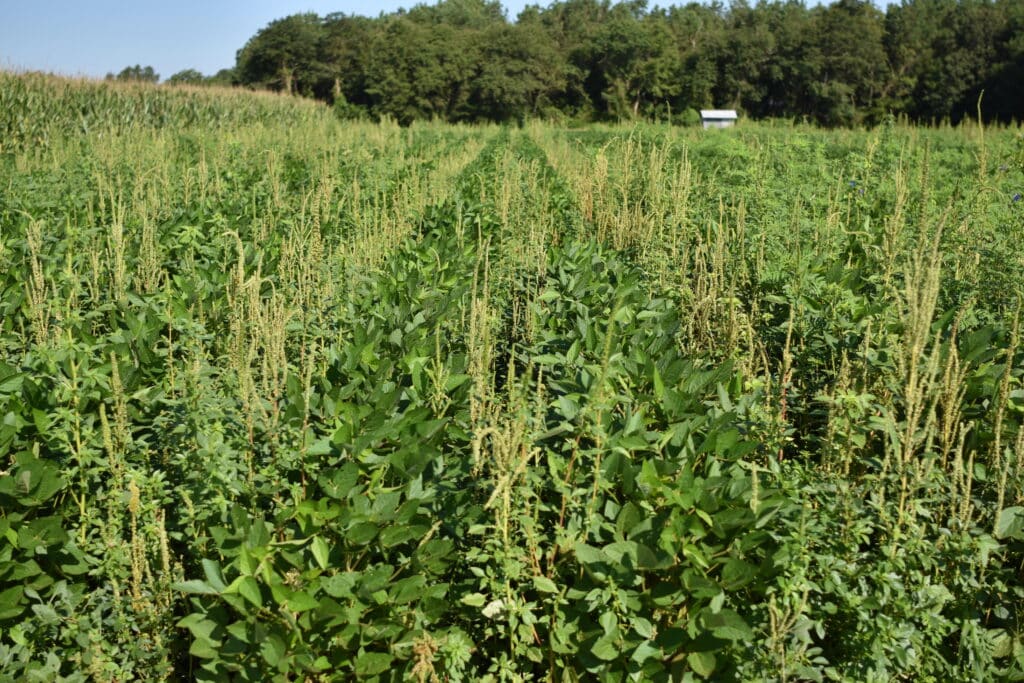
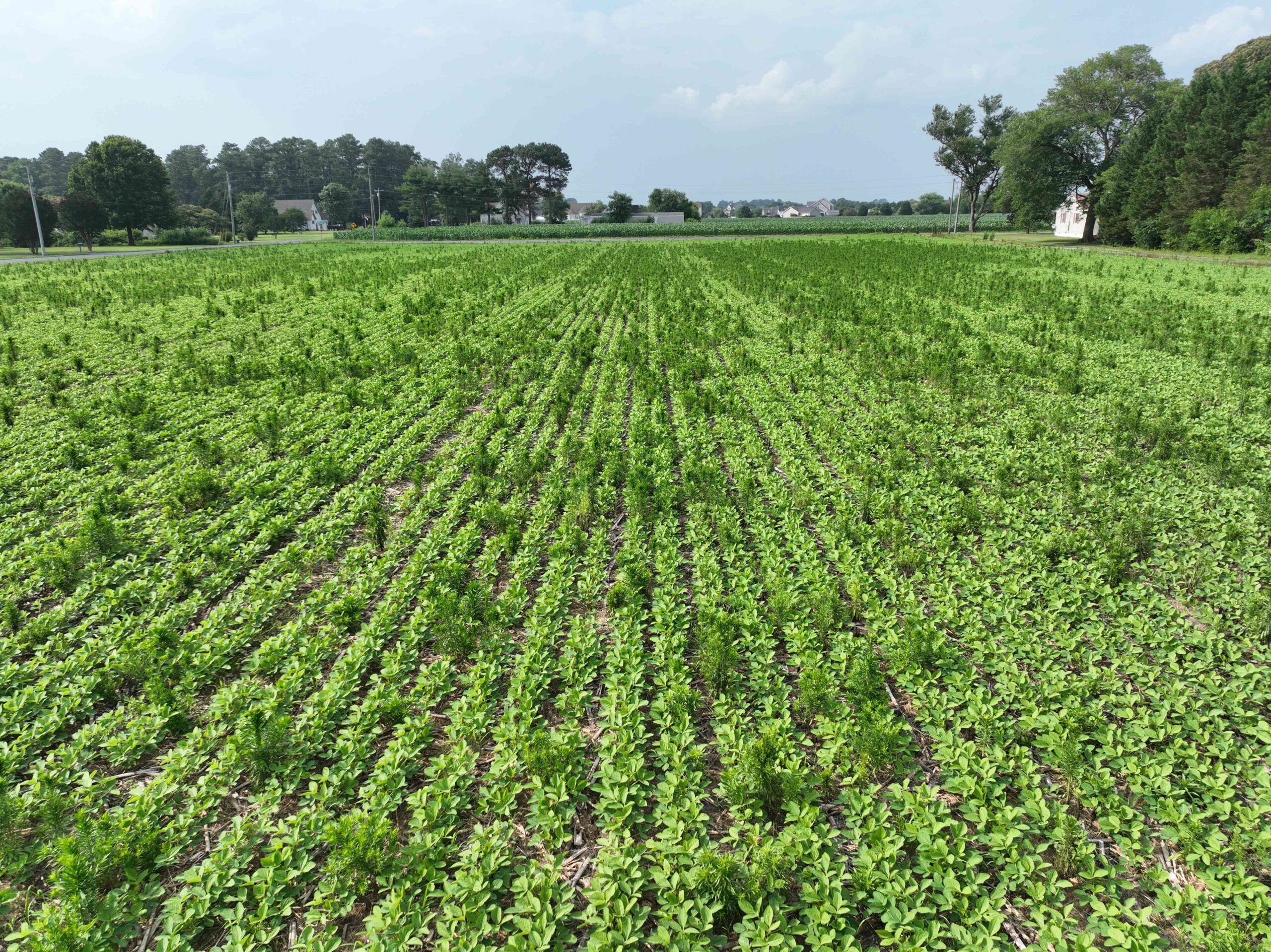
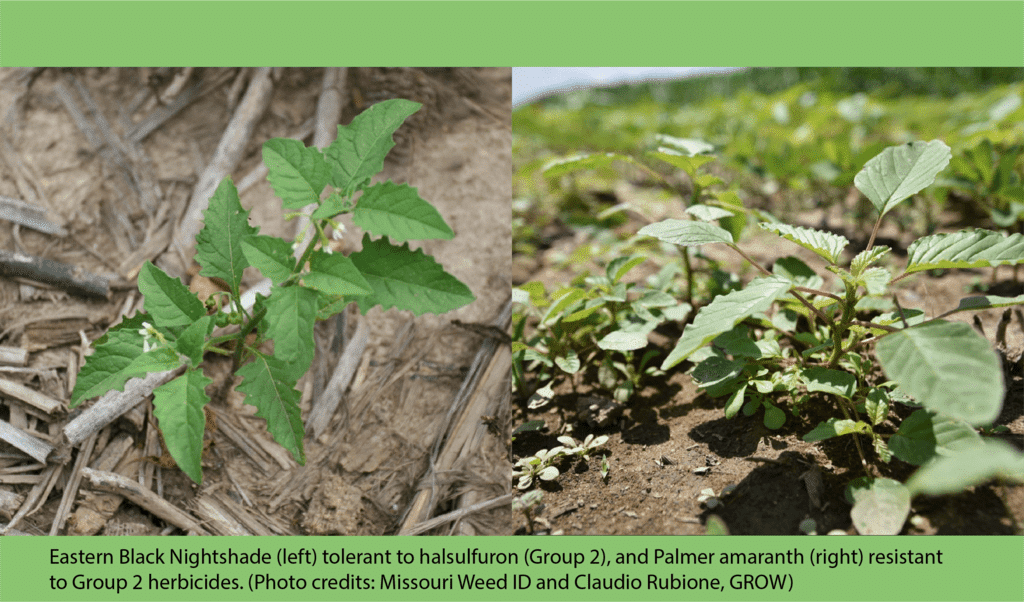
Palmer amaranth – a pigweed capable of producing over a half million seeds per plant per season – has already burst out of its native range in the southwestern United States across the mid-South, Midwest and eastern U.S., where it is a deeply problematic, herbicide-resistant weed threat. This new incursion into the farthest western regions of the U.S. could take unsuspecting farmers there by surprise, given the weed’s aggressive nature and many herbicide-resistant traits.
Waterhemp is another noxious pigweed that has never been found in Washington state, and it’s just as fearsome as Palmer amaranth when it comes to growth rate, yield reduction, and crop competition.
“There are no known populations of waterhemp in Washington, but this [finding] casts doubt on that fact,” Johnson says of his recent foray into Washington state birdseed samples.
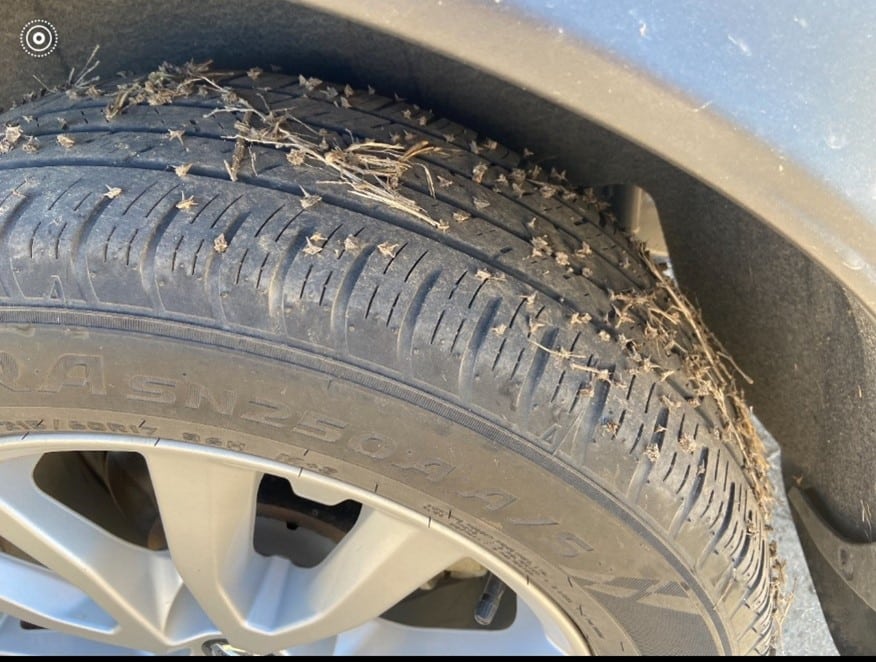
This isn’t the first time that invasive weeds like Palmer amaranth have found their way into new states via store-bought seed. This weed’s spread into Illinois, Iowa, Minnesota, and South Dakota has been linked to store-bought wildflower seeds. Past research has shown that birds themselves, as well as their feed, are capable carriers of weed seeds. Between the animals and the seeds, these sources of dangerous herbicide-resistant weed traits are proving uniquely hard to contain.
Stemming the Palmer Spread in Washington State
Palmer amaranth is capable of growing up to two inches each day and debilitating crop yields by as much as 91%, depending on the crop. Fortunately, Johnson’s quick identification helped contain the Safeway Palmer amaranth population within a week.
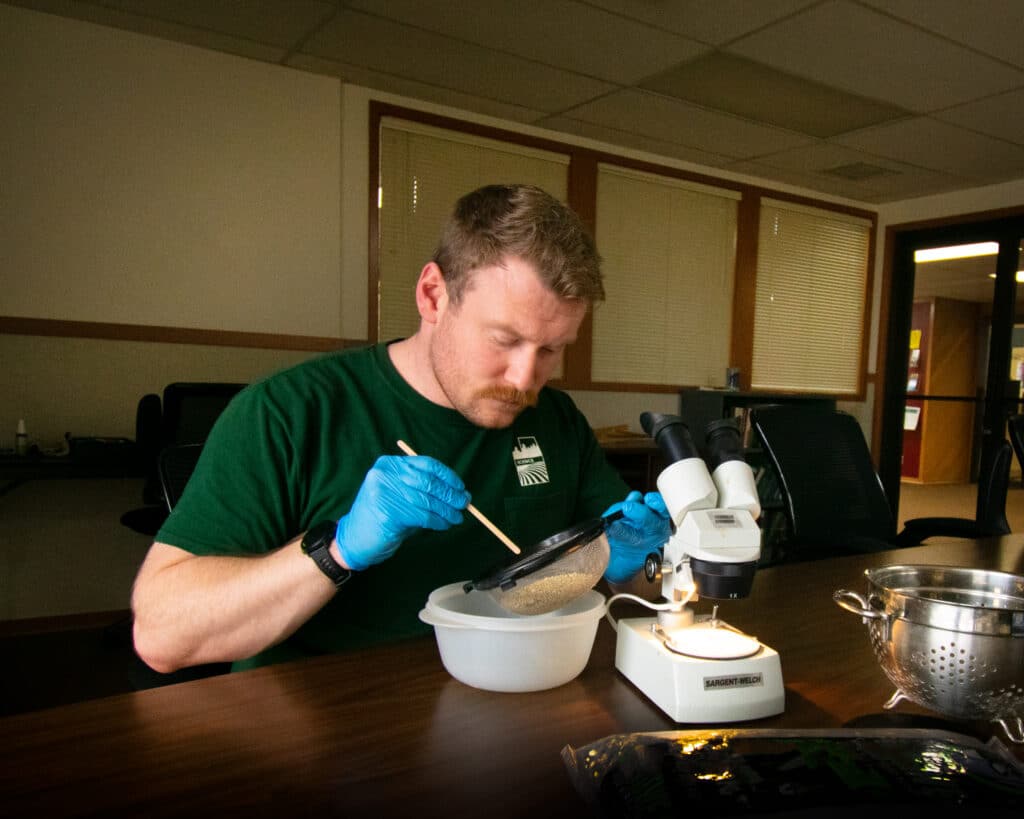
Johnson sent samples of the suspected Palmer amaranth plants from the parking lot to the National Genotyping Center in North Dakota, which quickly confirmed that the southern weed had indeed rooted itself in Washington again. Johnson sent a warning email to researchers and state employees in the state of Washington who would want to know about the discovery – around 75 people. He was able to identify the brand of bird seed by working with Safeway employees and comparing the seeds found around the Palmer amaranth to the seeds in each bag. Then came the hard work – Johnson and a fellow county employee spent seven hours digging through store bought bird feed to identify each seed species in the bag, including Palmer amaranth seeds.
“It looked like a scene from C.S.I.” Johnson recalls. “We had pictures of the seeds taped on the wall around us with measurements and were using colanders, spaghetti strainers, tweezers, and a magnifying glass to manually sort a seven-pound bag of bird seed.”
Johnson sent these newly identified Palmer amaranth seeds to the National Genotyping Center, which again confirmed his suspicions. That confirmation was sent to the email chain, which had swelled to over 100 people.
Then the Washington Department of Agriculture stepped in to help, and Washington and Oregon state officials issued recalls for the bags of bird feed harboring Palmer amaranth seeds.
Waterhemp Breaches Washington State
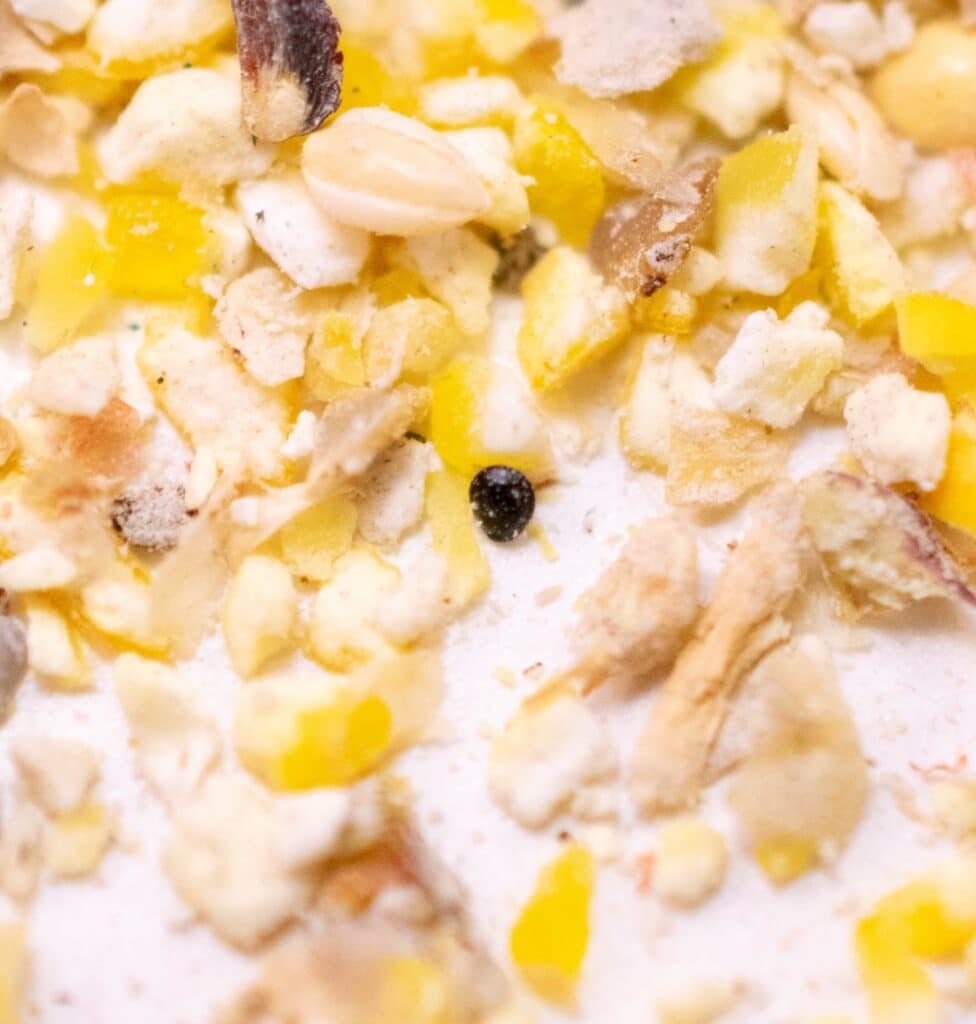
But the problem doesn’t end with those recalled bird feed bags. As of February 2026, Johnson and his colleague have identified seven other birdfeeds sold in Washington and Oregon that contain Palmer amaranth seeds. Four of those bags also contain waterhemp seeds, which had never before been found in Washington.
Johnson is now working with USDA-ARS research weed scientist, Dr. Olivia Landau, who is based at Washington State University in Pullman, Washington. Together, they hope to test those recently identified weed seeds for herbicide resistance and viability. But issuing a bird feed recall could be more difficult this time, as weed seed contamination is likely an industry-wide problem. “One bird feed distributor may supply over one dozen brands, and there are multiple distributors in this case,” Johnson says.
The Bird Seed Conundrum
As far back as 2016, University of Missouri Professor and State Extension Weed Scientist Dr. Kevin Bradley found that 94 of 98 commercially-available bags of bird feed contained pigweed seeds. The feed spanned stores in seven southern states and 22 different brands. At most, Bradley found 6,500 Amaranthus species seeds in a 2.2 pound portion of bird feed. Roughly 19% of the pigweed seed in each bird feed could germinate, and five of the contaminated bird feeds included glyphosate-resistant weed seeds.
Store-bought seed isn’t the only method of introducing weeds to new places. Similar research by Bradley found that some weed seeds digested by ducks and geese go unaffected by the birds’ stomach acid. Birds can excrete the seeds as far as 1,800 miles from where the seeds were first eaten. That distance could span half of the United States – that’s equivalent to a flight from St. Louis, Missouri to Seattle, Washington.
“We were starting to see Palmer show up in northern areas of Missouri, particularly in the river bottoms,” Bradley said of the research’s motivation. The sudden spread of Palmer amaranth to Missouri counties didn’t correlate with farm machinery spreading the seed, Bradley says. That clue, combined with the weed spread tracking along the Mississippi River basin where millions of birds migrate annually, made researchers wonder if an avian culprit was at fault.
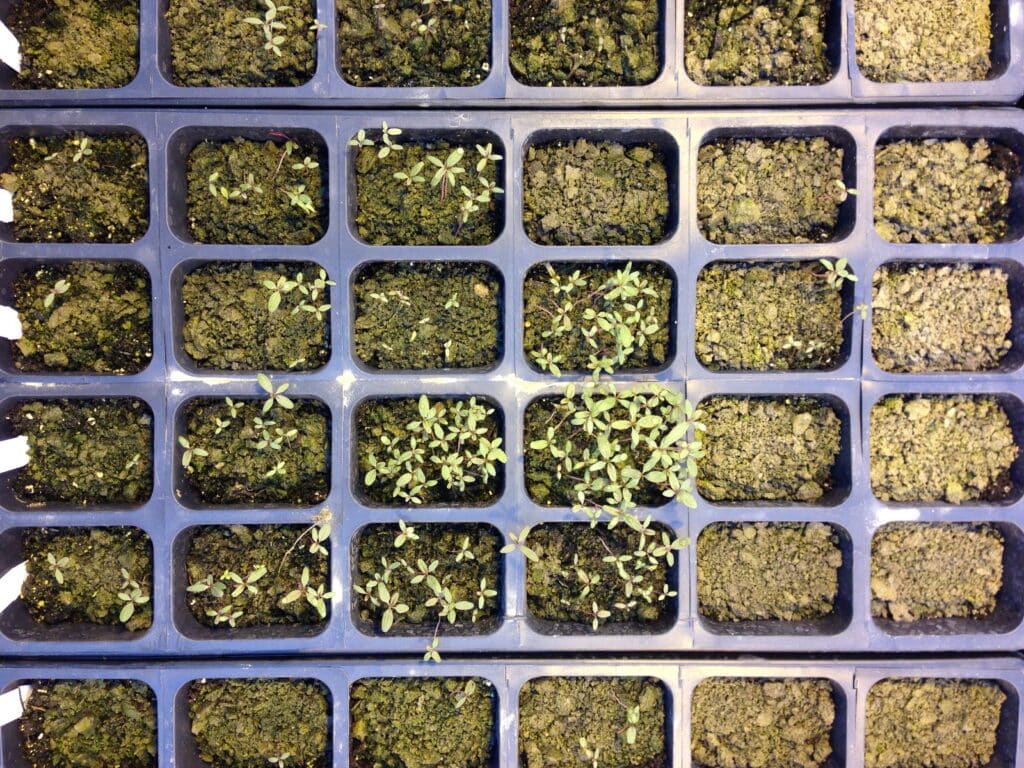
Barnyardgrass, waterhemp, palmer amaranth, and corn were some of the most common seeds ingested by the birds in Bradley’s research.
He observed that longer seed ingestion times usually resulted in lower weed seed germination. But Palmer amaranth and waterhemp seeds were able to survive as long as 38 hours in waterfowl digestive tracts and remain viable.
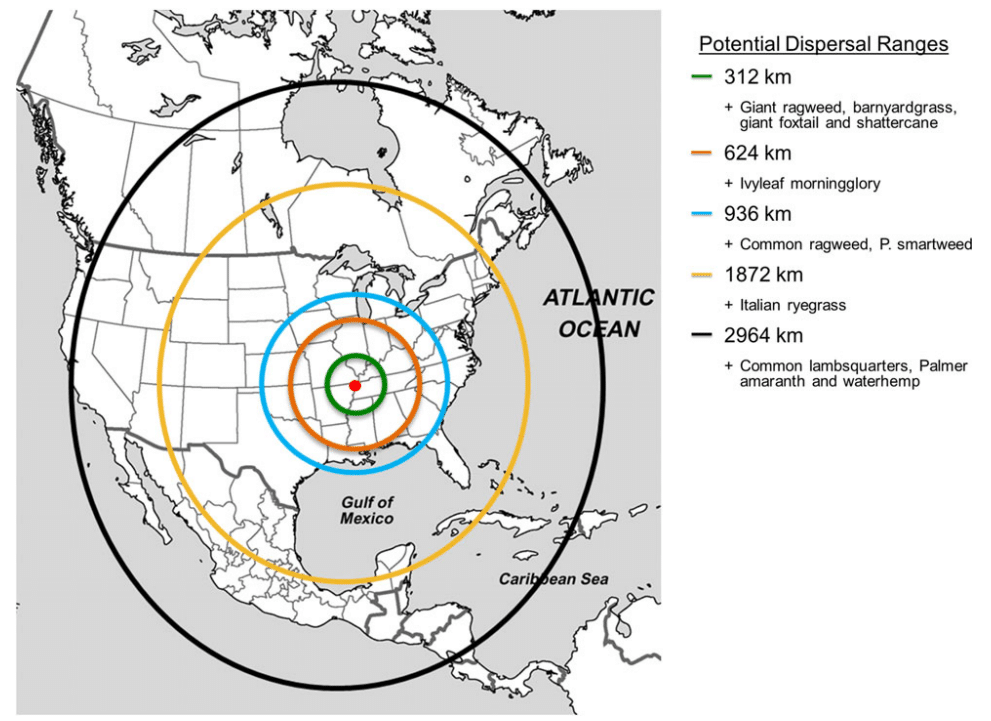
“I don’t know that there’s a whole lot we can do to stop this,” Bradley concludes. “The best thing for not only weed control, but also weed spread, is to never have that seed in the first place.”
Chasing Weed Seeds Before They Spread
That doesn’t mean that researchers are sitting idle, though. States and researchers are collaborating to keep the spread of weed seeds at bay, reports Montana State agricultural ecologist Dr. Tim Seipel.
Montana’s first Palmer amaranth appeared in 2021 — directly beneath a bird feeder. The state has since identified and controlled other Palmer amaranth populations that sprouted from contaminated bird feed and agricultural millet seed. But issuing recalls and controlling contaminants from state to state is not always easy. When Seipel’s suspected bird feed bags tested negative for Palmer amaranth seeds, the trail ran cold.
The best thing for not only weed control, but also weed spread, is to never have that seed in the first place.
Dr. Kevin Bradley, University of Missouri
“[Bird feed] is a very loosely regulated thing,” Seipel explains about Montana’s regulations. “It falls somewhere between our [agricultural] seed and our feed laws, so it can be dirtier than you would expect it to be.”
Montana has since created a Palmer amaranth task force to unite efforts against Palmer amaranth contamination. Montana leads the nation in pulse crop production, and Seipel reports that there are no postemergent herbicides available for use in the short-statured pulses. That means that even a few Palmer amaranth plants could severely disrupt a pulse farmer’s production.
“Having no herbicides that can be used in pulse crops means that Palmer amaranth will have a field day,” Seipel warns.
Johnson, Bradley, and Seipel all stress the importance of choosing seeds from reputable (and local) seed companies. The reality that bird feed, and birds themselves, can spread weeds makes it harder than ever to keep weeds from spreading to new areas.
“Understanding the factors that bring these plants into the state is crucial, and making sure we have clean products moving interstate is more important than I have given it credit for,” Seipel concludes. “We’re moving herbicide resistance across the United States in bags of bird feed.”
Explore GROW’s website for more information about managing weed seeds and herbicide resistance.
Article by Amy Sullivan, GROW; Header and feature photo by Thurman Johnson, Spokane County Noxious Weed Control Board.