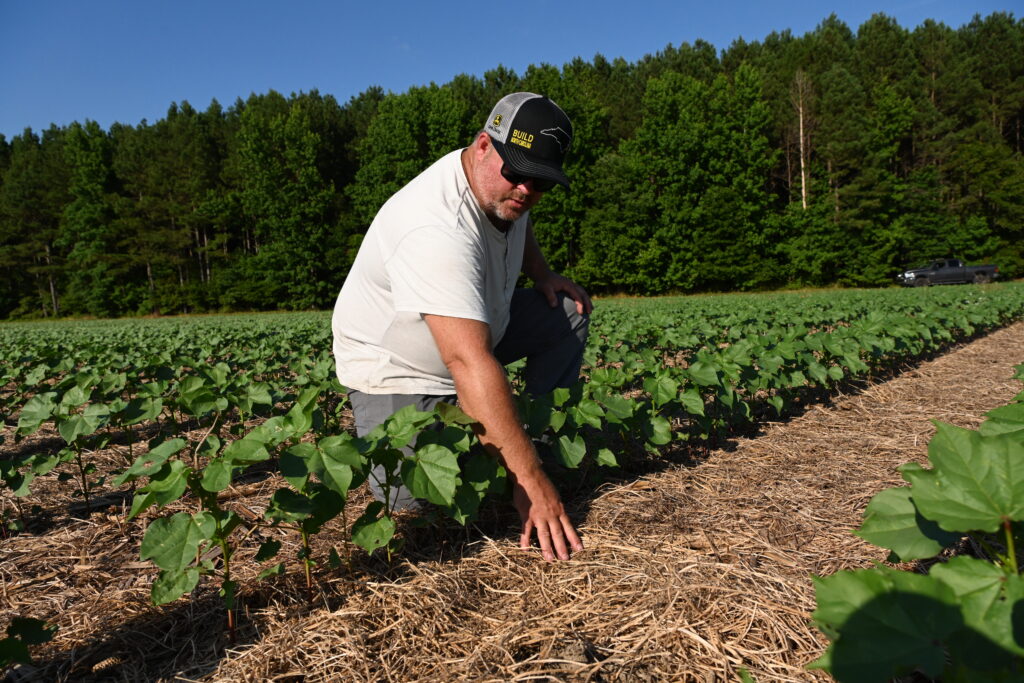
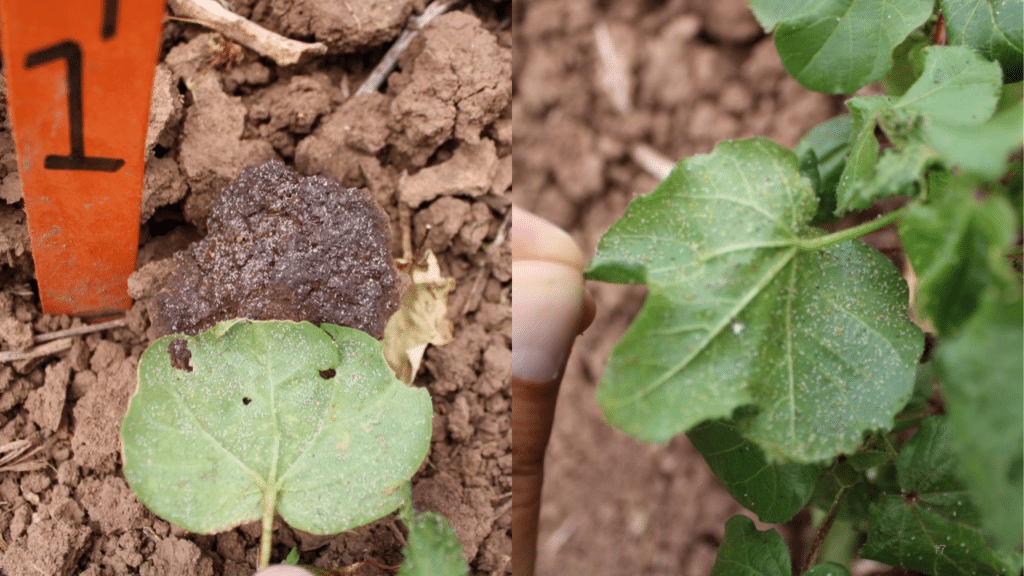
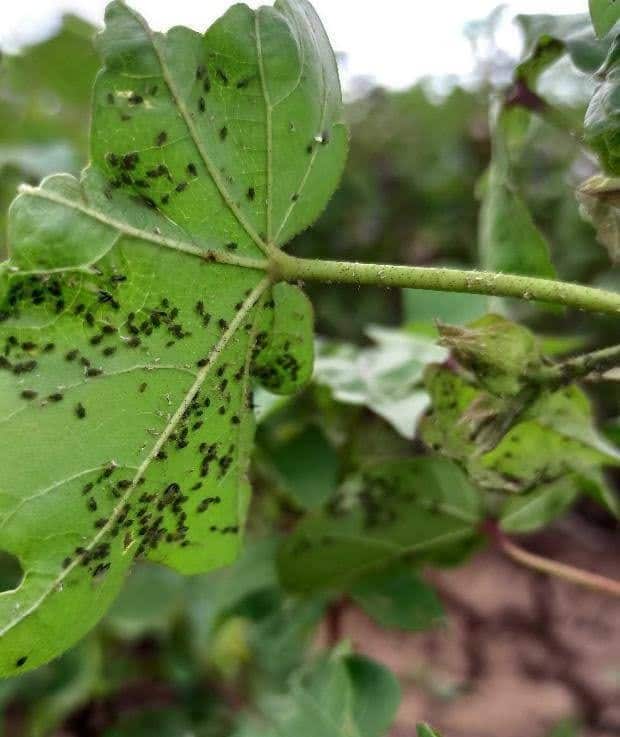
Dr. Ubaldo Torres noticed something strange when he visited his cotton herbicide drift research plots in the summer of 2022. Every row of young cotton plants sprayed with auxin herbicides, such as dicamba and 2,4-D, was covered in thousands of tiny, crawling yellow and black specks.
Aphids had infested the injured plants, the then-Texas A&M graduate student realized. And that infestation was spreading to neighboring rows. But the aphids seemed to completely avoid rows sprayed with certain other herbicides (atrazine, paraquat, nicosulfuron, and isoxaflutole), and they avoided older cotton plants, as well.
The strange findings prompted Torres to alert his advisor, Dr. Muthukumar Bagavathiannan, fellow graduate student Purushottam Gyawali, and Texas A&M entomologist Dr. Greg Sword. From there, Gyawali created his own strand of research investigating how aphids respond to cotton plants injured by different herbicides.
The research ultimately emphasizes just how intertwined weed and insect management are. Extension specialists, farm advisors, and farmers need to consider how their weed management plans could influence other agronomic problems in the field.
Understanding Aphids
Aphids, or ‘plant lice,’ are small insects that suck sap from plants, which causes the affected plants to wither and even die. Aphids then produce honeydew from that plant sap, which covers the plant and eventually molds. These insects also jump from plant to plant during their one-month lifespan, making them a vector for transmitting disease between plants.
Aphid infestation, understandably, stresses cotton plants and drags yields down. And the honeydew can coat cotton lint and create a sticky problem for cotton harvesters. The University of California reports that having as few as five aphids per cotton leaf late in the season can create harvest-disrupting honeydew accumulation.
Aphids are a season-long pest, but early-season aphids are a larger concern than they used to be, Sword says. In the past, cotton farmers needed an intensive pesticide program to head off cotton bollworms and boll weevils. These pesticide programs also controlled other insects, such as aphids. But eradication programs successfully removed boll weevils from the U.S., and genetically engineered cotton varieties have suppressed bollworm populations. This allowed cotton farmers to dial back their insecticide use, and early-season aphids became much more common in cotton fields without the rigorous pesticide programs, Sword explains.
Findings from the Field to the Greenhouse
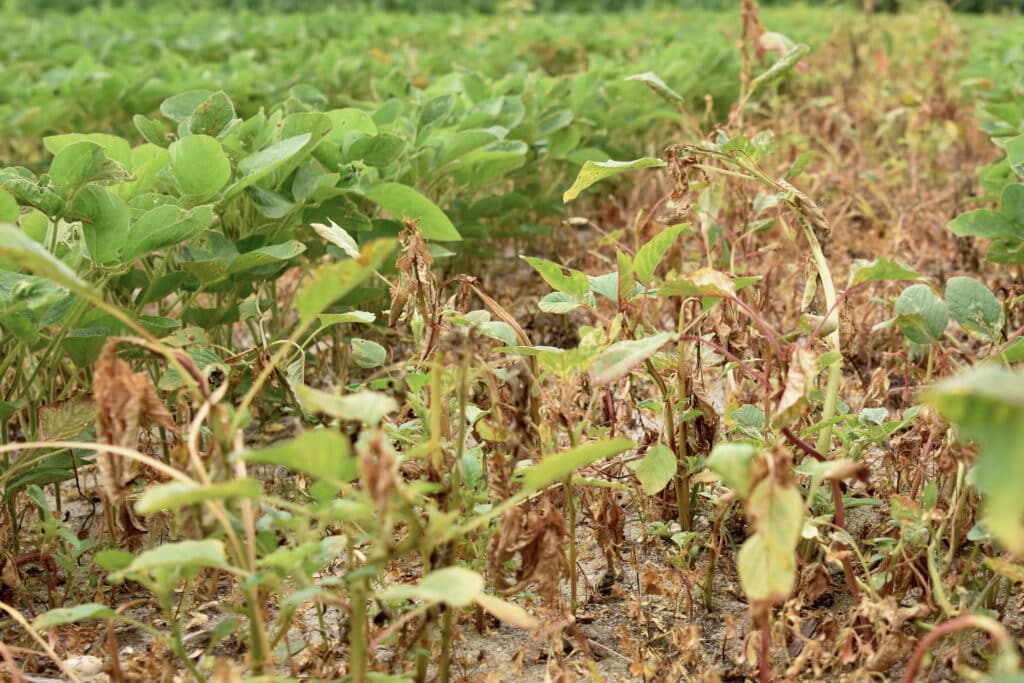
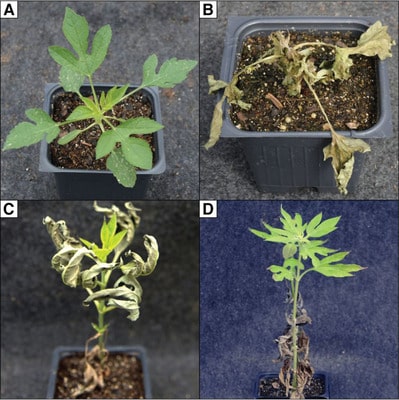
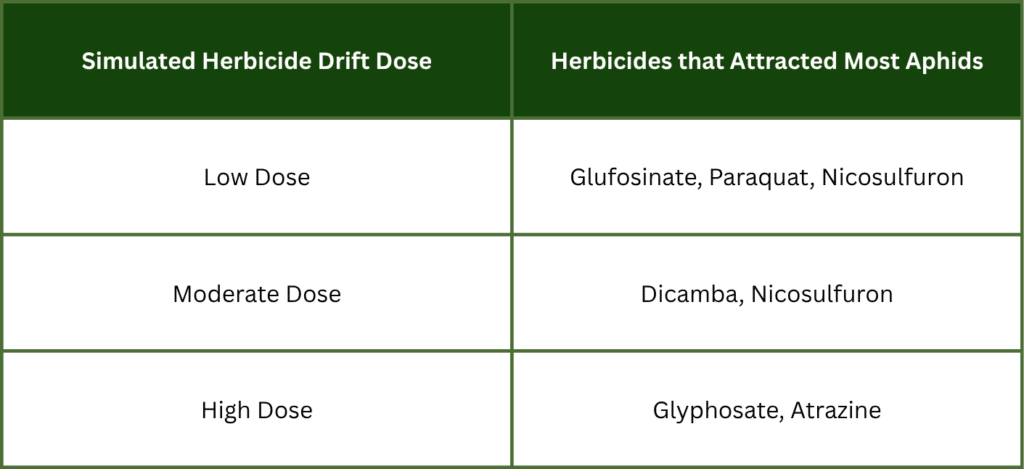
Torres’ 2022 fieldwork revealed that young cotton plants (up to four weeks old) sprayed with dicamba or 2,4-D had high herbicide drift damage rates, and the largest aphid infestations. These infestations resulted in dire plant injuries, with severe leaf curling, yellowing, and honeydew buildup.
“The auxin-sprayed plots were hotspots,” explained Gyawali. The infestations appeared to spread from the auxin-sprayed plants to nearby plants sprayed with other herbicides, although the spread was selective and associated only with certain herbicides.
Interestingly, herbicide dosage had almost no influence on aphids, suggesting that even the smallest auxin herbicide drift injury could influence aphid infestation.
Intrigued by these findings, Gyawali and Torres set up a field trial to explore it the following summer of 2023.
They found similar results: Aphids caused the most injury to young cotton plants sprayed with auxin herbicides in the first two weeks after simulated herbicide drift. In contrast, aphids in both field trials mostly avoided cotton injured by atrazine, paraquat, nicosulfuron, and isoxaflutole.
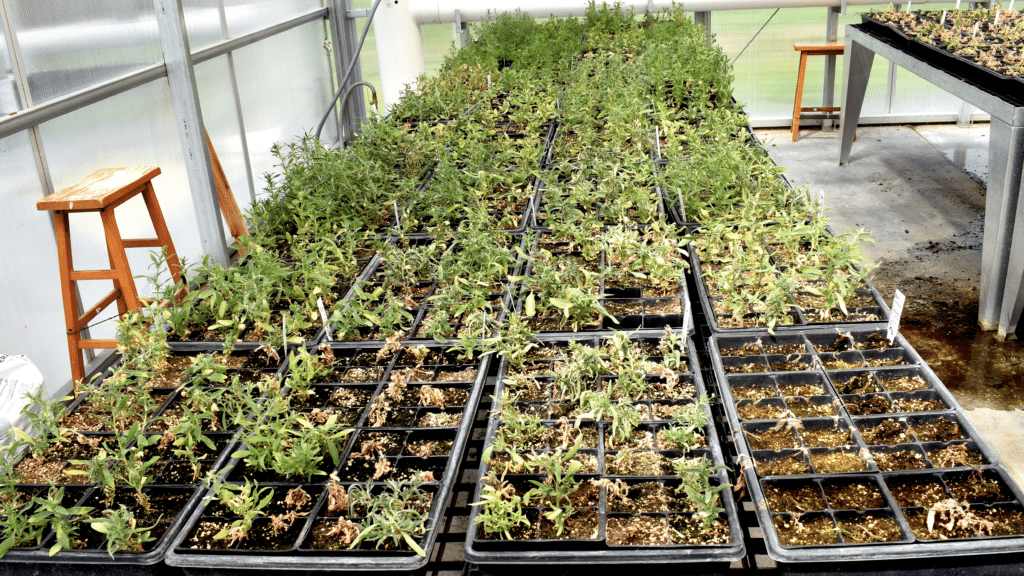
But Gyawali wanted to know more about the aphids’ herbicide preference in a controlled setting. So in 2024, he designed a greenhouse experiment to try and further investigate. He sprayed cotton plants with eight herbicides at three sublethal rates representing low, moderate, and high herbicide drift exposure. Those rates ranged from a 0.01x dose to a 0.88x dose. Then he randomly arranged the sprayed plants in two circles inside the greenhouse, and placed an untreated, aphid-infested cotton plant in the middle of the circle.
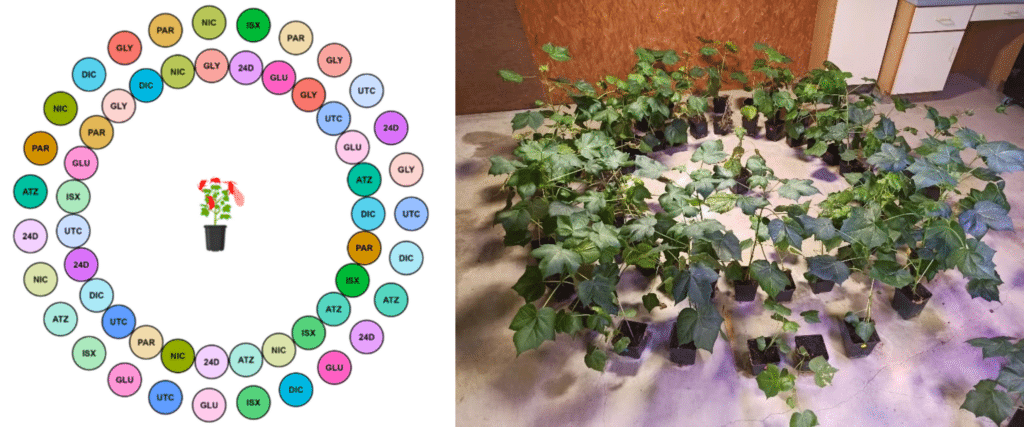
From there, Gyawali observed how the aphids preferred each sprayed cotton plant. The findings didn’t exactly align with what he saw in the field.
Aphids in the greenhouse study still preferred cotton plants injured by auxin herbicides, but they didn’t completely avoid cotton sprayed with herbicides like atrazine, paraquat, nicosulfuron, and isoxaflutole. Herbicide dosage also did play a role in the greenhouse aphid-plant preference, with aphid infestation varying inconsistently based on the herbicide and dosage applied to the cotton (rather than aphids only preferring auxin herbicides regardless of dosage).
Gyawali and Bagavathiannan also note that aphids avoided highly-stressed cotton plants in the greenhouse, instead preferring moderately-stressed cotton plants. The pair suspect that the plants’ close proximity in the greenhouse contributes to the different findings when compared to the field trials. Dr. David Kerns, another Texas A&M entomologist who confirmed that aphids were infesting injured cotton plants, thinks that greenhouse plants could be receiving extra nitrogen that contributed to the scattered greenhouse findings, suggesting yet another management factor that could play a role.
What’s Attracting the Aphids?
The researchers were able to note which herbicide injuries aphids preferred, but they don’t yet know what could be attracting the aphids to cotton injured by auxin herbicides.
Three potential reasons come to mind, reports Gyawali, Bagavathiannan, Sword, and Kerns. The aphids might be attracted by the cotton plants’ altered nutrient composition after herbicide injury, or by a plant hormone response to auxin herbicides, or by the auxin herbicides crippling the cotton plants’ defense pathways.
Researchers also don’t know what role environmental variables such as temperature and humidity play in aphid infestation after herbicide drift damage. And researchers don’t currently understand how aphids would respond to traited cotton, such as dicamba-tolerant cotton, that is stressed by herbicide drift. This research only observed herbicide drift effects and aphid infestation on conventional cotton.
But the unknowns don’t stop researchers from understanding the broader implications of their findings. “One of the really important parts about this project is that it started with observations that they saw in the field,” Sword notes. “They saw the real-world unexpected effects of herbicide treatments on insect numbers.”
Since aphids will infest and damage young cotton plants injured by herbicides, Extension weed specialists and farm advisors must consider how their recommendations could affect more than just the weeds in the field.
The bigger lesson is that crop scientists often work within topic silos – only considering their corner of agronomy, whether it is weeds, insects or disease. This finding is a good reminder that farmers instead deal with a web of agronomic problems that can cross disciplines, Bagvathiannan notes.
“As we put together management programs, we need to think about the system-level implications for those management practices,” Bagavathiannan concludes.
Article by Amy Sullivan, GROW; Header photo by Claudio Rubione, GROW; Feature photo by Purushottam Gyawali and Ubaldo Torres, Texas A&M.