When you need a new way to communicate weed management research but you’re isolated by a global pandemic, what can you do but create a hit weed science podcast?
In January 2021, the War Against Weeds podcast aired its first episode. Fast forward to September 2026, and the podcast has kicked off its 12th season, with 181 episodes in its rear view mirror. But it took five years of learning and a lot of behind-the-scenes effort to get the podcast where it is today, the War Against Weeds team says.
Here’s a glimpse into their long, productive odyssey.
Five Years of Growth
The podcast’s episodes, which each feature a weed scientist or industry professional, have been downloaded over 92,000 times by listeners. However, the podcast didn’t reach weed science fame overnight.
War Against Weeds started with just three hosts: Dr. Sarah Ganske (Kansas State Extension weed specialist), Dr. Joe Ikley (North Dakota State Extension weed scientist) and Dr. Mandy Bish (then University of Missouri State Extension weed scientist, now plant pathologist).
Initially, the team was seeking a new way to give the ag community weed management tips, after decades of giving the industry countless presentations, videos, factsheets, news articles and other print materials. Then COVID-19 shuttered conferences, which are critical to sharing research among the nation’s weed scientists. Suddenly, the team not only needed a way to communicate with farm decision makers, they also needed a way to communicate with other weed scientists.
One successful grant proposal later, and the team had secured funding from the North Central IPM Center for the recording equipment and editing software needed to get the podcast up and running.
But there was another hurdle: the team didn’t have a background in podcasting. So they learned how to plan, schedule, and edit podcasts on top of their full-time Extension weed science jobs.
“We were building the plane as we were flying it,” Ikley recalls.
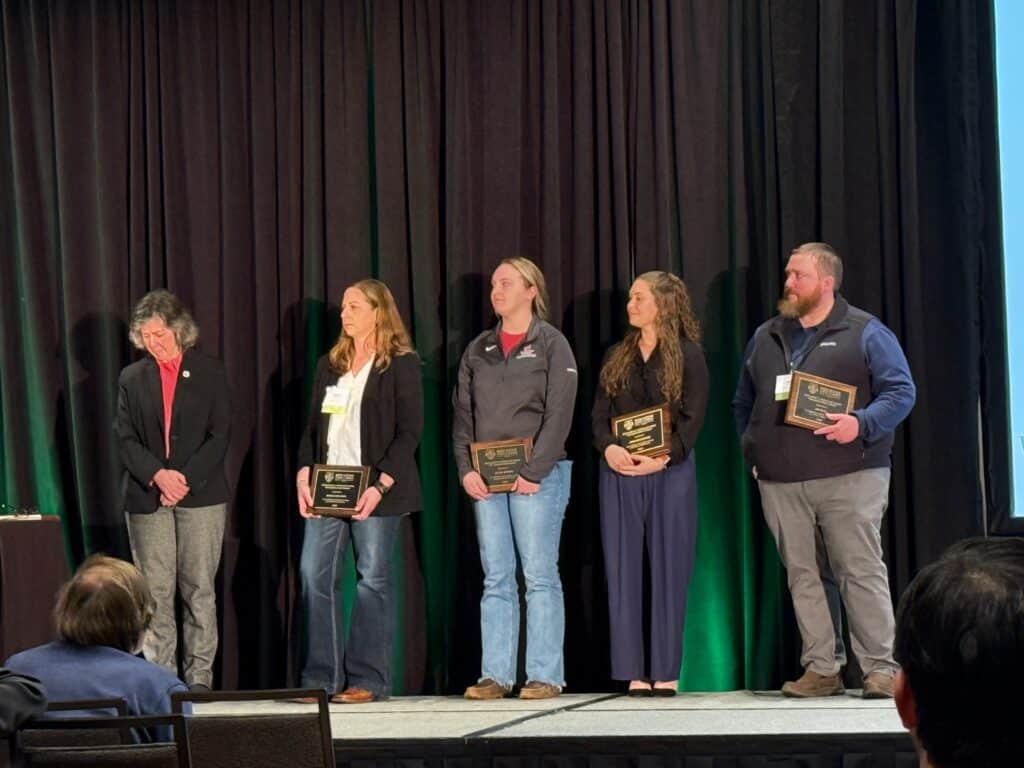
And that learning curve resulted in a trove of “lost episodes,” where mistakes forced the team to shelve some episodes permanently – including one instance where they forgot to press record during an interview (that episode was later re-recorded).
“There were learning pains along the way, as with any adventure,” Ikley notes. “It’s fun to learn from those and, of course, the goal is not to repeat them.”
One year after starting the podcast, Bish stepped away and the team welcomed a new host: Ohio State’s Dr. Alyssa Essman, an Extension weed specialist. Essman offered the podcast a new voice and perspective with her experience advising farmers in the North Central region.
One year later, the team added another member: Purdue’s Stephanie DeSimini. DeSimini, who has a background in weed science, serves as the team’s podcast editor and social media manager. She coordinates host and guest schedules, edits each podcast episode, plans social media campaigns, and publishes the podcast with a quick one-to-two week turnaround time for each episode.
DeSimini keeps the work on schedule and polished, but accommodating the podcast is still a juggling act, the team says. Each member has their respective responsibilities from weed science research to teaching and helping farmers battle weeds.
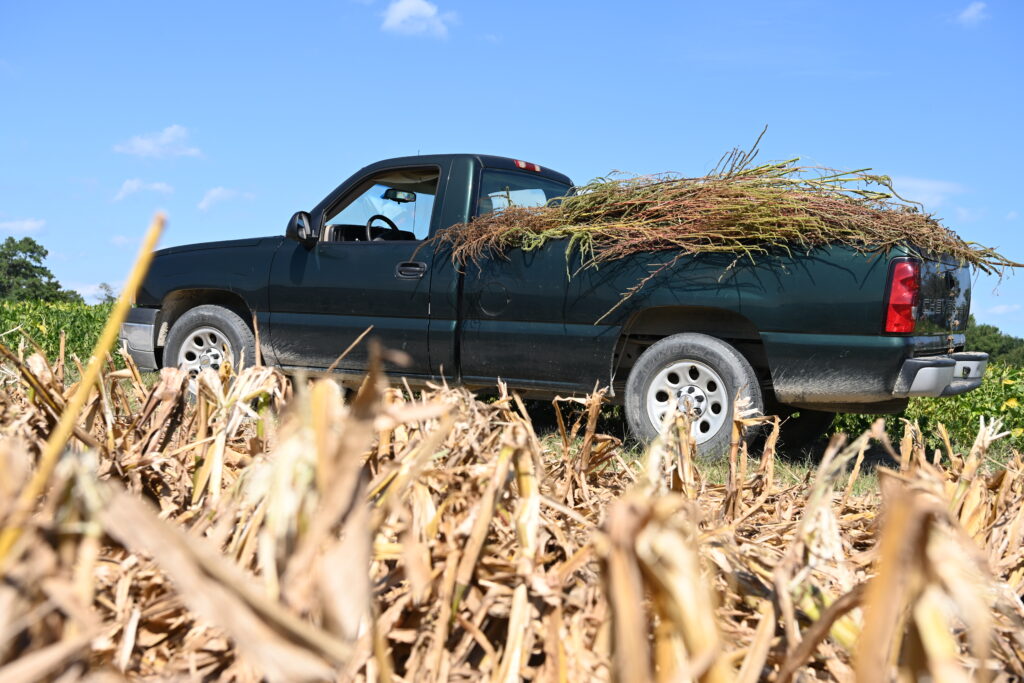
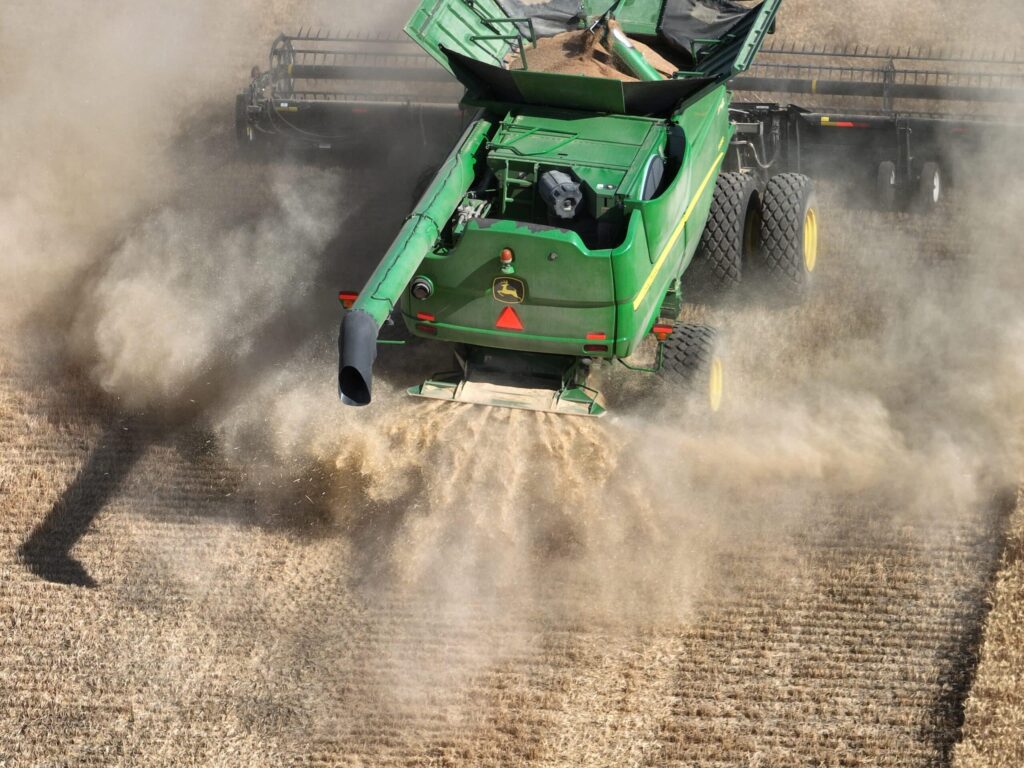
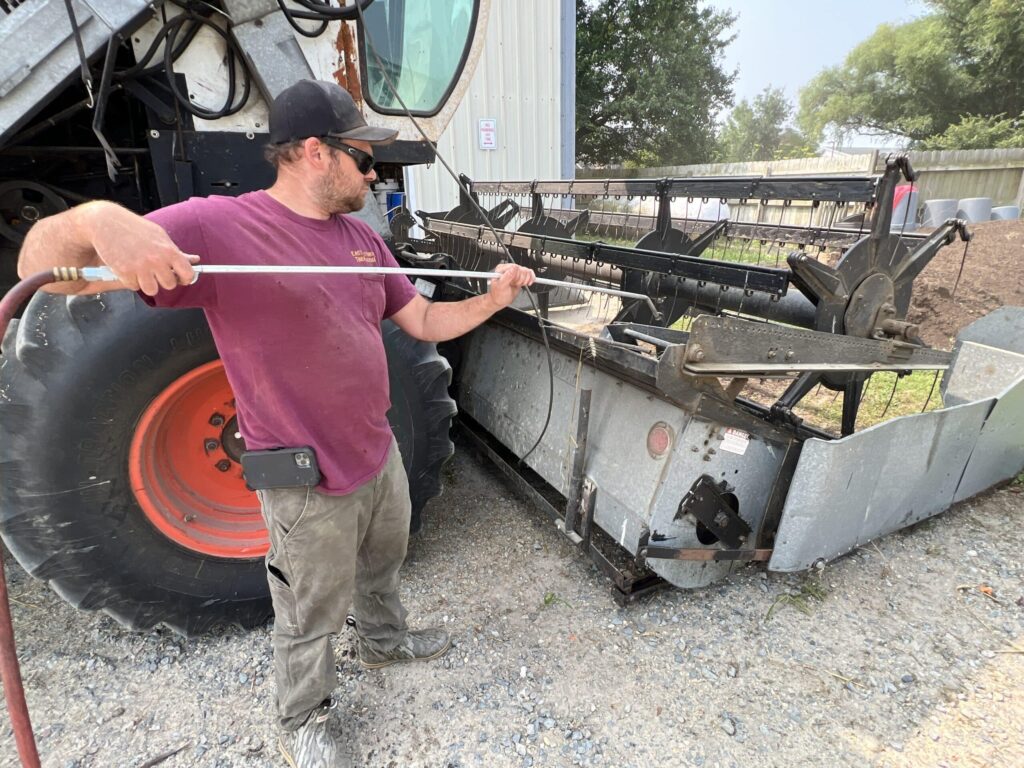
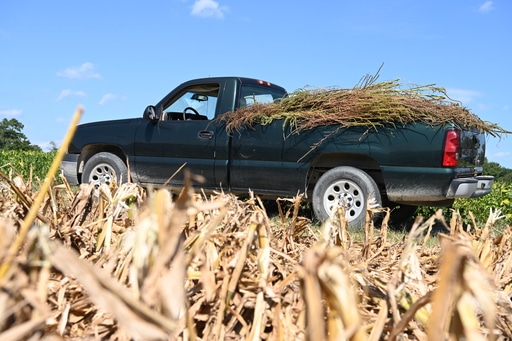
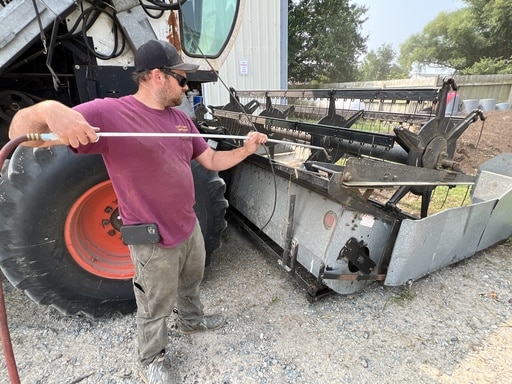
The result? The team has recorded the podcast just about everywhere – from their offices to pickup trucks to the inside of a combine. Ganske even recalls a time where she needed a quiet spot to record at a weed science conference – and was forced to resort to a janitor’s closet.
Keeping Episodes Timely, Informative, and Entertaining
Having a podcast team full of Extension specialists ensures that episodes are relevant to what’s happening in fields nationwide. Episodes that air during the growing season focus on field updates, in-field problems, and weed control tactics. Winter episodes often explore more obscure or exotic research such as herbicide ballistic technology and weed-sniffing dogs.
“[The episodes] meet people where they are at,” Ikley notes. And while some podcasts feature research that is still far from reaching the field, these episodes cast a light on the wide range of weed science research happening, Ikley explains.
The team has a running list of episode topics that they (and podcast listeners) constantly add to. These topics include hot weed science talking points, new products and trait systems, and weed species of interest.
“We try to make [the podcast] applicable across all of our geographies and nationally with different topics and weed management considerations,” Essman says.
Covering a range of topics keeps the podcast from getting stale. Upping the production value with upgraded microphones and recording software, and offering CCA CEU credits, are two other ways that the team keeps the podcast engaging. They also plan to continue adding hosts in the future. War Against Weeds’ newest host is Purdue Extension weed specialist, Dr. Tommy Butts, who is making his debut on the podcast’s current 12th season.
Another way the podcast keeps from getting stale? The guest speakers. Once a topic is decided, the team reaches out to topic-appropriate guest speakers. Rarely does a speaker turn the podcast down.
“We’ve been really fortunate to have guests who are willing to come back and share their knowledge and provide engaging content and stories,” Ganske remarks.
Farm decision makers comprise the podcast’s target audience. But everyone from undergraduate students to esteemed weed science researchers tune in. Industry professionals have used War Against Weeds episodes for professional development and training, while undergraduate professors have used episodes as classroom lectures, Ganske reports. The podcast even gets feedback from its audience, in the form of new episode topic suggestions or follow-up questions.
Have feedback for the War Against Weeds team, or is there a topic you’d like to see covered on the podcast? Let the team know by contacting waragainstweeds@gmail.com!
“In Extension, we always have our ears to the ground trying to figure out what’s going on [in the field],” Ganske says.
Those who want to tune into the podcast can access the twelfth season, and all 181 previous episodes, at https://waragainstweeds.libsyn.com/.
Want to know more about weed management and herbicide resistance? Explore GROW’s and Take Action’s website for recent news and informational resources.
Article, header photo and feature photo graphic by Amy Sullivan, GROW; Original feature photo by Claudio Rubione, GROW.