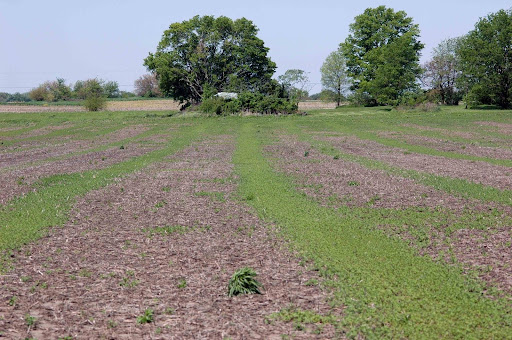
When organic corn and soybean farmer Jacob Leopold saw Old School Manufacturing’s new interrow row crop weed zapper on Facebook, he knew he wanted to try it out on his family’s organic farm in northwest Ohio. One phone call later, Leopold Family Farms, where Jacob farms with his father Jim and brother Jeremy, became one of the first farms to test the new weed electrocution unit.
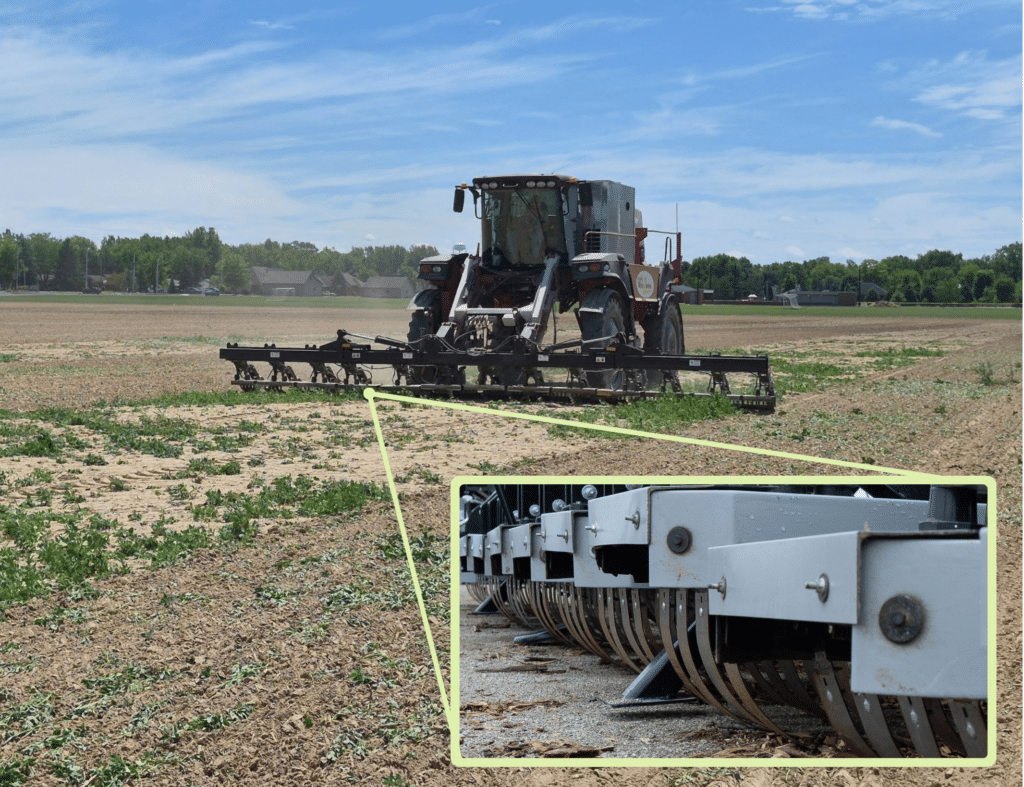
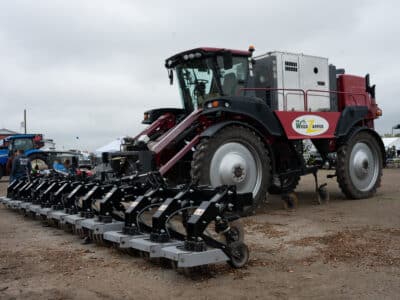
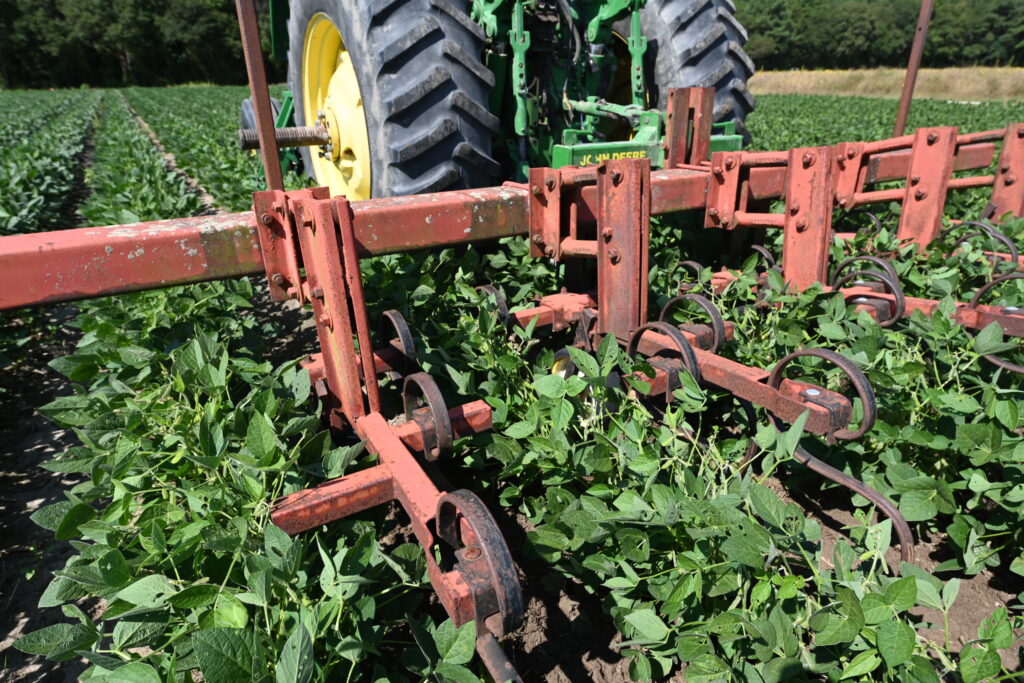
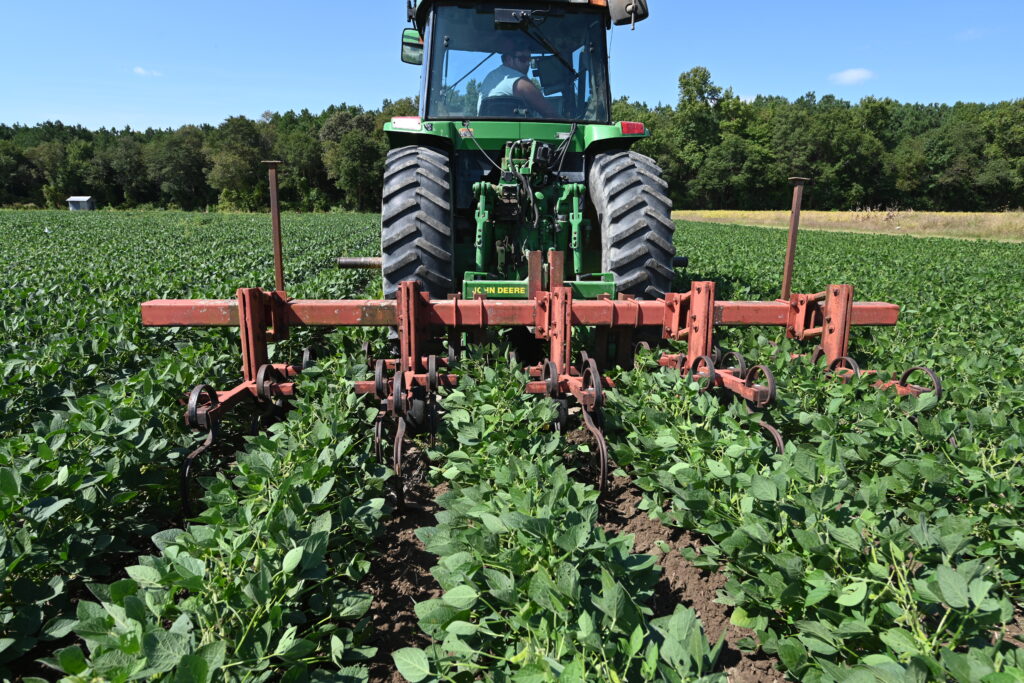
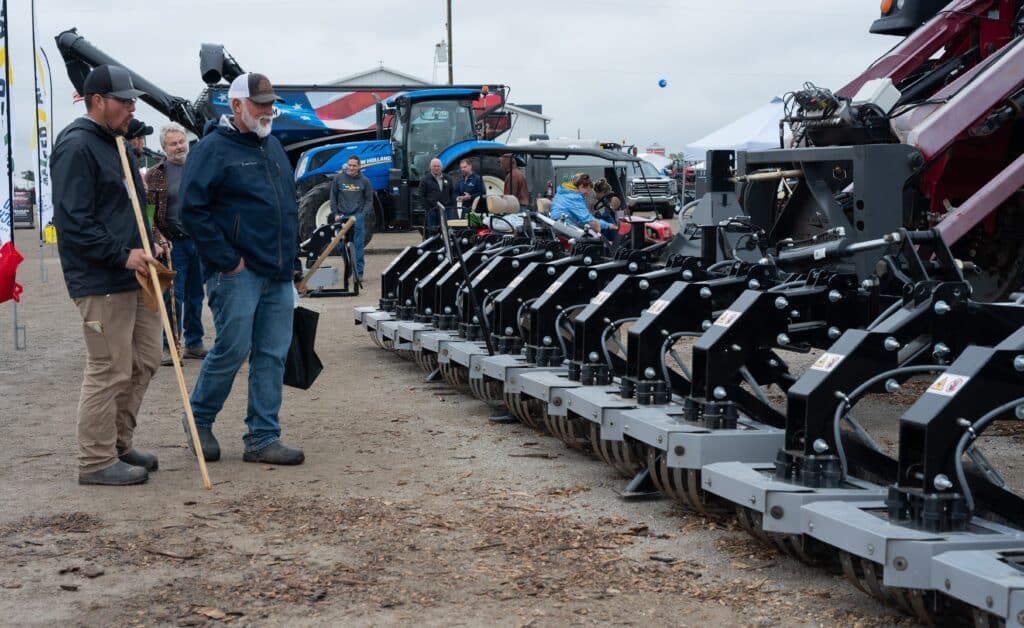
It was Old School Manufacturing’s Digital Cultivator that grabbed Leopold’s eye. The machine uses electrified applicators mounted on a 30-foot toolbar to brush the ground between crop rows and successfully zap even the shortest weeds with minimal-to-no crop injury. Leopold’s trial year revealed that the Digital Cultivator successfully controlled weeds before and after planting. Weed control only faltered when weeds hid in the crop rows or were too dense for the Digital Cultivator to touch every weed in a patch.
“This could be a game changer for organic farmers in terms of reducing their reliance on tillage for interrow weed control,” says Dr. Eugene Law, Ohio State weed ecologist.
Old School Manufacturing isn’t new to the world of weed electrocution. Already, the family-owned company makes both tractor-mounted and self-propelled shock discharge Annihilators and Terminators, under the Weed Zapper brand. These units use an electrified (and elevated) metal rod to shock weeds standing above crop canopies. And other companies, such as Zasso, are also working on continuous-contact weed electrocution units that might someday operate in row crops. (See more GROW coverage of weed electrocution technology here).
What Leopold’s On-Farm Testing Found
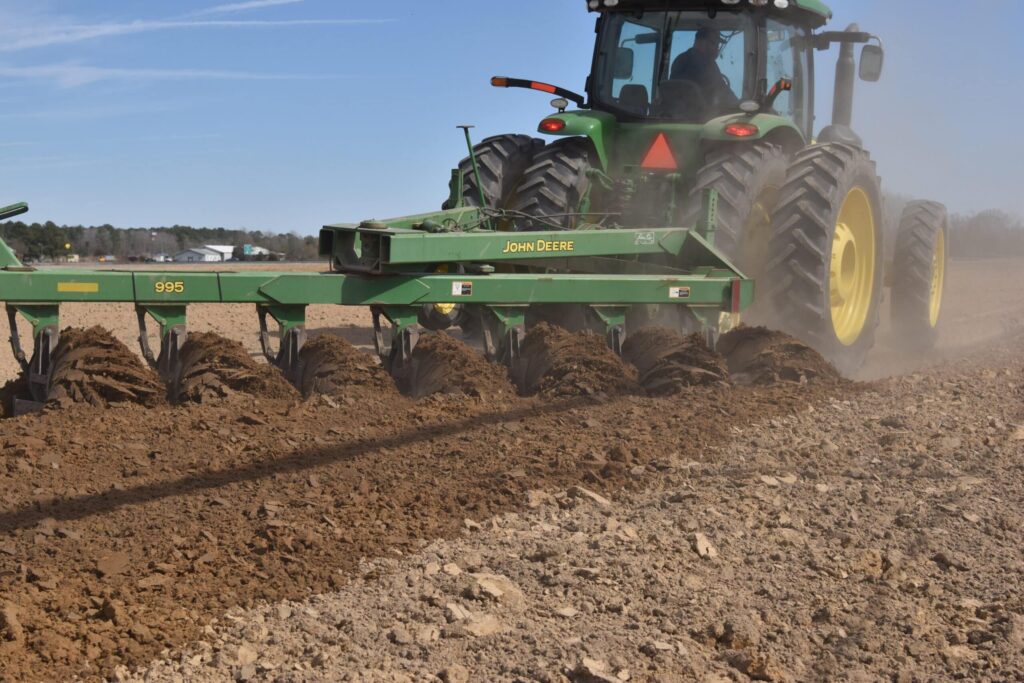
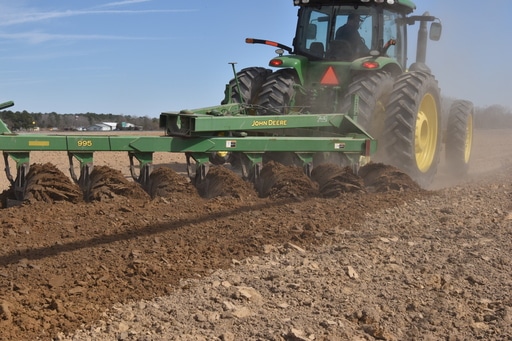
For Leopold, who relies heavily on tillage in his organic production, the Digital Cultivator offered a much needed weed control option. Leopold’s farm consists of heavy clay soils that don’t dry quickly enough in the spring for timely planting – not to mention the soil erosion risks. The Digital Cultivator, Leopold thought, could potentially replace preplant tillage altogether.
Ben Kroeger, co-owner of Old School Manufacturing, also hopes that the Digital Cultivator could overcome tillage’s largest enemy: rocks.
The Leopolds initially planned to test the Digital Cultivator on just 40 acres of their operation, but it worked so well that they ended up using the tool across 500 corn and soybean acres.
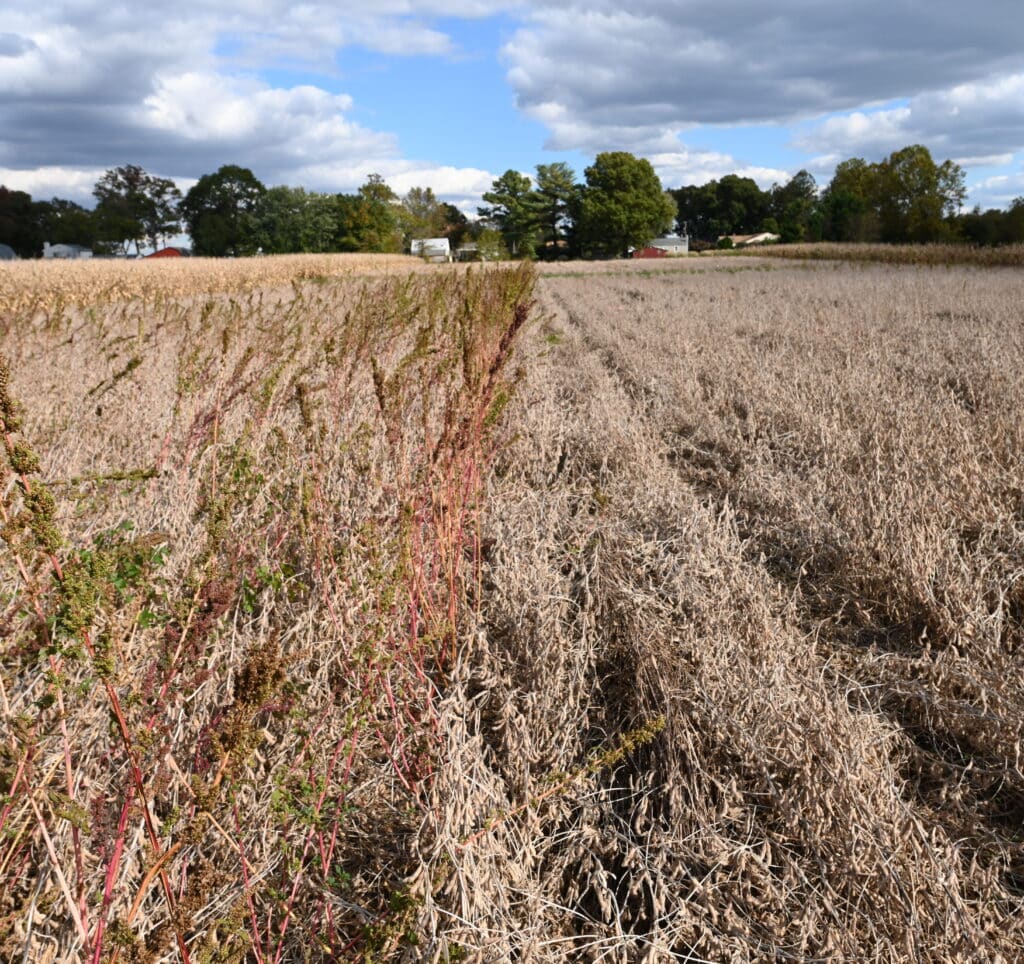
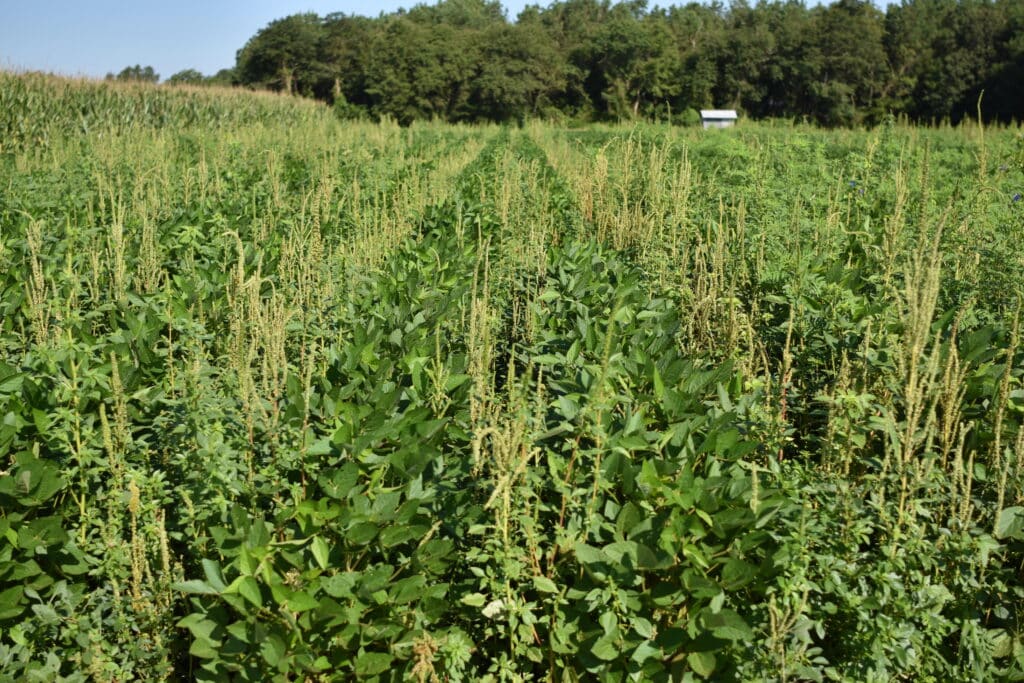
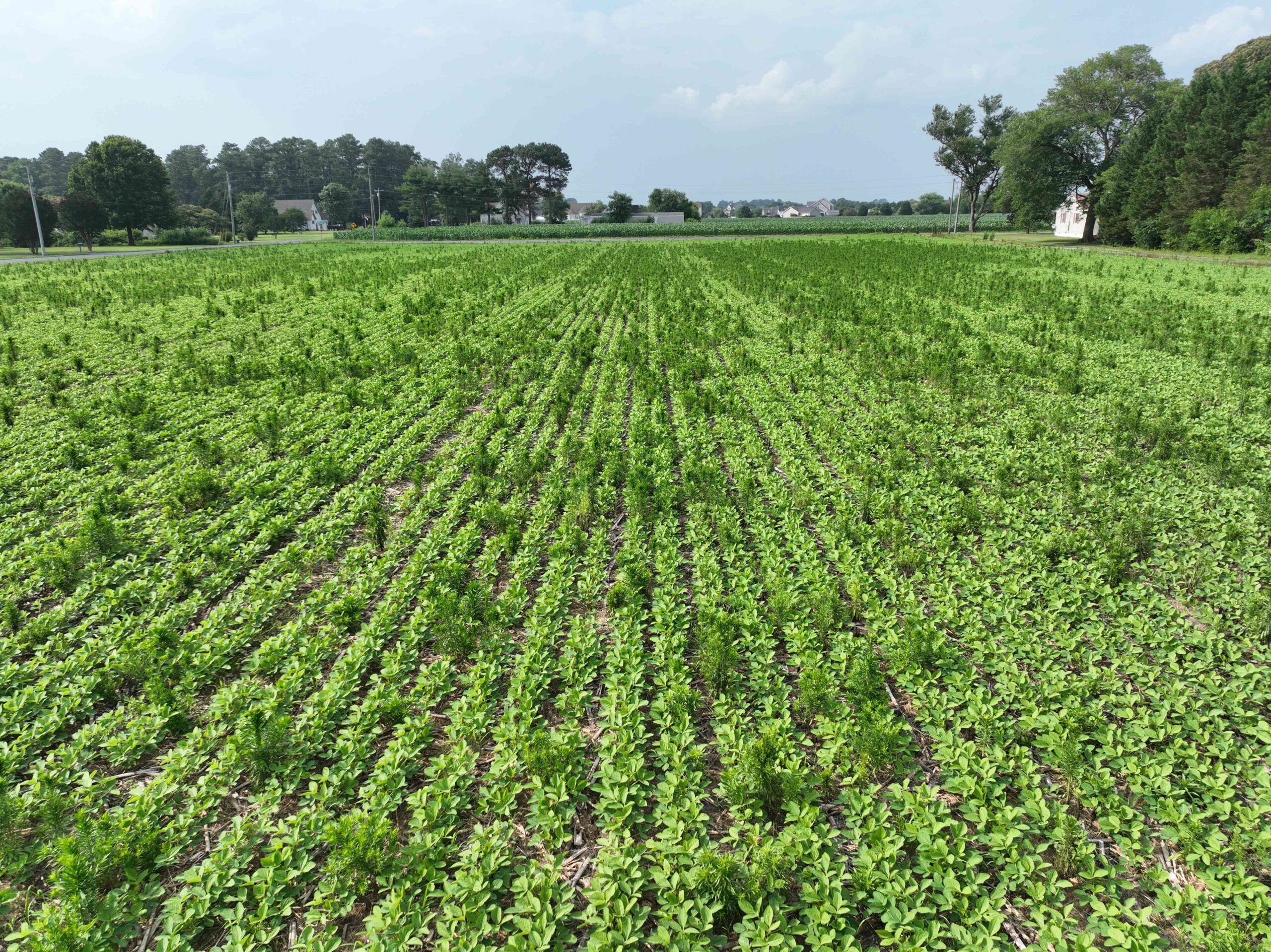
Weeds such as pennycress, lambsquarter, and pigweeds were all controlled by the Digital Cultivator, Leopold reports.
“We had really good weed control as long as the [weed] density wasn’t too thick,” Leopold reports. “Shielding becomes an issue you have to watch out for.”
Shielding happens when tall weeds or thick stands of weeds prevent the Digital Cultivator’s electrified pads from physically contacting each weed, he explains. The Cultivator’s electrified pads push weeds over as the machine drives forward, causing weeds in the front of a patch to get electrocuted while shielding any weeds pushed beneath them.
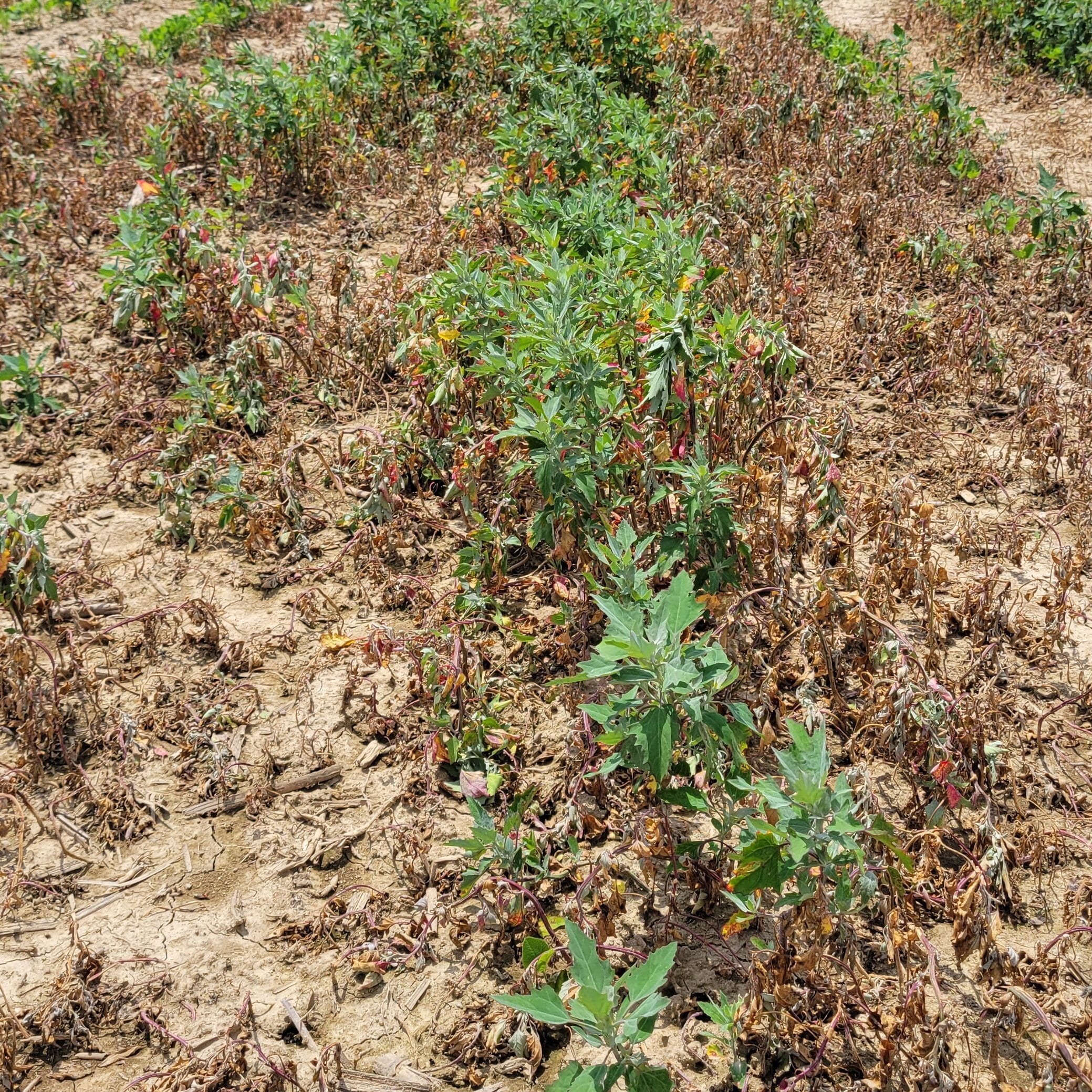
Leopold ran two pre-plant passes with the Digital Cultivator about 14 days apart, with the second pass occurring at planting.
“We were really happy to eliminate three to four passes of pre-plant tillage,” Leopold says.
Leopold also experimented with different combinations of electrocution and tillage. In one corn field, he ran the Digital Cultivator twice pre-plant and once post-plant, and then used a crop cultivator. In one soybean field, he only ran one pre-plant pass with the Digital Cultivator and then continued his normal weed control routine with a rotary hoe and a traditional mechanical row crop cultivator.
Using the Digital Cultivator reliably improved weed control, Leopold says. He ran the Digital Cultivator at speeds up to four miles per hour, and its fuel consumption appeared similar to his fuel use from tillage.
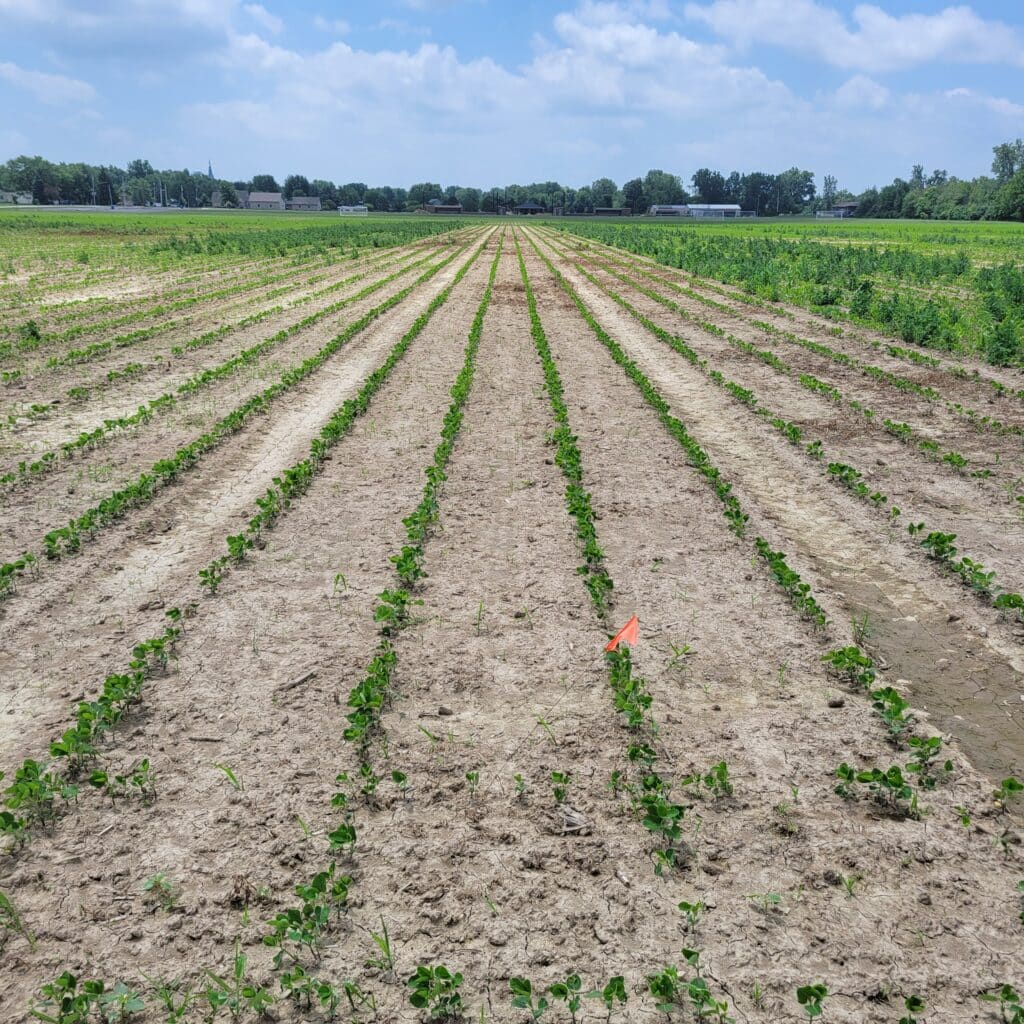
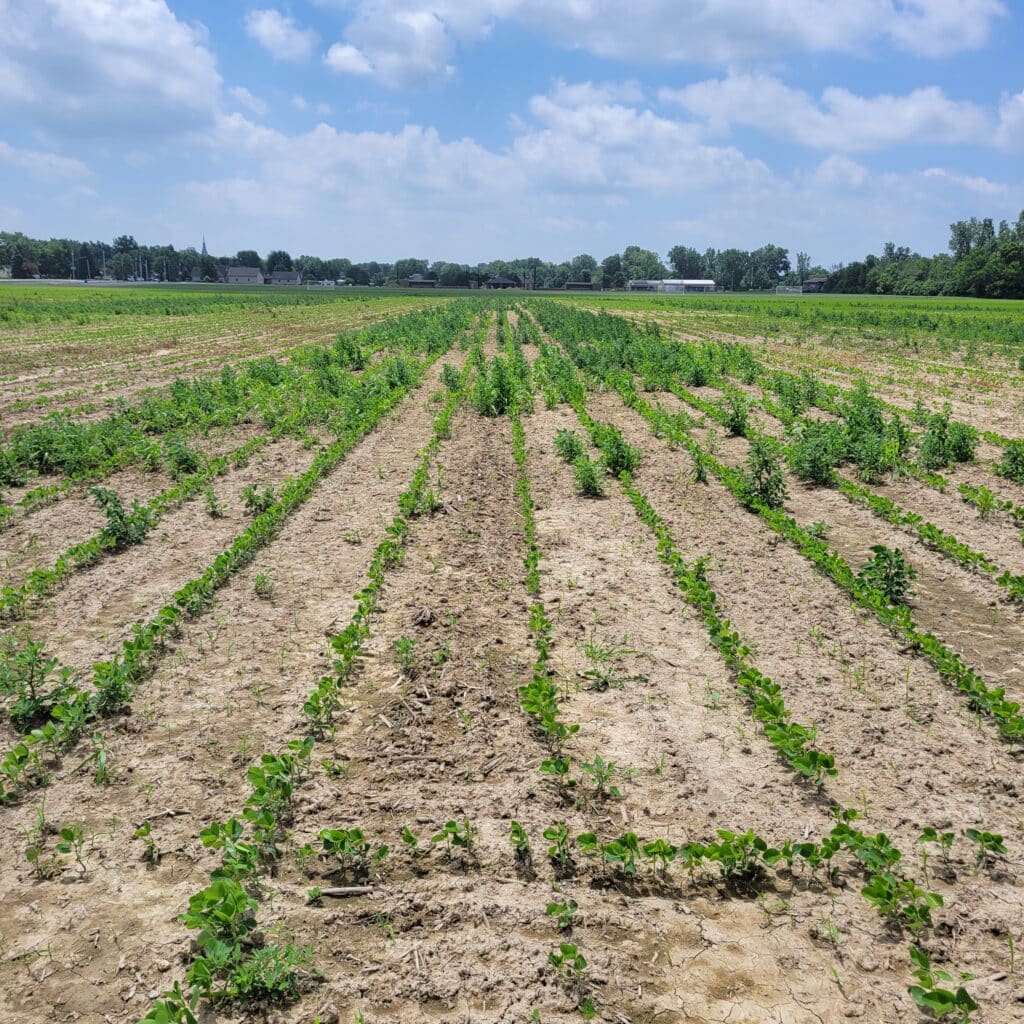
Leopold reports having little crop injury from the Digital Cultivator, even after operating it in tall corn and bushy soybeans.
Old School Manufacturing’s Kroeger says that users can alter the Digital Cultivator for different row widths and application types. The Cultivator accommodates standard 22-, 30-, and 38-inch row spacing, and can even be altered to fit 7.5-inch row spacing. Similarly, farmers can transition between burndown (full-width) and interrow applications by altering the electrocution applicator spacing. Changing the applicator spacing takes around one hour for the entire unit.
But there is a limit to when the Digital Cultivator can run. Users cannot operate the machine after their soybeans develop a full canopy and after corn plants grow chest-high.
No Weeds Left Behind?
The Digital Cultivator can electrocute your interrow weeds, but it cannot take out your in-row weeds without also electrocuting your crop, Ohio State’s Dr. Law notes. Farmers will need to integrate their continuous-contact weed electrocution with other weed control methods such as tillage or flame weeding to fully tackle all weeds in their fields.
“I still have to do a ridging pass to bury the weeds in a [corn] row,” Leopold adds.
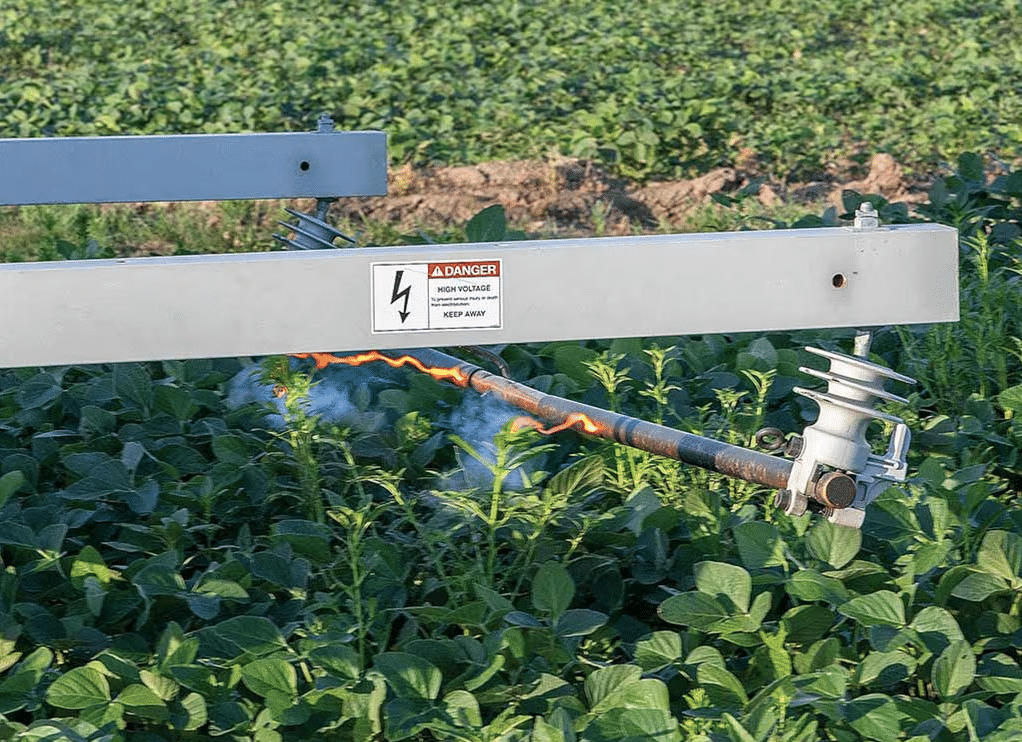
Combining the Digital Cultivator with a tractor-mounted shock discharge weed electrocution device could help once crops are too bushy for the interrow weeder. The shock-discharge device uses an electrified horizontal bar to zap weeds above the crop canopy. Together, the two tractor implements can shock weeds throughout most of the growing season as row crops grow a strong canopy. While zapping weeds above the crop canopy won’t alleviate any yield loss from weed competition that has already occurred, it can reduce weed seed production that would otherwise increase weed pressure in future years, Law adds.
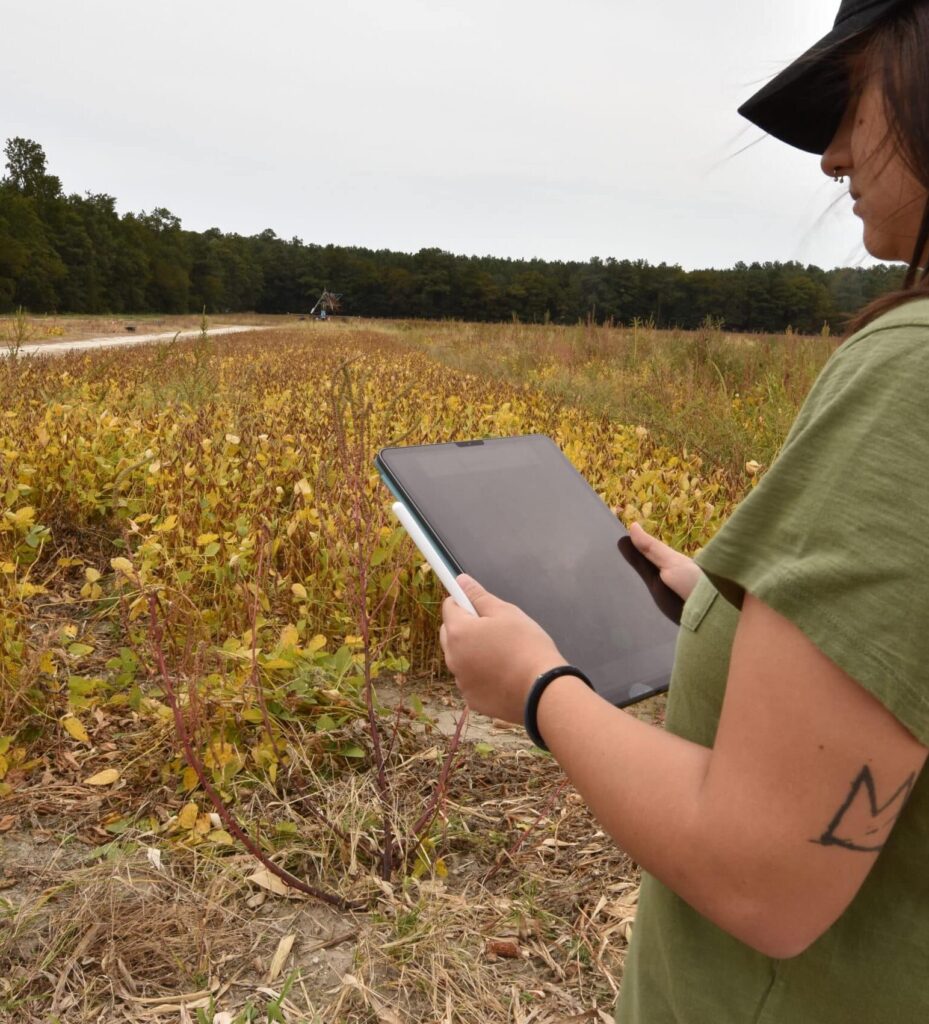
Leopold Family Farm’s Digital Cultivator testing is supported by collaboration with Law and his research team, who have visited Leopold’s farm throughout the electrocution testing. The researchers plan to gather data from Leopold’s electrocution work to better understand how continuous contact weed electrocution in row crops impacts weed control and crop yields compared to tillage.
In the meantime, Leopold plans to continue using the Digital Cultivator in his production. Old School Manufacturing is continuing to test and enhance the Digital Cultivator for all row crops and regions by releasing 10 tractor-mounted units to farmers across the United States and Canada for the 2027 growing season. Kroeger wants the Digital Cultivator to be capable of tackling weeds even in the most troubled fields, he says.
“Feedback from these 10 units will determine what changes are needed before bringing the machine to a full production level for the spring of 2028,” Kroeger notes. The Digital Cultivator will cost $200,000 USD once it hits the market.
Explore GROW’s website for more information on weed electrocution and tillage.
Article and feature photo by Amy Sullivan, GROW; Header photo by Jacob Leopold, Leopold Family Farms.