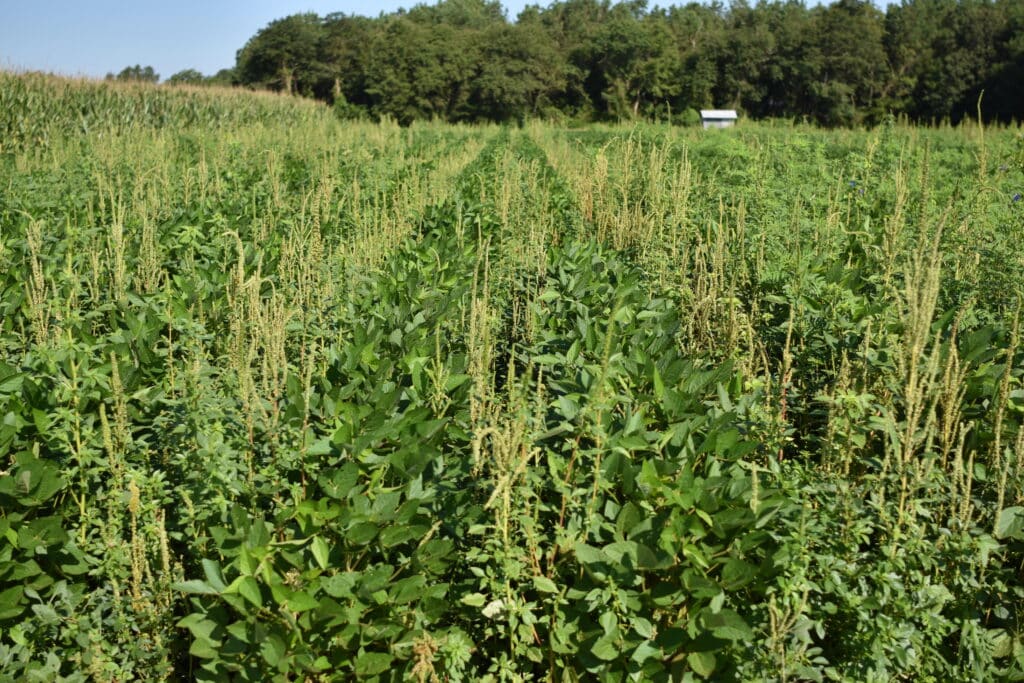
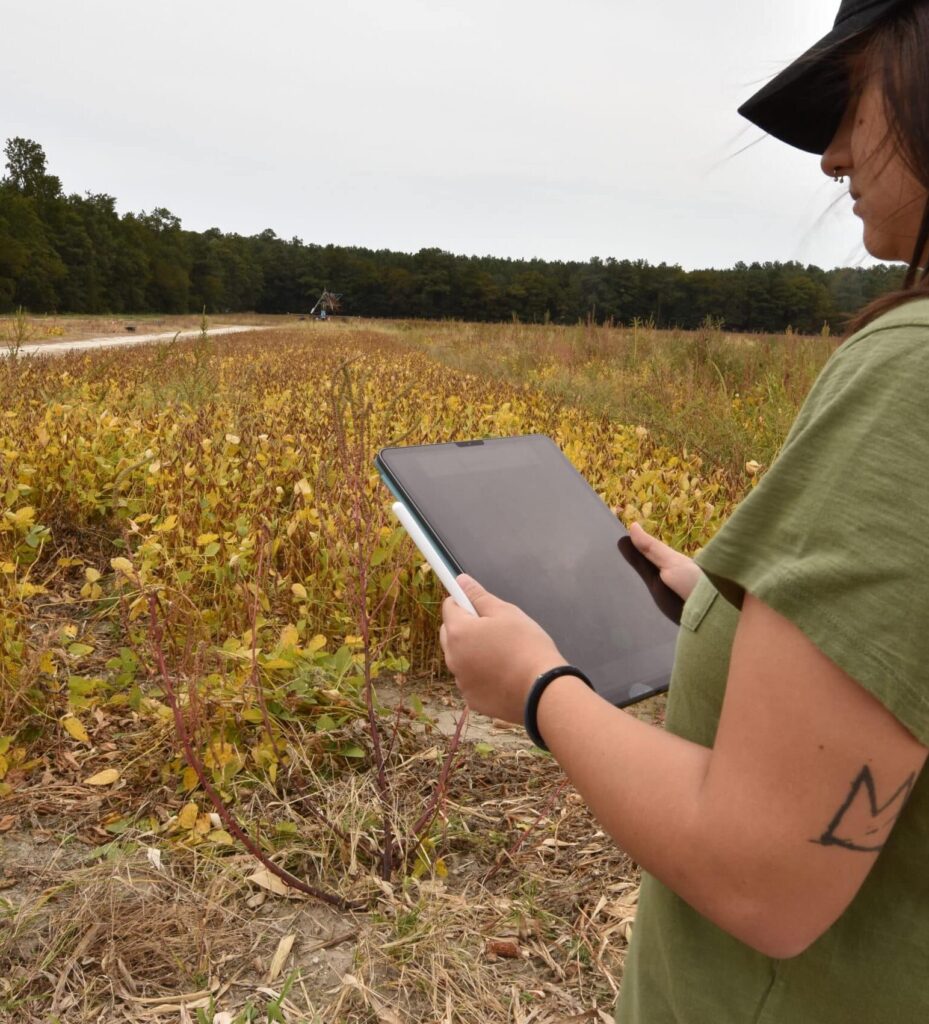
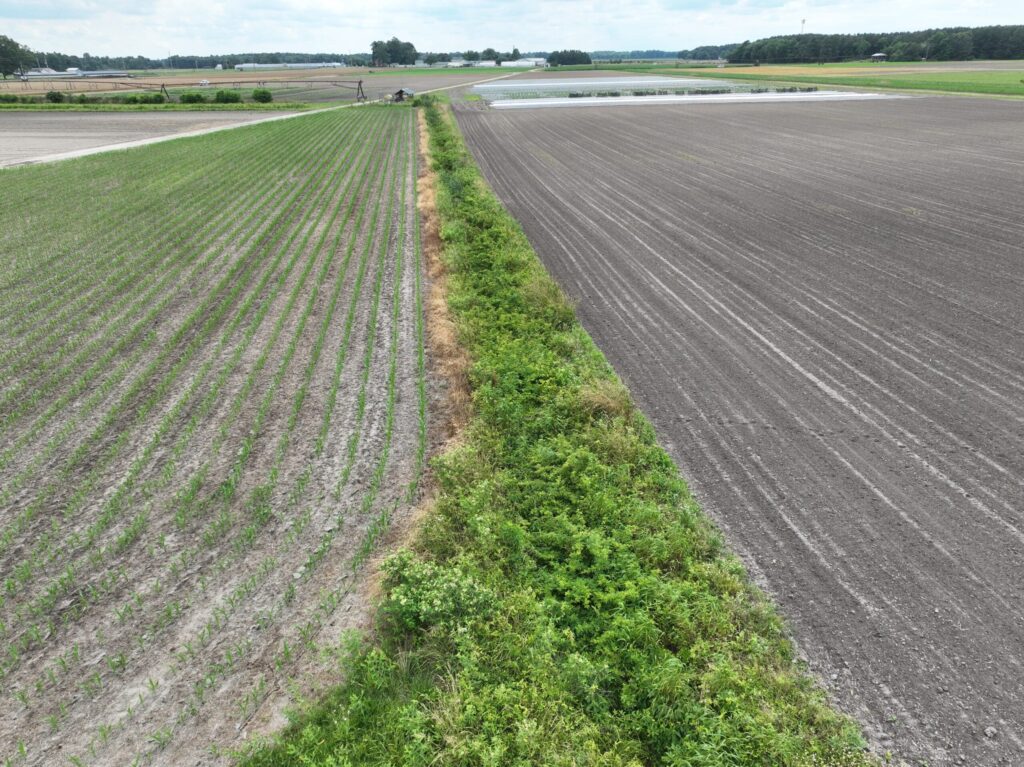
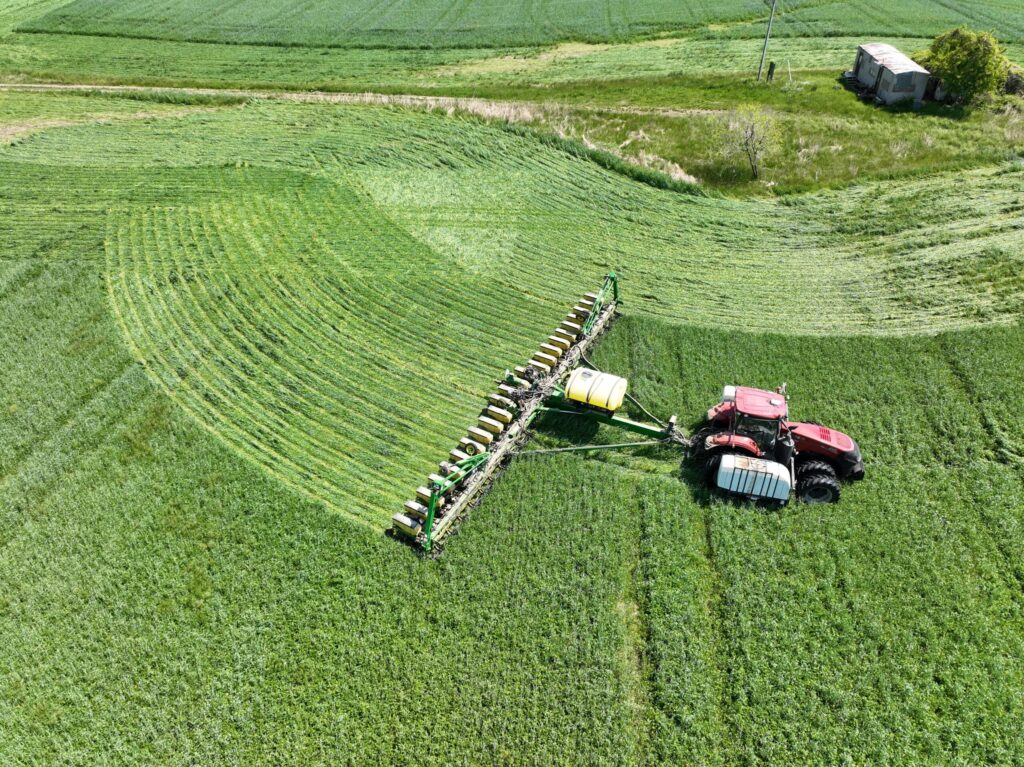
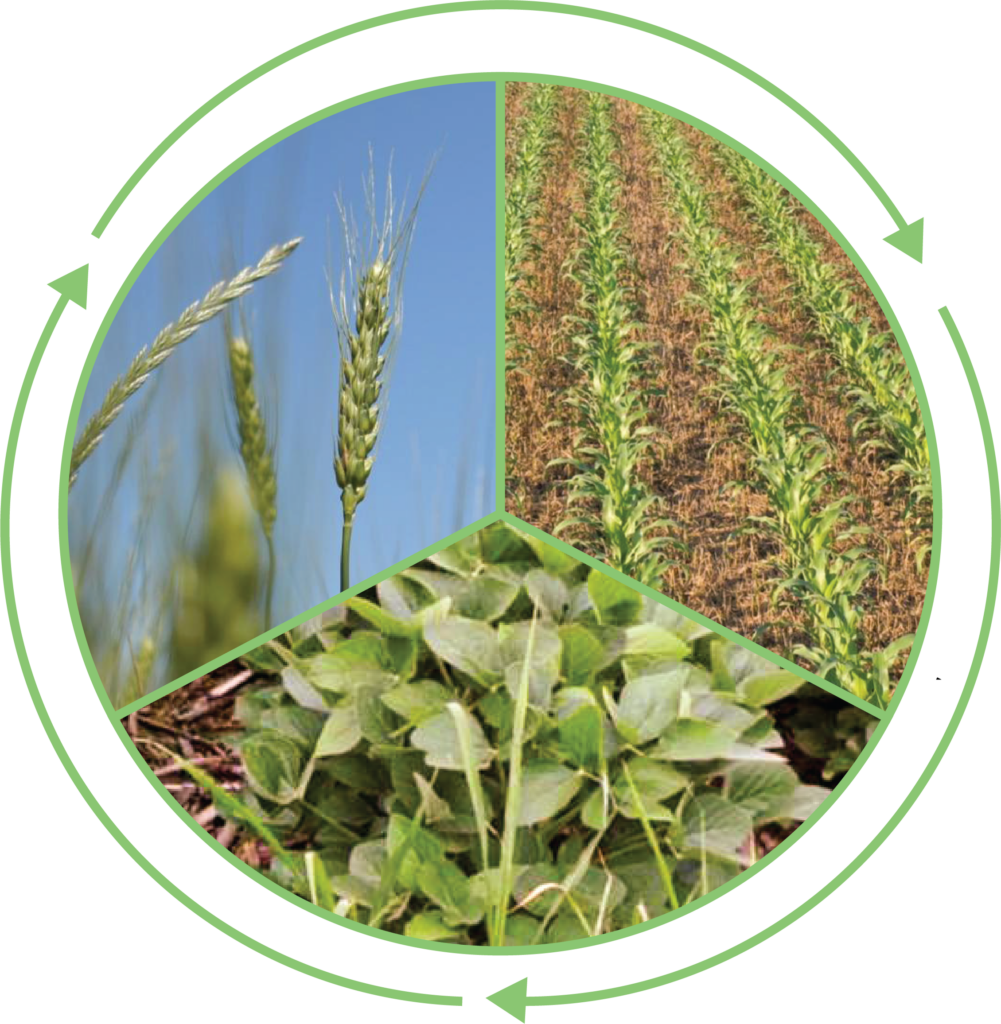
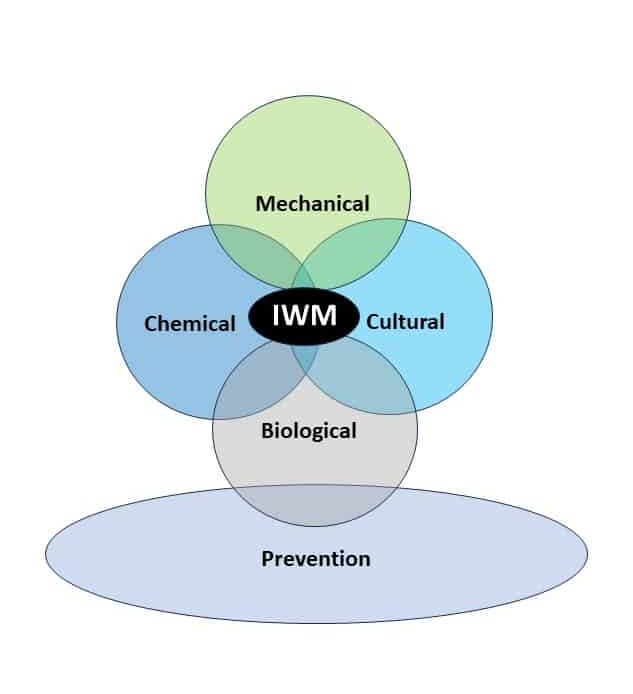
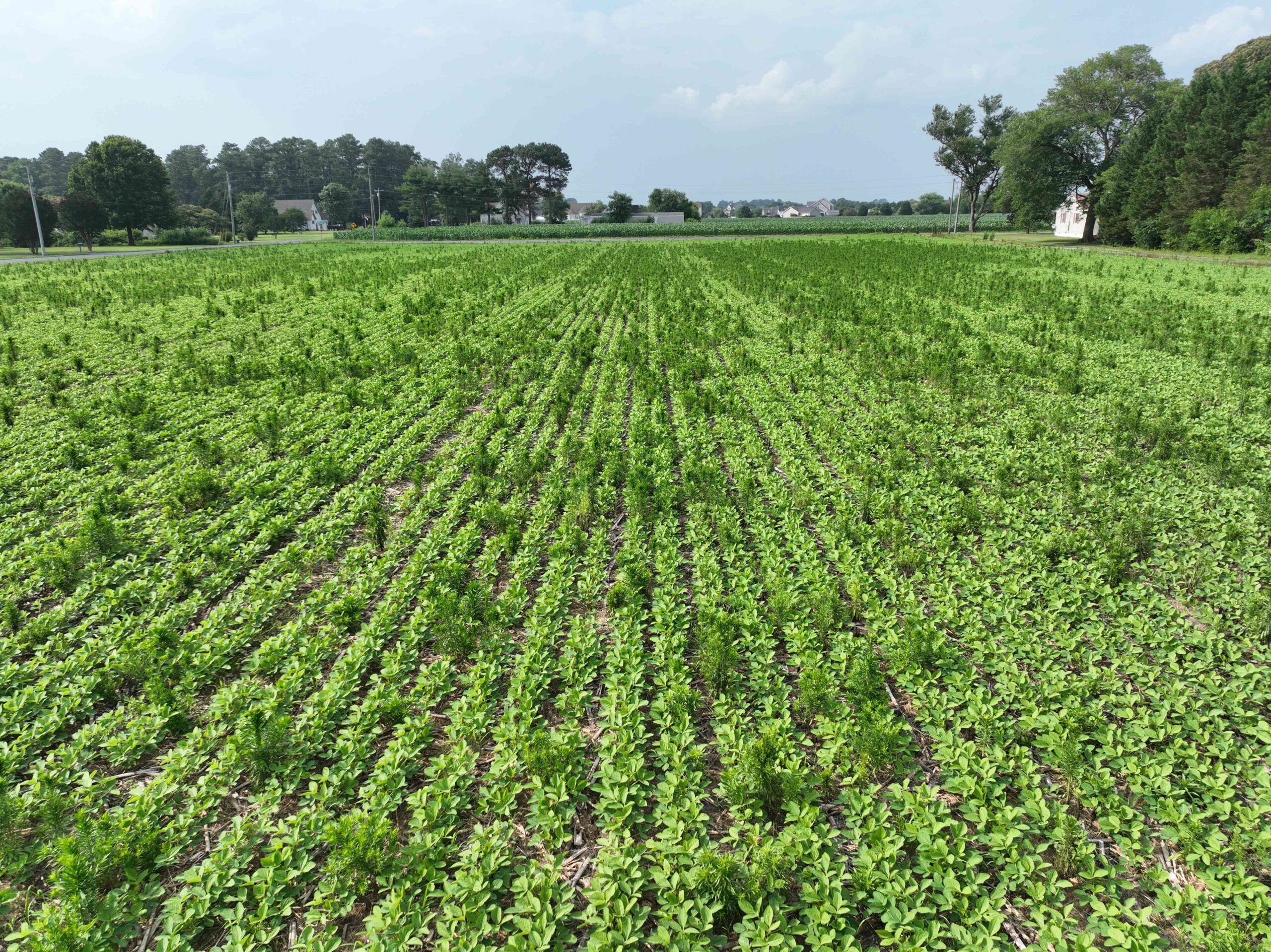
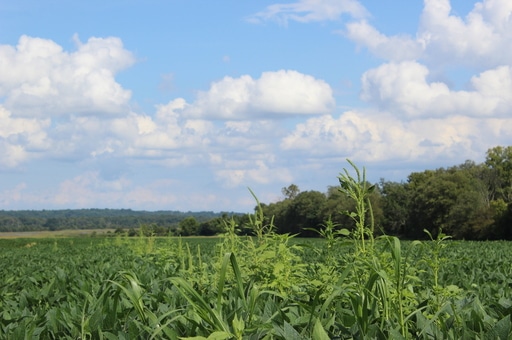
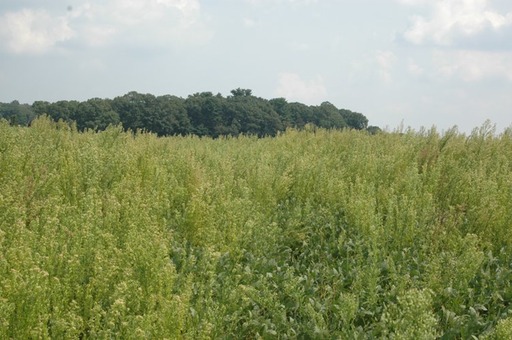
The Wisconsin Cropping Systems Weed Science Program has been conducting extensive research on soybean “planting green” systems as part of integrated weed management strategies.
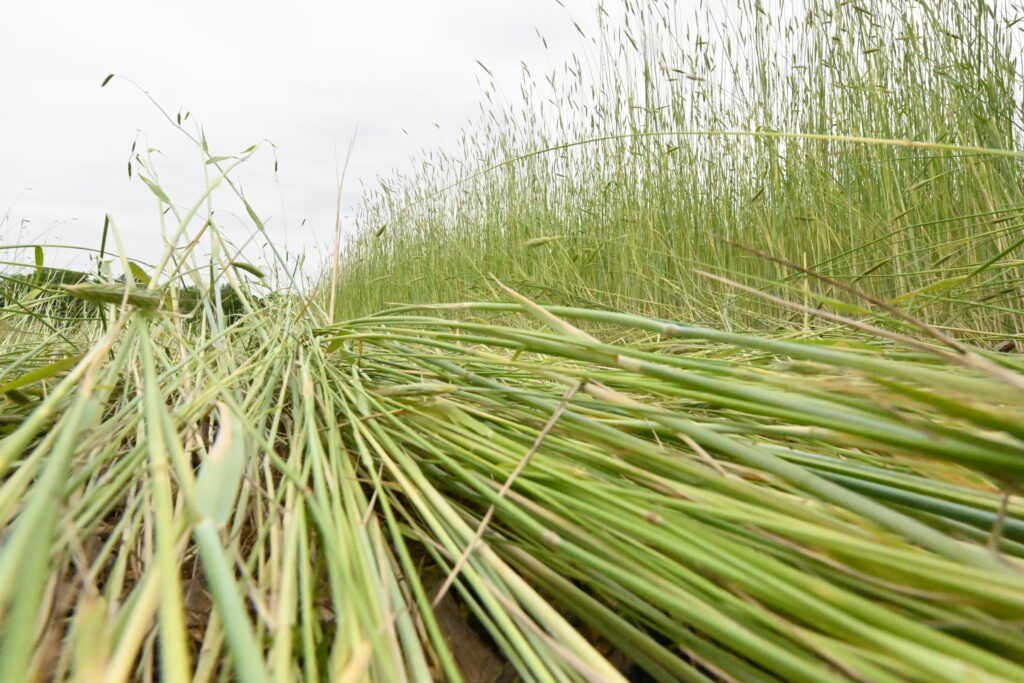
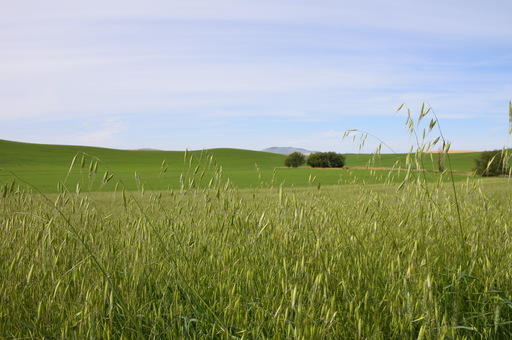
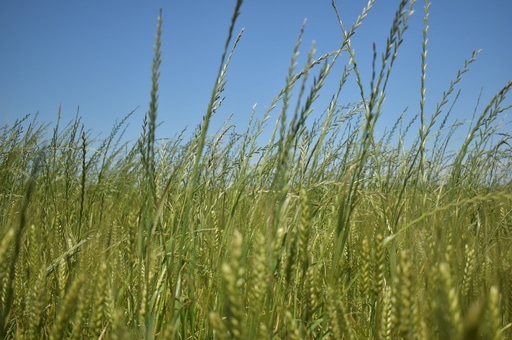
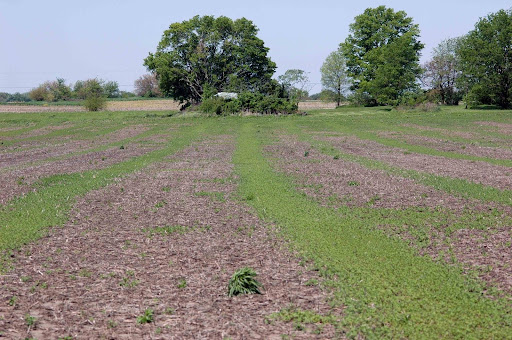
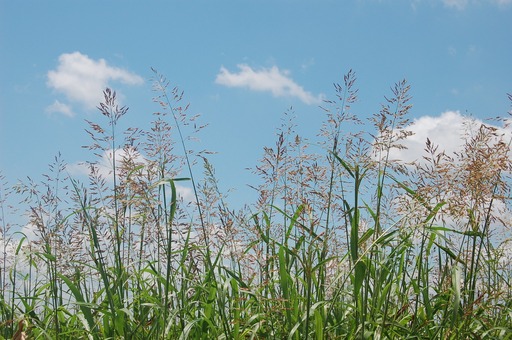
Our field research, which is part of a USB-funded multi-state project, demonstrates that planting green and terminating cereal rye when it reaches approximately 30–36 inches in height (~4,500 lbs of biomass per acre) or at the soybean VE stage, whichever occurs first, is a promising approach for suppressing weeds without negatively impacting soybean yield (as found in UW-Madison graduate student Guilherme Chudzik’s Ph.D. research).
However, we have also consistently observed that soil-applied residual herbicides are still necessary, even in high-biomass cereal rye systems, to achieve effective early-season control of troublesome weeds such as waterhemp, according to research by UW-Madison graduate student Jose Nunes.
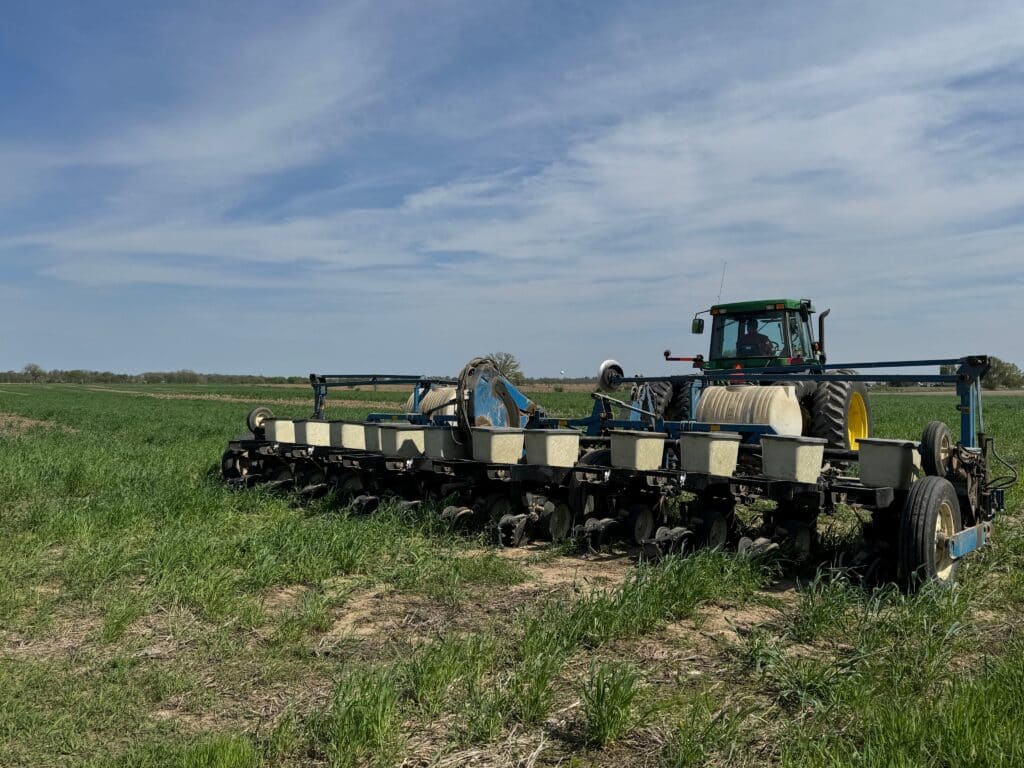
The use of multiple effective soil-residual herbicides at higher labeled rates, in tandem with high cereal rye cover crop biomass, is strongly recommended to achieve more consistent early-season weed control and to reduce selection pressure for further herbicide resistance.
Dr. Rodrigo Werle, University of Wisconsin-Madison
A common question from stakeholders across Wisconsin and beyond is: Which soil residual herbicides are compatible with high-biomass cereal rye cover crop systems?
In other words, which herbicides are most likely to move through the cereal rye residue layer and reach the soil where they can be effective?
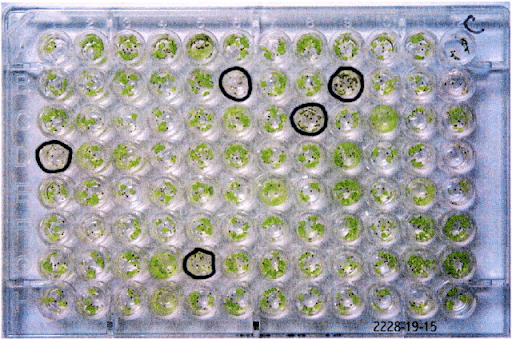
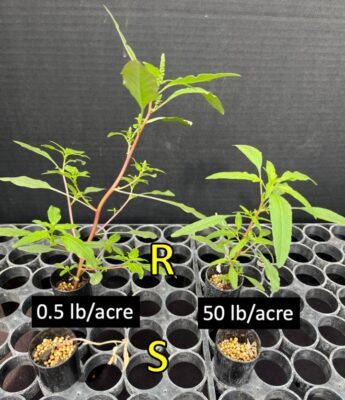
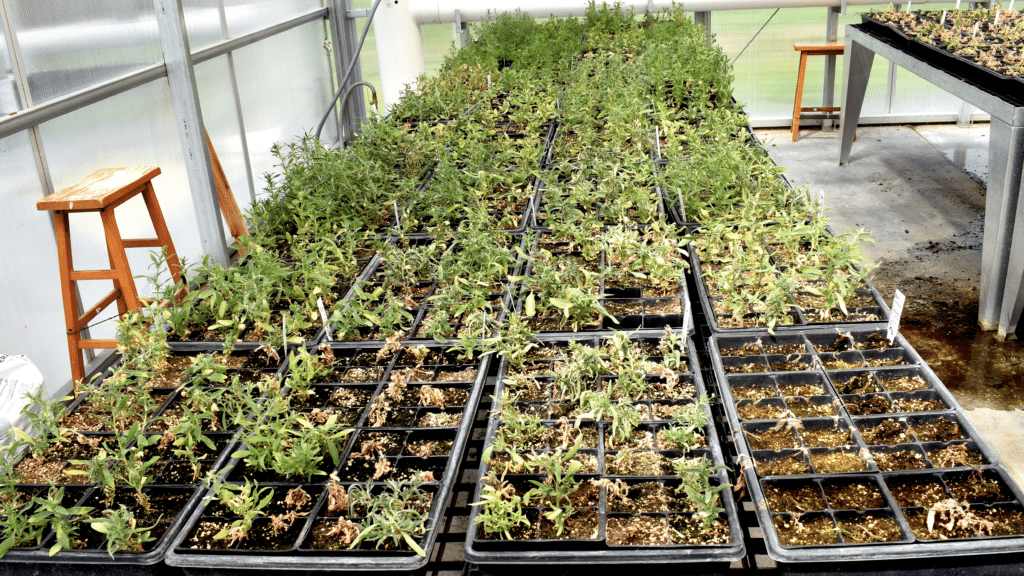
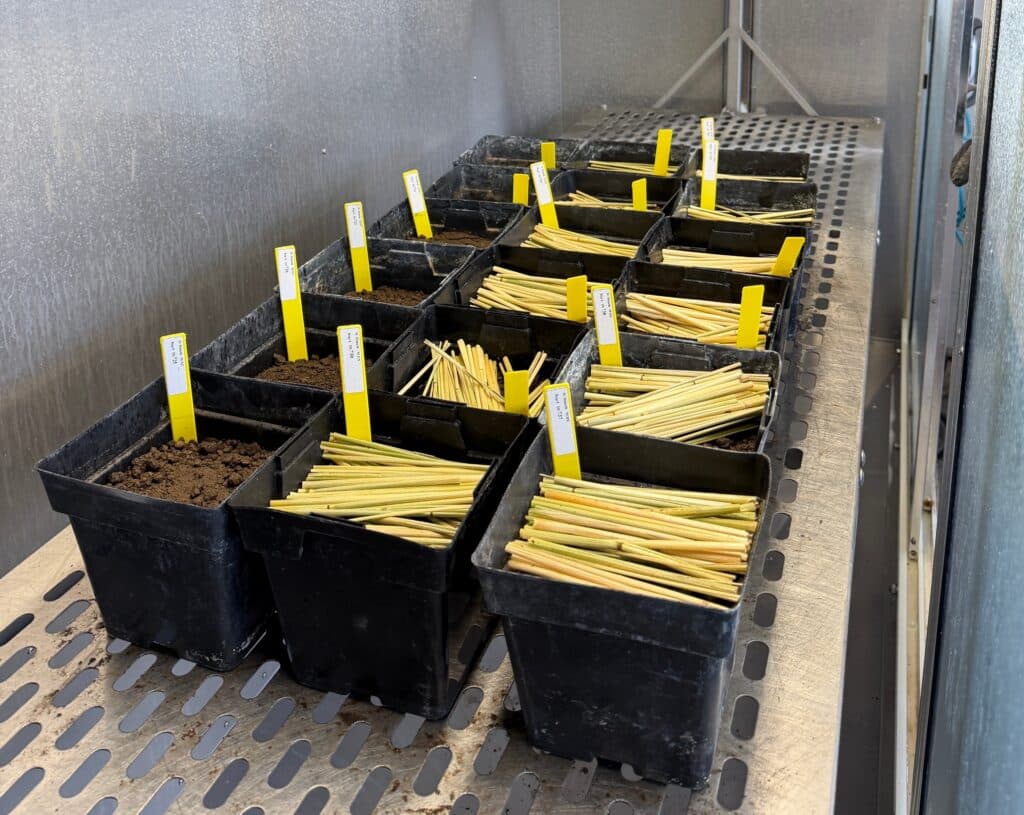
To address this, WiscWeeds students and staff Lukas Holderby, Sabeel Abuhakmeh, and Dr. Ahmad Mobli conducted a controlled-environment study this winter evaluating 21 single-active-ingredient corn and/or soybean herbicides. This study assumed adequate precipitation following application and simulated a condition of ~4,500 lbs of dry cereal rye per acre on soil surface. (Future research will evaluate how rainfall patterns influence herbicide movement through cover crop residue.)
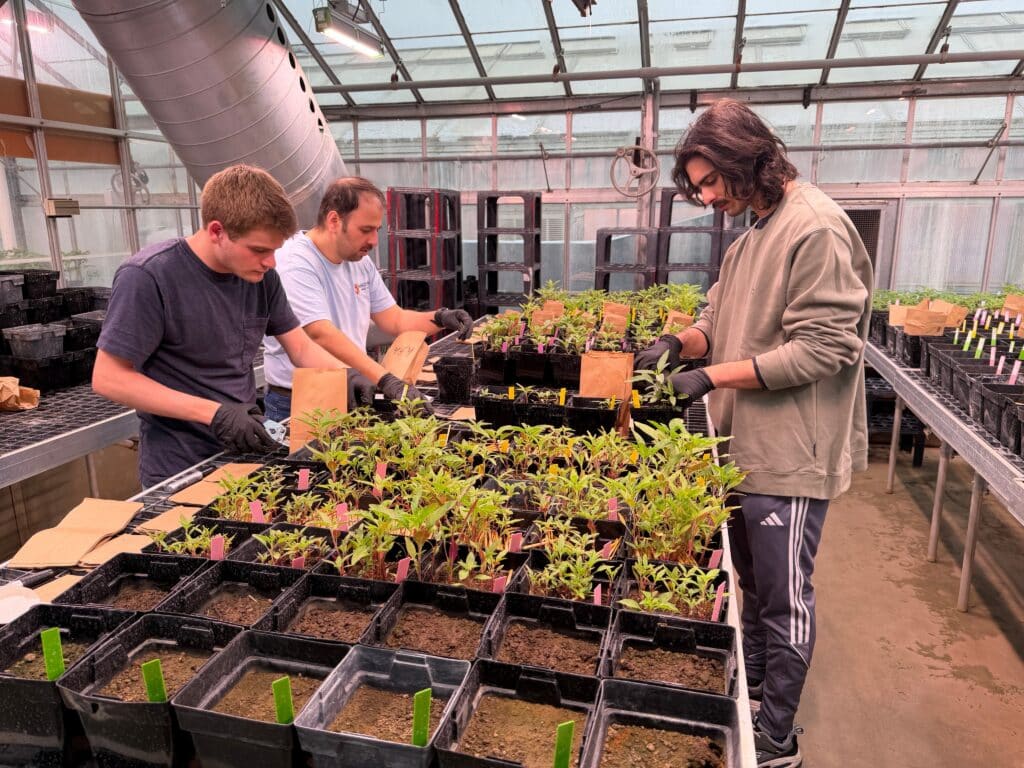
The Findings: Which Herbicides Made it to the Ground and Provided Residual Waterhemp Control
Corn herbicides identified as effective for waterhemp control AND compatible with high-biomass cereal rye in this study included:
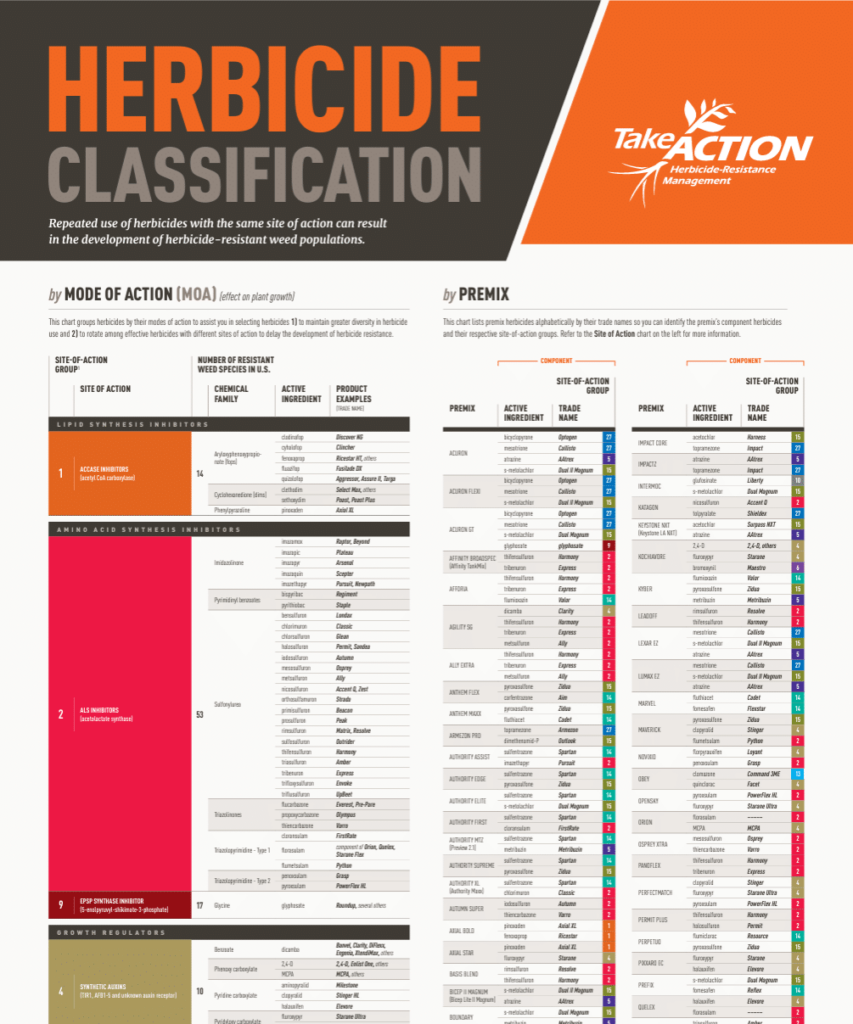
- Acetochlor (Harness – Group 15)
- Dimethenamid-P (Outlook – Group 15)
- Pyroxasulfone (Zidua – Group 15)
- S-metolachlor (Dual II Magnum – Group 15)
- Atrazine (Group 5)*
- Isoxaflutole (Balance Flexx – Group 27)
- Mesotrione (Callisto – Group 27)
*waterhemp population used in this study is still susceptible to atrazine applied preemergence.
Soybean herbicides identified as effective for waterhemp control AND compatible with high-biomass cereal rye in this study included:
- Dimethenamid-P (Outlook – Group 15)
- Pyroxasulfone (Zidua – Group 15)
- S-metolachlor (Dual II Magnum – Group 15)
- Flumioxazin (Valor – Group 14)
- Fomesafen (Flexstar – Group 14)
- Metribuzin (Group 5)
Soybean growers should pay close attention to application timing restrictions. Flumioxazin-containing products for instance must be applied within three days of soybean planting, while metribuzin must be applied prior to soybean emergence. The remaining soybean herbicides listed above can be applied preemergence or early postemergence, offering flexibility for growers who plant early and delay cereal rye termination until after soybean emergence.
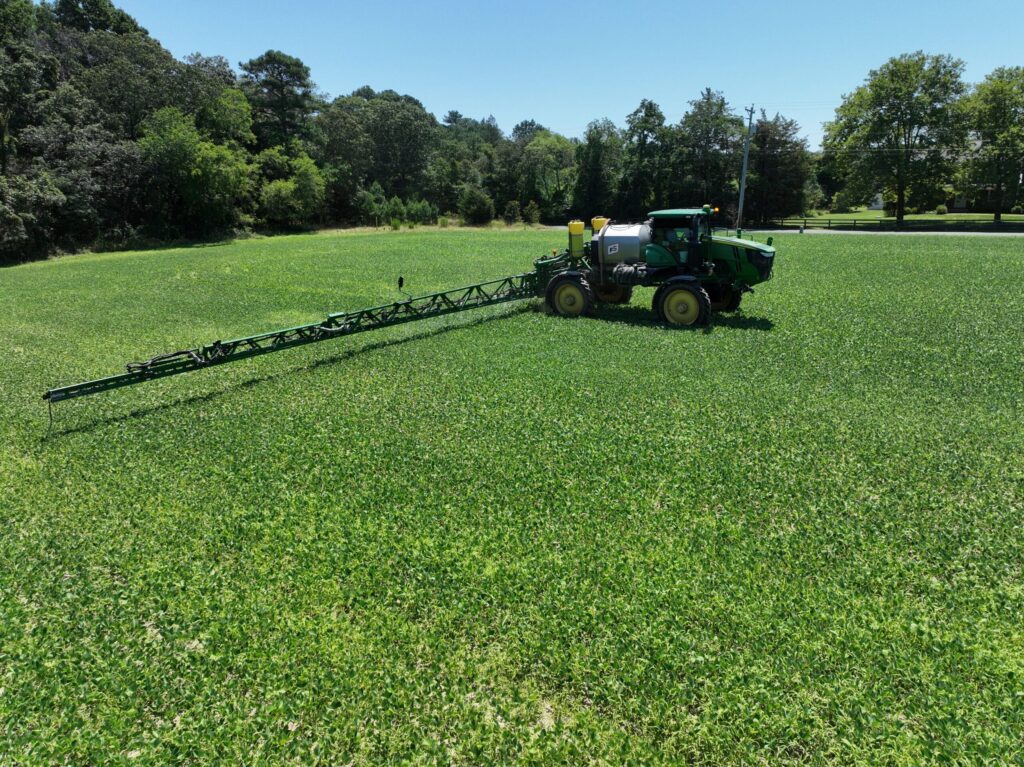
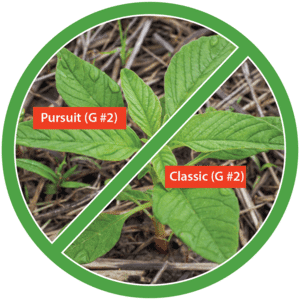
A standard program in planting green systems where the cereal rye is terminated after soybean emergence may include glyphosate for cereal rye termination, combined with soil residual herbicides fomesafen plus a Group 15 herbicide (e.g., pyroxasulfone, S-metolachlor, or dimethenamid-P) and a Group 2 herbicide such as imazethapyr (Pursuit), cloransulam (FirstRate), or chlorimuron (Classic) for broad spectrum weed control.
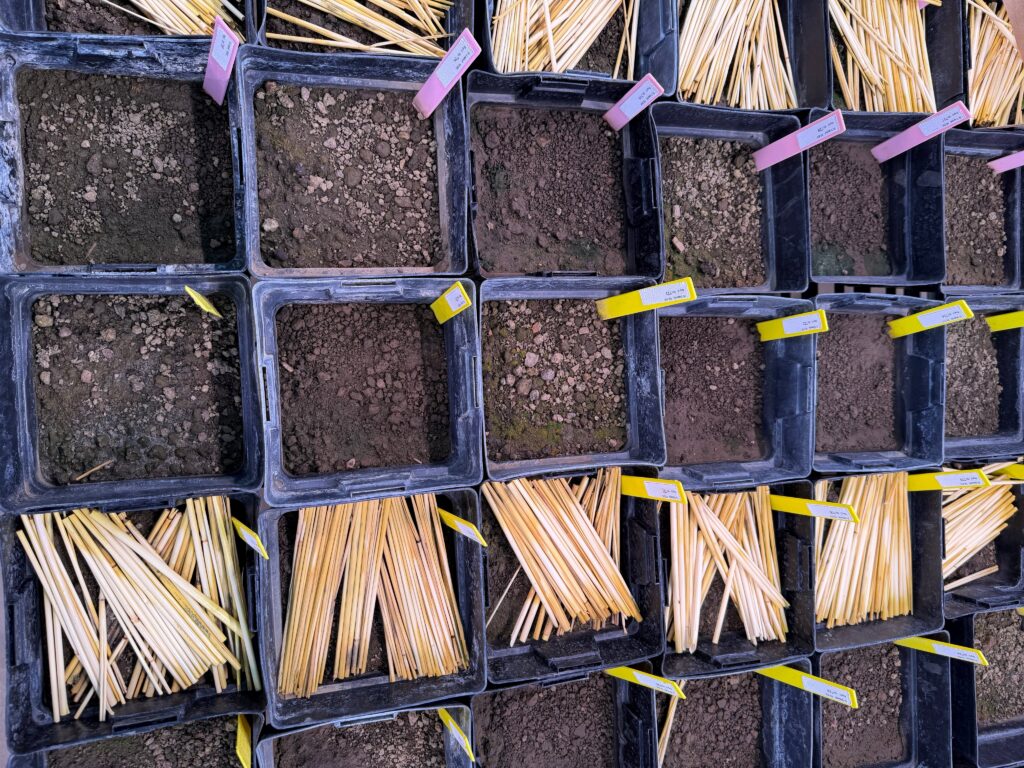
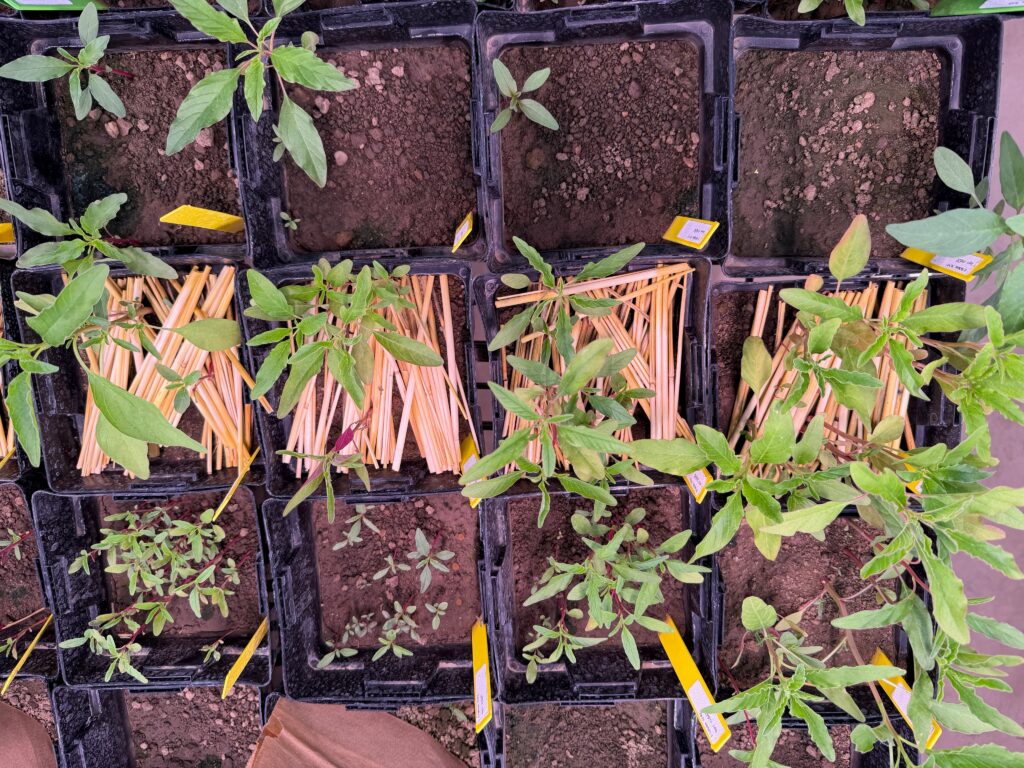
While these findings are preliminary and additional controlled-environment and field research is ongoing, we aim to provide timely guidance to help growers make informed decisions as the 2026 planting season approaches.
The use of multiple effective soil-residual herbicides at higher labeled rates in tandem with high cereal rye cover crop biomass is strongly recommended to achieve more consistent early-season weed control and to reduce selection pressure for further herbicide resistance.
This research project was conducted by WiscWeeds Team Members Lukas Holderby, Sabeel Abuhakmeh, and Dr. Ahmad Mobli. This overall effort is being funded by the Wisconsin Soybean Marketing Board, United Soybean Board, and USDA-NIFA.
Research update article by Rodrigo Werle, University of Wisconsin-Madison Extension Cropping Systems Weed Scientist; Header photo by the United Soybean Board; Feature photos by Claudio Rubione, GROW; Article funded in-part by the United Soybean Board.